

And then there were none: Australia’s only shrew declared extinct
- Written by: John Woinarski, Professor of Conservation Biology, Charles Darwin University
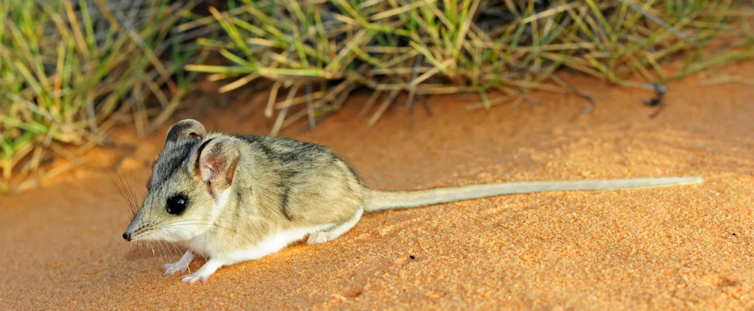
It’s official: the only Australian shrew is no more.
The latest edition of the International Union for the Conservation of Nature’s Red List, the world’s most comprehensive global inventory on extinction risk, has declared the Christmas Island shrew is extinct.
The news may not seem momentous. After all, most Australians know nothing of shrews and would be unaware this one species counted among our native fauna.
But the shrew’s extinction increases the tally of Australian mammals extinct since 1788 to 39 species. This is far more than for any other country. These losses represent about 10% of all Australia’s land mammal species before colonisation. It is a deplorable record of trashing an extraordinary legacy.
So, what are shrews?
Shrews are small, long-nosed, insect-eating mammals, with many species widely distributed across Asia, Africa, Europe and the Americas. On mainland Australia, similar roles are filled by unrelated small marsupials such as dunnarts, antechinuses, planigales and ningauis, which are themselves not writ large on our national consciousness.
Many people will know of shrews only courtesy of Shakespeare. Combining misogyny and zoophobia (an intense fear of animals) he used the name of this inoffensive animal to describe a shrill, ever-complaining, grating caricature of women. The offensive term has stuck through the ages, draining sympathy for and interest in the animal.
The history of Australia’s shrew
It must have been a harrowing voyage. Tens of thousands of years ago, a small family of shrews (or a pregnant female) rafted on floating vegetation, from islands of what is now Indonesia. Haphazardly, they landed on uninhabited Christmas Island, now an Australian territory about 1,500 kilometres west of the mainland. These lucky or reckless pioneers gave rise to Australia’s only shrew species.
For many years the Christmas Island shrew prospered. When European naturalists first visited Christmas Island in the 1890s, at the time of its settlement, they remarked:
[…] this little animal is extremely common all over the island, and at night its shrill shriek, like the cry of a bat, can be heard on all sides.
Change came quickly thereafter. In 1900, black rats were accidentally introduced, stowaways on hay bales. Worse, these rats were infested with trypanosomes, a cellular parasite. These trypanosomes spread rapidly to the island’s two species of native rats (and presumably the shrew).
The long isolation of Christmas Island had cocooned its native mammals, leaving them with no resistance to new diseases. Within a year, island residents began seeing many dying rats stumbling across the forest floor.
By the time naturalists next visited the island in 1908, the two species of native rats and the Christmas Island shrew were thought to have become extinct. Subsequently, many other endemic animals were also lost or suffered serious declines due to the introduction of cats and invasive species of ants, snails, plants, giant centipedes, birds and snakes.
It is a pattern that has occurred repeatedly across the world’s islands. Introductions of plants and animals have subverted island ecosystems and, as a consequence, endemic island species represent a disproportionately high number of the world’s extinctions.
Defying extinction?
But the shrew lived on. After not being seen for more than 50 years, two survivors were caught in the 1950s as bulldozers cleared a patch of rainforest for mining. The shrews were released and the find was not reported until many years later.
Then, nothing for another 30 years. In December 1984, biologists Hugh Yorkston and Jeff Tranter were clearing a rainforest track and came across a live female shrew in a clump of fallen birds’ nest fern. They kept the shrew in a terrarium for 12-18 months, industriously catching grasshoppers to feed it.
At the time, they didn’t consider this a final opportunity to conserve the species through a captive breeding program. When, with extraordinary serendipity, a male shrew was found alive only a few months later in March 1985, it was kept in a separate terrarium. The female was docile but the male was aggressive. It also appeared unwell.
Whatever the reason, there was no introduction, no consummation and no baby shrews. The male died about three weeks after capture while the female lingered on, alone.
No shrews left
Since 1984, there have been no recorded sightings. This means only four Christmas Island shrews have been reported in over 120 years.
Almost no information on the biology of this species has been published, other than the single sentence written by naturalist Charles Andrews in 1900:
[…] it lives in holes in rocks and roots of trees, and seems to feed mainly on beetles.
There are few pictures. However, inklings of the nature of the last known shrew can be seen in a beautiful sketch by the park ranger, naturalist and artist Max Orchard.
In the nearly 40 years since the death of the last known individual, two recovery plans have been compiled, outlining the actions needed to conserve the species. There have been targeted searches. But no shrews have turned up to benefit from those plans.
The most telling evidence of their extinction is the absence of any shrews in the stomach contents of hundreds of feral cats culled over the past few decades.
While the shrew clearly survived until the 1980s, this decade saw the arrival of yet another threat, the Asian wolf snake. This snake quickly spread across the island, most likely causing the extinction of the island’s endemic microbat, the Christmas Island pipistrelle, in 2009 and most of the endemic lizards. The snake’s arrival also probably marked the death knell for any remaining shrews.
We must try harder to prevent extinctions
Extinction can be difficult to prove, especially for a species as cryptic as the shrew. There is peril in categorising a species as extinct when it still survives. This misclassification has been termed the “Romeo error”, where formal recognition of a species as extinct can result in the withdrawal of funding or protection, and hence increase likelihood of actual extinction.
In 2022, the Australian government through then-Minister for the Environment Tanya Plibersek pledged, admirably, to preventing any more extinctions. Although today’s formal recognition of the shrew’s extinction comes after that pledge, the last shrew probably died one to two decades beforehand.
The shrew’s loss is a reminder of the enormity of the challenge of preventing further extinctions, of the diverse ways these losses can happen, of the need to seize opportunities to protect rare species, and of the importance of a national and political commitment to prevent extinction.
I hope the Christmas Island shrew is not extinct; after all it has defied previous calls of its demise. Perhaps somewhere, a small furtive family of shrews are hanging on, elusive survivors, secure in the knowledge of their own existence and waiting to prove the pessimists wrong.
Hugh Yorkston, Jeff Tranter and Paul Meek helped with this article.
Authors: John Woinarski, Professor of Conservation Biology, Charles Darwin University
Read more https://theconversation.com/and-then-there-were-none-australias-only-shrew-declared-extinct-265988


 Daily Bulletin


.webp)