

Condé Nast bans fur after decades of protest. Is it a turning point, or another fashion fad?
- Written by: Rachel Lamarche-Beauchesne, Senior Lecturer in Fashion Enterprise, Torrens University Australia
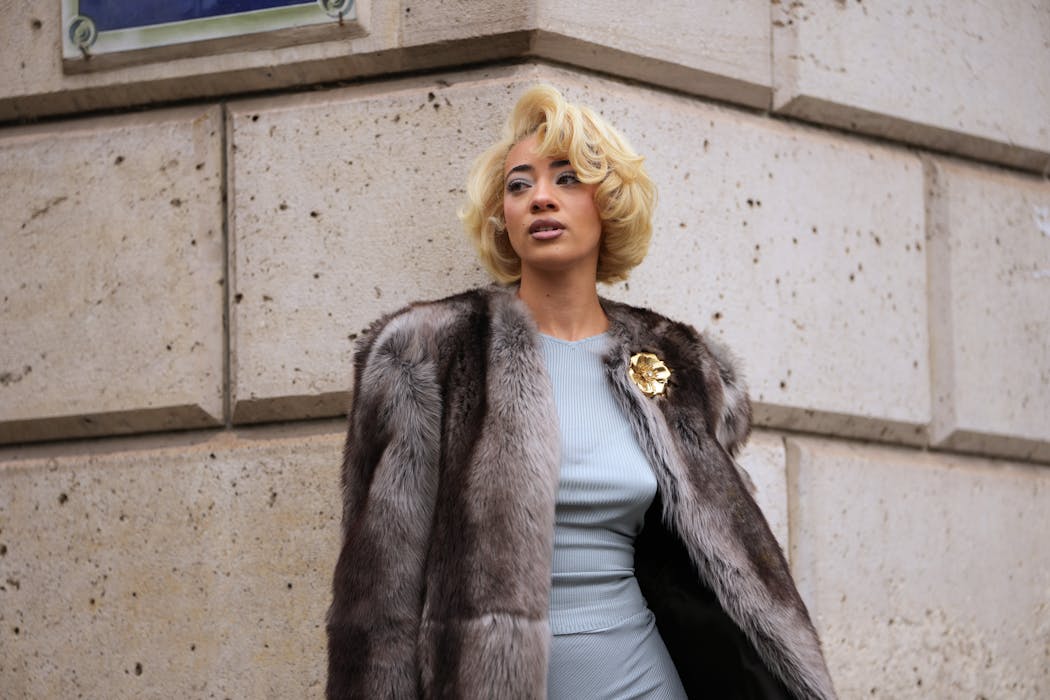
For decades, animal rights activists, campaigners and ethical designers have fought to strip fur fashion of its glamour and expose the cruelty behind it.
From bold celebrity-led protests to quiet shifts in consumer values, these efforts have slowly reshaped the fashion landscape.
Now, one of the industry’s most influential gatekeepers, Condé Nast – publisher of Vogue, Vanity Fair and Glamour – has announced it will no longer feature “new animal fur in editorial content or advertising” across its titles.
The decision, which includes exceptions for what are outlined as “byproducts of subsistence and Indigenous practices”, marks a symbolic turning point within the fashion media landscape due to Condé Nast’s global reach.
It is especially significant given Vogue’s legacy in glamorising fur and its historically unwavering support under former editor-in-chief Anna Wintour, one of fur’s most powerful advocates in fashion media and a long-time target of the anti-fur movement.
Wintour remains involved at Condé Nast in the role of chief content officer, and as Vogue’s global editorial director.
Anti-fur campaigns
The announcement by Condé Nast follows a nine-month campaign led by the Coalition to Abolish the Fur Trade. This activist group staged more than a hundred protests targeting Condé Nast executives, editors and affiliated businesses.
Demonstrations ranged from picketing outside the homes of Vogue editors to disruptive actions inside stores linked to Condé Nast through board affiliations.

While this campaign undoubtedly influenced the publisher’s decision, it was likely the culmination of anti-fur advocacy dating back to the early 20th century.
The long tail of the movement
Animal rights activism in fashion can be traced back to the late 19th century, when the feather trade decimated bird populations and led to the extinction of species prized for their plumage.
Anti-fur activism followed. It gained momentum in the 1970s, and with the founding of the People for the Ethical Treatment of Animals (PETA) in 1980.
Through high-profile campaigns exposing the cruelty of fur farms, PETA enlisted celebrities and models to pose nude in its iconic “I’d rather go naked than wear fur” ads.
These efforts led to tangible change. Calvin Klein dropped fur in 1994, citing animal advocacy. Since then, fur-free policies have become a relatively easy win for brands navigating the increasingly complex ethics of animal materials.

A new standard for luxury fashion
Several US states have banned fur sales, and fur farming is now outlawed in countries including the United Kingdom, Netherlands, Austria, Italy and Norway.
Condé Nast’s new position places it alongside other media and fashion leaders. Elle magazine went fur-free in 2021. Major luxury brands such as Max Mara, Burberry, Chanel, Prada, Valentino and Versace have adopted similar policies, as have retailers including David Jones (Australia), Macy’s (US), Nordstrom (US), Saks Fifth Avenue (US) and Hudson’s Bay (Canada).
In 2022, French luxury conglomerate Kering also committed to a fur-free policy across its brand portfolio.
The largest remaining holdout is LVMH (Moët Hennessy Louis Vuitton SE) – the parent company of Dior and Fendi – which faces mounting pressure to follow suit.
The fur paradox
Despite these shifts, fur remains a fascination within fashion, and periodic revivals are still celebrated in the press.
TikTok’s 2024 “mob wives” aesthetic, featuring oversized fur coats and animal prints, sparked a return of fur on winter runways. Singer Sabrina Carpenter even wore a special edition Louis Vuitton fox fur coat on the day of the Met Gala.
This paradox reflects fashion’s cyclical and often contradictory nature. Faux fur and faux shearling are increasingly used to replicate the luxury aesthetic without the ethical baggage. Yet debates about the environmental impact of synthetic fur complicate this narrative.
What’s next?
Condé Nast’s fur-free stance comes at a time when many fashion brands are rethinking or rolling back their sustainability commitments.
Some industry observers worry climate goals are being deprioritised. Ralph Lauren, for instance, has dropped its net-zero emissions target. Also, the Vestiaire Collective, a platform for pre-loved luxury item resale, has started monetising its activities by selling carbon credits, demonstrating the difficulty of navigating current market conditions.
Still, there are signs of progress. Stella McCartney’s Summer 2025 Paris Fashion Week show featured feather alternatives made of plant-based materials.
This year also marked the first Australian Fashion Week in which fur, feathers and exotic leathers were banned from catwalks.
Animal rights advocates, such as Collective Fashion Justice founder Emma Hakansson, continue to push for the industry to reduce its use of leather, wool and other animal-derived material.
This space is dynamic and evolving. Whether Condé Nast’s decision is a tipping point, or another fashion fad, remains to be seen.
Authors: Rachel Lamarche-Beauchesne, Senior Lecturer in Fashion Enterprise, Torrens University Australia


 Daily Bulletin


