

Read The Times Australia

Daily Bulletin

Strait of Hormuz: closing vital oil and gas route would disrupt global supplies. How will Australia be affected?

  • Written by: Sanjoy Paul, Associate Professor in Operations and Supply Chain Management, UTS Business School, University of Technology Sydney
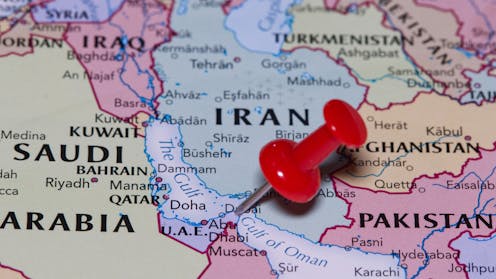
Strait of Hormuz: closing vital oil and gas route would disrupt global supplies. How will Australia be affected?

The Iranian parliament has approved the closure of key shipping route the Strait of Hormuz, in a move that could further escalate the Israel/Iran war.

The strait lies between Iran and its Gulf Arab neighbours and is used to transport about 20 million barrels per day of oil – the equivalent of 20% of global daily oil consumption.

Since 2020, this critical route has been used to transport an average of 14.8 million barrels a day of crude oil and natural gas liquids, 5.5 million barrels a day of petroleum products and 10.8 billion cubic feet per day of LNG.

The closure of the strait, which will not take effect until endorsed by Iran’s Supreme National Security Council, will significantly impact global oil and gas supplies and could potentially create energy crises.

An important route for Asia

In 2024, 84% of the crude oil and natural gas liquids, and 83% of the LNG passed through this channel were destined for Asian countries including China, India, Japan and South Korea.

In the first quarter of 2025, China alone imported about 38% of crude oil shipped through the strait.

It is likely these countries will be directly impacted by a closure.

What it means for Australia

Only about 15% of Australia’s crude oil and 5% of petroleum products are imported from Middle Eastern countries including Saudi Arabia and the United Arab Emirates.

However, 30% of Australia’s refined oil effectively transits through the Strait of Hormuz. This is because Australia sources refined oil from the Republic of Korea and Singapore that is refined from crude oil from the Middle East.

If Australia’s key suppliers are affected by the closure, there could be devastating flow-on effects for the country’s oil supply.

Since the conflict between Iran and Israel started, the oil price has increased by 10%. The closure of the strait could further inflate the oil price globally

Though Australia does not rely directly on crude oil from the Middle East, its reliance on South Korea and Singapore for refined oil is significant. The increased oil price and its impact on the cost of goods and services could also hurt Australia’s fight to control inflation.

Past tensions in the strait

The Strait of Hormuz has never been fully closed. However, it has been disrupted a few times leading to reduced capacity.

Notable disruptions include attacks on commercial ships including oil tankers during the Iran-Iraq war in the 1980s and the tension in the strait between Iranian and US navies in 2007.

None of these disruptions led to the closure of the channel so the impact of these disruptions on global oil supply was minimal.

Bypassing the strait

Both Saudi Arabia and the United Arab Emirates have established oil pipelines that could bypass the Strait of Hormuz if it is closed or compromised.

Saudi Arabia’s pipeline can carry five million barrels per day and the emirates’ capacity is 1.5 million barrels per day. This is compared to their production capacities of nine and 3.3 million barrels per day respectively.

This could significantly slow down the transportation of crude oil from both countries.

Qatar relies on the Strait of Hormuz to transport nearly all of its LNG shipments. Last week Qatar instructed all LNG carriers to hold off transiting through the strait until the day before loading and to remain east of Hormuz. This has kept their carriers outside the impacted regions.

The limited alternative options and reduced capacities of pipelines could potentially disrupt the global oil and LNG supply.

Potential strategies

If the strait is fully closed, the impacts could be severe, especially for Asian countries which rely on energy from the Middle East.

Many countries, such as China, have oil reserves that can sustain their current oil consumption for about five years. However, many developing countries don’t keep supply inventories.

In the short term, countries should seek to diversify their sources of oil and gas supply. In the long term, they should create a strategic reserve for it.

Supply countries should focus on expanding alternative routes such as pipelines connected to alternative ports.

Most importantly, countries should focus on creating renewable energy sources and speed up their adoption to meet energy needs. In future, renewable energies will be the most viable alternatives to crude oil and LNG amid geopolitical tensions.

Authors: Sanjoy Paul, Associate Professor in Operations and Supply Chain Management, UTS Business School, University of Technology Sydney

Read more https://theconversation.com/strait-of-hormuz-closing-vital-oil-and-gas-route-would-disrupt-global-supplies-how-will-australia-be-affected-259535

Business News

Designing Eco-Friendly Custom Water Bottles for Your Next Event

The Evolution of Sustainable Event Merchandise Event planning has undergone a massive transformation over the last decade. Gone are the days when organizers could hand out cheap, single use plastic...

Daily Bulletin - avatar Daily Bulletin

Why Choosing a Professional Florist Melbourne Makes Flower Delivery Impactful

Flowers have a great power to speak when humans cannot express their feelings with right words. Flowers are the best gifts when you are celebrating a birthday or welcoming a newborn child into your fa...

Daily Bulletin - avatar Daily Bulletin

The Business Case for Choosing Australian Fabricators Over Imported Alternatives

For a long time, you might have defaulted to overseas suppliers when sourcing fabricated metal components for a project. The unit price was lower on paper, and the maths seemed straightforward. That...

Daily Bulletin - avatar Daily Bulletin

Australian organisations are relying on business continuity plans built for a far more predictable world

Tariff escalations, supply chain fragility, geopolitical events, and the ongoing threat of cyber disruption have reshaped the risk environment facing Australian organisations. The problem is that ma...

Daily Bulletin - avatar Daily Bulletin

How to Rent a Car for Uber in Melbourne: What Every New Driver Needs to Know

Starting out as an Uber driver in Melbourne is not as complicated as it sounds but getting the vehicle right is where most new drivers get stuck. Uber has strict requirements around vehicle age, condi...

Daily Bulletin - avatar Daily Bulletin

When Should You Speak to a Lawyer About a Legal Issue?

Legal issues can begin with a simple question, then become harder to manage once formal steps are involved. Many people wait until a matter feels urgent before seeking guidance, even though earlier ...

Daily Bulletin - avatar Daily Bulletin

The strategic rise of Bali as Australia’s next essential healthcare support hub

As Australian healthcare providers grapple with unprecedented operational bottlenecks, a new nearshore model is quietly transforming patient care delivery. Forward-thinking organisations,  including...

Daily Bulletin - avatar Daily Bulletin

Cost Savings and Benefits of Using Used Pallets in Logistics

In today’s competitive logistics and supply chain industry, businesses are constantly looking for ways to reduce operational costs without compromising efficiency and reliability. One of the most prac...

Daily Bulletin - avatar Daily Bulletin

How Fulfilment Services in Australia Help Businesses Scale Efficiently

The growth of e-commerce and modern retail has transformed customer expectations. Consumers now expect fast shipping, accurate order processing, and seamless delivery experiences regardless of where...

Daily Bulletin - avatar Daily Bulletin

The Daily Magazine

Why Every Workplace Should Take Emergency Preparedness Seriously

Emergency planning is one of those things many workplaces know they should think about, but it oft...

Why Clearer Communication Still Matters in a Digital-First Business

It’s never been easier for businesses to communicate, but that doesn’t mean they’re always communica...

What Happens After You Lodge a BYDA Enquiry? The Step Most Excavation Projects Miss

Every excavation project in Australia — from a backyard deck footing to a multi-storey commercial bu...

How to Choose the Right Dentist on the Gold Coast

Finding a dentist you trust is one of those decisions that quietly affects your health for years, ...

The Hidden Engineering Problem Inside Australia's Older Housing Stock

A significant share of Australian homes were built for a way of living that no longer exists. Houses...

DIY Rodent Control Vs Professional Help: When Is It Time To Call The Experts?

Rodents are one of the most frustrating pest problems for Australian property owners. Rats and mic...

Lighting Shop in Perth: How The Right Lighting Can Transform Your Home And Business

The right lighting can completely change the look, feel, and functionality of any space. Whether it ...

Traffic Light System Solutions For Safer And More Efficient Traffic Management

Modern cities and growing communities rely heavily on effective traffic management to ensure safety...

Gold Migration Lawyers in Liquidation: How the Closure Affects Your ART Appeal

If your appeal was with Gold Migration Lawyers, a recent change to how the Tribunal decides cases ...