

Wetland restoration is seen as sunk cost – but new research shows why it should be considered an investment
- Written by: Wei Yang, Senior Scientist in Environmental Economics, Te Kunenga ki Pūrehuroa – Massey University
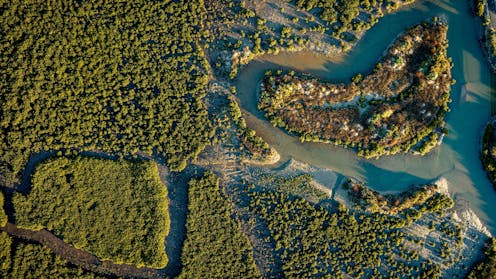
As extreme weather intensifies globally, governments are seeking nature-based solutions that deliver both climate and economic benefits.
The restoration of wetlands is an often overlooked opportunity. As our recent study shows, wetlands have long been treated as environmental “add-ons” but are in fact rising economic assets, delivering more value as they mature.
Restored coastal wetlands, particularly mangroves and saltmarshes, offer growing returns in the form of carbon sequestration, biodiversity protection and storm buffering. These benefits build up gradually, sometimes exponentially, over time.
But planning frameworks treat restorations as static costs, rather than compounding investments.
Using international data and economic modelling, we developed a framework to capture how wetland benefits evolve over decades. While we draw on global datasets, this approach can be applied in New Zealand to understand the value of local restoration projects.
Timing matters for wetland investment
Traditional cost-benefit analyses treat wetland restoration as a one-off expense with fixed returns. Our research shows this misses the bigger, long-term picture.
For example, coastal mangroves initially store a modest amount of carbon while seedlings develop. But as root systems establish and capture sediment, there is a critical threshold when carbon sequestration accelerates dramatically. Mature restored mangroves can store three times more carbon annually than during early years.
Saltmarshes follow a similar pattern. They develop from basic habitat into complex networks that buffer storm surges, filter nutrients and support productive fisheries.
For New Zealand, where many wetlands were historically drained or degraded, the implication is clear. Early investment in restoration is critical and will deliver increasing returns over time.
Our study highlights mangroves and saltmarshes as priority systems, but also points to peatlands and freshwater marshes as promising candidates.
Risk from resource management reform
As part of a major reform of the Resource Management Act, the government is reviewing the environmental rules governing the work of local and regional councils, including policies on freshwater.
The law review and freshwater policy consultations present both opportunities and challenges for wetland valuation.
The amendment to the Resource Management Act regarding freshwater proposes:
quick, targeted changes which will reduce the regulatory burden on key sectors, including farming, mining and other primary industries.
While this may reduce the regulatory burden, it highlight the need for robust valuation tools that can weigh long-term benefits against immediate development returns.
The current consultation outlines specific changes, including clarifying the definition of a wetland. The amended definition would exclude wetlands “unintentionally created” through activities such as irrigation, while constructed wetlands would have a new set of objectives and consent pathways.
Councils would also no longer need to map wetlands by 2030, while restrictions on non-intensive grazing of beef cattle and deer in wetlands would be removed.
These definition changes could exclude wetlands that accumulate significant climate and biodiversity benefits over time, regardless of their origin. As our research suggests, the ecological and economic value of wetlands often increases substantially as systems mature.
The valuation gap
Despite growing international recognition of “blue carbon” initiatives (which store carbon in coastal and marine ecosystems), New Zealand lacks frameworks to capture the dynamic value of wetlands.
Earlier research shows coastal ecosystems contribute about US$190 billion annually to global blue carbon wealth, with wetlands storing about half of all carbon buried in ocean sediments despite occupying less than 2% of the ocean.
New Zealand has no wetland-specific financial instruments to attract private investment and wetlands are not integrated into the Emissions Trading Scheme, the government’s main tool for reducing greenhouse gas emissions.
This creates a fundamental mismatch. Policy frameworks treat restoration as static costs while science reveals appreciating assets.
Our modelling framework offers a pathway to bridge this gap. By tracking how different wetland types accumulate benefits over time, decision makers can better understand long-term returns on restoration investment.
Australia is already developing wetland carbon markets. International blue carbon financial initiatives are emerging and recognising that today’s restoration investment delivers tomorrow’s climate benefits.
For New Zealand, this could mean:
integrating wetland valuation into environmental assessments, moving beyond upfront costs to consider decades of accumulating benefits across different wetland types
aligning finance with restoration timelines and developing funding mechanisms that capture growing value rather than treating restoration as sunk costs
building regional datasets and generating location-specific data on how New Zealand’s diverse wetlands develop benefits over time, reducing investment uncertainty.
With sea-level rise accelerating and extreme weather becoming more frequent, wetlands represent critical infrastructure for climate adaptation. Unlike built infrastructure (stop banks, for example) that depreciates, wetlands appreciate, becoming more valuable as they mature.
The current policy consultation period offers an opportunity to embed this thinking into New Zealand’s environmental frameworks. Rather than viewing wetlands as regulatory constraints, dynamic valuation could reveal them as appreciating assets that increase resilience for coastal communities.
Restoring coastal wetlands is not just about repairing nature. It’s about investing in a living, compounding asset that ameliorates climate impacts and protects our coasts and communities.
Authors: Wei Yang, Senior Scientist in Environmental Economics, Te Kunenga ki Pūrehuroa – Massey University


 Daily Bulletin


