

Read The Times Australia

Daily Bulletin

A reversal in US climate policy will send renewables investors packing – and Australia can reap the benefits

  • Written by: Christian Downie, Professor, Australian National University
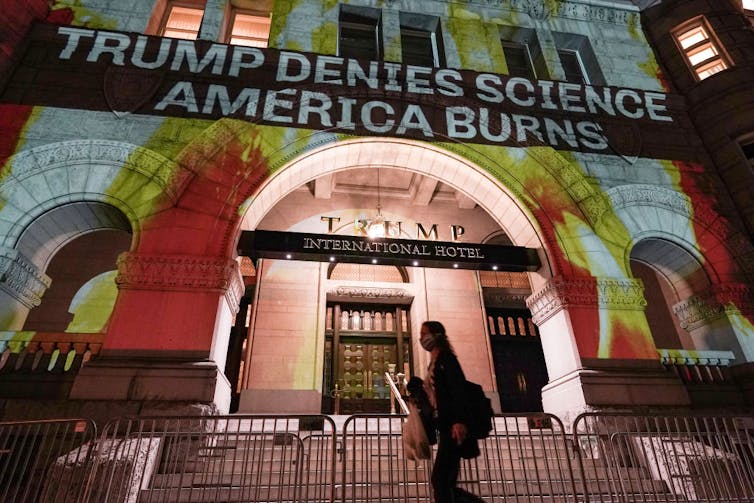
People walk by a projection of flames and commentary on the side of the Trump International Hotel

President Donald Trump is trying to unravel the signature climate policy of his predecessor Joe Biden, the Inflation Reduction Act, as part of a sweeping bid to dismantle the United States’ climate ambition.

The Inflation Reduction Act, or IRA, is a A$530 billion suite of measures that aims to turbocharge clean energy investment and slash emissions in the US. Once hailed as a game-changer for the global clean energy transition, it set in train a fierce international competition for renewable energy investment.

But the policy is now hanging by a thread, after the US House of Representatives last month narrowly passed a bill to repeal many of its clean energy measures.

Should the bill pass the Senate, billions of dollars in renewables investment once destined for the US could be looking for a new home. Now is the time for the Albanese government to woo investors with a bolder program of climate action in Australia.

People walk by a projection of flames and commentary on the side of the Trump International Hotel
The Trump administration is seeking to wind back Biden’s signature climate policy. Jemal Countess/Getty Images for Climate Power 2020

What is the Inflation Reduction Act?

The Inflation Reduction Act passed US Congress in 2022. It legislated billions of dollars in tax credits for solar panels, wind turbines, batteries and geothermal plants, among other technologies.

It included around A$13 billion in rebates for Americans to electrify their homes, tax credits of almost A$11,000 to electrify their cars, and billions more to establish a “green bank” and target agricultural emissions.

The money flowed. Last year, almost A$420 billion was invested in the manufacture and deployment of clean energy – double that in 2021, the year before the legislation passed.

Even in the first quarter of this year, under a Trump presidency, A$103 billion was invested in clean energy tech – an increase on the first quarter results of 2024. Electric vehicle manufacturing projects, especially batteries, were standout performers.

a man wearing a suit smiles in front of small crowd
Then US president Joe Biden in August 2023, celebrating the first anniversary of the Inflation Reduction Act. The policy aimed to turbocharge the clean energy transition. Win McNamee/Getty Images

But then came the proposed repeal. The Trump administration wants to gut tax credits for clean energy technologies. The measures passed the House of Representatives and must now clear the US Senate, where the Republicans have a margin of three votes.

Initial modelling suggests the bill, if passed, could derail clean energy manufacturing in the US – including in Republican states where new projects were planned.

The potential economic damage has sparked concern even among Trump’s own troops. Some Republicans last week reportedly urged the scaling back of the cuts, despite voting for the bill in the House.

Opportunities for Australia

After the IRA was enacted, many countries followed the US’ lead – including Australia’s Albanese government, which legislated the A$22.7 billion Future Made in Australia package.

So how will Trump’s unravelling of the policy affect the rest of the world?

The economic impacts are still being modelled. Some studies suggest the US could cede A$123 billion in investment to other countries.

The US axing of tax credits for battery and solar technology paves the way for nations such as China and South Korea to capitalise – given, for example, they already dominate battery manufacturing.

Two workers wearing white clothes working on a solar panel.
China is well-placed to capitalise on US moves to axe tax credits for solar and battery technologies. CHINATOPIX

Australia should be doing its utmost to attract investors that no longer see the US as an option. Our existing policies are a start, but they are not sufficient.

In February this year, Labor increased the investment capacity of the Clean Energy Finance Corporation – Australia’s “green bank” – by A$2 billion. But more will be needed if the government is serious about crowding-in private investment in low-emission technologies exiting the US.

The government would also be wise to remove incentives that increase fossil fuel use. This includes the diesel fuel rebate, which encourages the use of diesel-powered trucks on mine sites. Fortescue Metals this week announced a push for the subsidy to be wound back – potentially providing the political opening Labor needs.

A worker stands in front of a steel furnace.
Australia needs to double down on its clean energy policies to attract investment once destined for the US. Dean Lewins/AAP

What about nuclear?

Trump has also promised a “nuclear renaissance”, signing four executive orders designed to reinvigorate the US nuclear energy industry.

But those measures are likely to fail, just as Trump’s 2016 promise to revive the coal industry never eventuated.

In fact, his cuts to the Loan Programs Office – which helps finance new energy projects including nuclear – threaten to undermine the viability of new nuclear plants. The office has been the guarantor for every new US nuclear plant this century, bar one.

If the US is struggling to scale up its existing nuclear industry, this does not bode well for the technology’s hopes in Australia. Here, the prospect of a nuclear energy policy still appears alive in the Coalition party room, even though the technology remains politically unpopular, and the economics don’t stack up.

What’s next?

Predicting US climate and energy policy is a fool’s errand, given the potential IRA repeal, flip-flopping tariff announcements and daily social media tirades from Trump, including a social media bust-up with former ally Elon Musk over the merits of the repeal itself.

Stepping back from the politics, we cannot ignore the climate harms flowing from a walk-back on US climate action.

The US is the world’s second-largest emitter of greenhouse gases. As climate change reaches new extremes, the policy vacuum created by Donald Trump must urgently be filled by the rest of the world.

Authors: Christian Downie, Professor, Australian National University

Read more https://theconversation.com/a-reversal-in-us-climate-policy-will-send-renewables-investors-packing-and-australia-can-reap-the-benefits-258388

Business News

Australian organisations are relying on business continuity plans built for a far more predictable world

Tariff escalations, supply chain fragility, geopolitical events, and the ongoing threat of cyber disruption have reshaped the risk environment facing Australian organisations. The problem is that ma...

Daily Bulletin - avatar Daily Bulletin

How to Rent a Car for Uber in Melbourne: What Every New Driver Needs to Know

Starting out as an Uber driver in Melbourne is not as complicated as it sounds but getting the vehicle right is where most new drivers get stuck. Uber has strict requirements around vehicle age, condi...

Daily Bulletin - avatar Daily Bulletin

When Should You Speak to a Lawyer About a Legal Issue?

Legal issues can begin with a simple question, then become harder to manage once formal steps are involved. Many people wait until a matter feels urgent before seeking guidance, even though earlier ...

Daily Bulletin - avatar Daily Bulletin

The strategic rise of Bali as Australia’s next essential healthcare support hub

As Australian healthcare providers grapple with unprecedented operational bottlenecks, a new nearshore model is quietly transforming patient care delivery. Forward-thinking organisations,  including...

Daily Bulletin - avatar Daily Bulletin

Cost Savings and Benefits of Using Used Pallets in Logistics

In today’s competitive logistics and supply chain industry, businesses are constantly looking for ways to reduce operational costs without compromising efficiency and reliability. One of the most prac...

Daily Bulletin - avatar Daily Bulletin

How Fulfilment Services in Australia Help Businesses Scale Efficiently

The growth of e-commerce and modern retail has transformed customer expectations. Consumers now expect fast shipping, accurate order processing, and seamless delivery experiences regardless of where...

Daily Bulletin - avatar Daily Bulletin

Practical Ways Australian Workplaces Can Reduce Operating Costs

Reducing business costs doesn’t always mean cutting staff, shrinking services or making the workplace feel bare-bones. In many cases, the smarter savings are hiding in everyday operations: the light...

Daily Bulletin - avatar Daily Bulletin

Executive Recruitment Solutions That Help Organisations Secure Exceptional Leaders

Leadership has a direct impact on organisational performance, employee engagement, strategic growth, and long-term success. Businesses operating in increasingly competitive environments require experi...

Daily Bulletin - avatar Daily Bulletin

Why A WooCommerce Website Designer Matters For Online Growth

Running an online store today requires more than simply listing products and waiting for customers to arrive. Businesses need a website that is fast, reliable, easy to navigate, and designed to suppor...

Daily Bulletin - avatar Daily Bulletin

The Daily Magazine

DIY Rodent Control Vs Professional Help: When Is It Time To Call The Experts?

Rodents are one of the most frustrating pest problems for Australian property owners. Rats and mic...

Lighting Shop in Perth: How The Right Lighting Can Transform Your Home And Business

The right lighting can completely change the look, feel, and functionality of any space. Whether it ...

Traffic Light System Solutions For Safer And More Efficient Traffic Management

Modern cities and growing communities rely heavily on effective traffic management to ensure safety...

Gold Migration Lawyers in Liquidation: How the Closure Affects Your ART Appeal

If your appeal was with Gold Migration Lawyers, a recent change to how the Tribunal decides cases ...

The pressure cooker: life in urban Australia in 2026

Australian cities have always been demanding. Long commutes, rising housing costs, busy schedules a...

What Actually Makes a Good Criminal Lawyer in Melbourne

Most people only think about this question once. That is usually too late. Most people charged wi...

Why Working With A Chatswood Tutor Can Improve Academic Performance

Academic expectations continue increasing for students across primary school, high school, and senio...

Is It Worth Getting Solar Panels in Melbourne?

The real question is not whether solar works in Melbourne. It works. The question is what it is co...

How A Diploma Of Project Management Builds Practical Skills For Modern Work Environments

Developing the ability to plan, execute, and deliver outcomes efficiently is a key requirement in to...