

Is regulation really to blame for the housing affordability crisis?
- Written by: Nicole Gurran, Professor of Urban and Regional Planning, University of Sydney
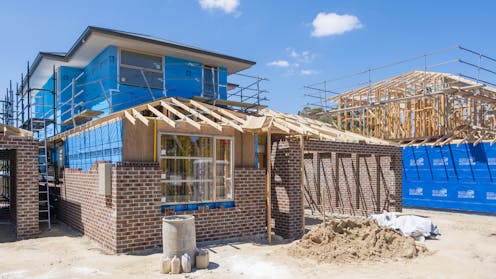
The Albanese government has a new mantra to describe the housing crisis, which is showing no signs of abating: homes have simply become “too hard to build” in Australia.
The prime minister and senior ministers are taking aim at what they are calling a “thicket” of red tape and regulation, which is making it “uneconomic” to build affordable housing.
Undoubtedly, the great Australian dream is further out of reach, with average house prices now above A$1 million for the first time.
But will a war on excessive regulation be enough to address the affordability barriers keeping many people out of the market? Or does the answer lie in systemic change, including tax reform?
Abundant housing agenda
Assistant Minister for Productivity Andrew Leigh kick-started the assault on regulation when he recently took aim at local councils for holding back new housing developments:
Approvals drag on. Rules multiply. Outcomes are inconsistent. They don’t say ‘no’ outright. They just make ‘yes’ harder than it needs to be.
By lamenting rigid planning processes, Leigh was channelling the zeitgeist. The minister was drawing on the book Abundance by Ezra Klein and Derek Thompson. The book – a smash hit in political circles – calls on progressives to adopt “YIMBY” policies (Yes In My Backyard) and remove the barriers that slow project delivery.

Leigh was duly applauded by the housing industry, which promotes its own version of abundance as an “unabashed focus on supply-side housing policy mechanisms”.
More than supply
New housing construction is certainly critical, as reflected in the government promise to build 1.2 million homes over five years.
The target is already out of reach, with the regulatory burden being blamed for a forecast shortfall of 262,000 homes by mid 2029.
But by focusing on planning laws as the main barrier to new supply, Leigh risks diverting attention from the overarching systemic changes needed to improve access to affordable housing.
While an overhaul of red tape is important, it won’t be enough to address current supply barriers, including market conditions and industry constraints. Nor will unleashing construction be sufficient to make housing affordable for first home buyers or low income renters.
According to the National Housing Supply and Affordability Council, other priority areas for the government should include social housing, protection for renters and tax reform.
Winding back tax breaks such as negative gearing and the capital gains tax discount, would free up resources for public investment in social housing. Targeting financial incentives to new, and preferably affordable homes, would also boost supply.
Perhaps the size of Labor’s election victory and the calls for reform by a chorus of experts may convince the government to reconsider its refusal to curb these tax breaks.
Blaming local councils
Within a system-wide reform agenda, regulatory roadblocks to new land and housing supply should be assessed. But in doing so, accurate data and analysis is critical.

Leigh singles out North Sydney Council to illustrate his argument that over-regulation is holding back housing starts. He claims just 44 dwelling were approved between July 2024 and February 2025, well short of its state-imposed target of 787 homes:
This is not a small gap. It is structural failure, Even where planning targets exist, the systems to meet them often don’t.
But the figures Leigh cites isn’t for development approvals. Instead, they refer to construction certificates issued when a development is ready to commence. According to the NSW Planning Portal, the actual number of new dwellings approved in North Sydney was 446, which was particularly notable given the economic conditions.
Unfortunately, Leigh’s attack on local councils perpetuates many common misunderstandings about how planning systems operate in Australia. He seems to point the finger at local councils, when land use plans – zoning, height and density controls – are signed off by the states.
Leigh also recalls a time when housing completions were flowing much more freely in his home town of Canberra, implying the key difference is one of over regulation and not underlying economic circumstances.
The ACT is particularly prone to a slowdown in building approvals because of the shift from detached homes on greenfield sites towards medium density apartments. And there has been a near total retreat from public sector investment in new supply. For instance, in 1969-70, nearly a third of new homes in Canberra were delivered by the government. These days it’s just 5%.
Political will
The tired cliches about housing and zoning continue to circulate.
The need to relax zoning restrictions to ease house prices was the media’s main takeaway from the OECD’s latest Economic Outlook Report.
The 280-page document does mention “zoning” in the list of regulatory reforms Australian governments could undertake. But the OECD says the emphasis should be on public investment “to address the housing affordability crisis by boosting supply” especially in social housing.
As our research has previously demonstrated, calling for zoning and planning reform is a popular technique for seeming concerned about housing while avoiding the systemic change that would deliver additional supply.
Has housing really become too hard to build?
Or does the difficultly lie in finding the political will to take the real steps needed to make housing more accessible to generations of Australians who risk missing out?
Authors: Nicole Gurran, Professor of Urban and Regional Planning, University of Sydney


 Daily Bulletin


