

Sudden arrivals: NZ ambulance crews describe what it’s like when babies are born out of the blue
- Written by: Vinuli Withanarachchie, PhD candidate, College of Health, Te Kunenga ki Pūrehuroa – Massey University
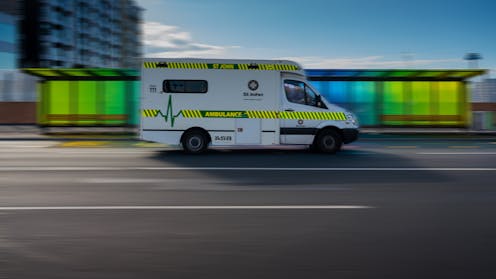
It doesn’t happen very often, but every now and then expectant mothers don’t quite make it to the delivery suite on time – requiring specialised care from emergency medical services (EMS).
This can happen when babies come early, when the mother-to-be is in denial, or when they simply don’t know they are pregnant. These out-of-hospital births can increase the risks for both mother and child.
While there haven’t been any New Zealand-specific studies, data from Norway and Ireland show infant mortality rates are two to three times higher for unplanned out-of-hospital births compared to those in medical facilities.
In 2024, Hato Hone St John, Aotearoa New Zealand’s largest ambulance service, responded to 2,745 obstetric emergencies. This accounted for 0.9% of all ambulance patients – similar to comparable countries such as Australia and the United States.
In our new research, we surveyed Hato Hone St John ambulance personnel to better understand their experiences attending unplanned out-of-hospital births. Although such events are rare, personnel must be prepared to provide care for mothers and newborns during any clinical shift.
The 147 responses we received highlighted the need for ongoing and targeted training for staff as they balance supporting the safe arrival of a newborn with patient and whānau-centered care.
Navigating the unknown
EMS personnel reported being dispatched for reports of abdominal or back pain in female patients, only to encounter an unanticipated imminent birth upon arrival.
In many of these cases, patients were unaware of their pregnancies and had received no prior antenatal care. This left EMS personnel to lead labour and birth care without crucial information about gestational age or potential complications. As one paramedic explained:
The call was for non-traumatic back pain. The patient had a cryptic pregnancy and was not aware she was pregnant until I informed her that she was in labour. I was the senior clinician in attendance, we were 25 minutes to a maternity unit that didn’t have surgical facilities and a [neonatal unit].
In some situations, EMS personnel attended teenage patients who were in denial of their pregnancies or fearful it would be discovered by their families.
Attending to the mother’s emotional needs, respecting her dignity and navigating family dynamics compounded existing challenges to providing care. Another paramedic explained:
Attended an 18-year-old that did not know or was in denial that she was pregnant. She had the baby on her own in the bathroom. The parents came home during the birth, and she was too scared to tell them and kept the baby quiet by nursing her. She called an ambulance from the bathroom and told them she didn’t want the parents to know.
Practical challenges
Complex births, medical emergencies and limited specialised neonatal equipment required EMS to improvise in such cases. While some focused on skin-to-skin contact between mother and baby, others prepared makeshift blankets using things such as plastic clingfilm to keep their newborn patients warm. An intensive care paramedic said:
I needed to “chew” through the cord with the scissors provided, which was frustrating given the patient was under CPR. Also, I wanted to keep the patient warm as the house was cold and it was winter, so I used the Gladwrap in the ambulance. The roll I had was a new one and very difficult to start up as it shredded. I ended up using the patient’s industrial size wrap with a plastic blade attached.
The distance to a specialised newborn care facility, as well as rules around who could be transported and when, meant mothers and babies sometimes needed separate transport. This distressed mothers and added pressure to already stressful situations. One North Island-based paramedic explained:
The baby was flown to [a tertiary hospital] – great for the baby but very distressing for mum as she had to be transported by road.
Detailed accounts emerged of EMS providing labour and birth care in remote and poorer areas, such as homes with no electricity or heating, far away from hospital facilities and with no back up readily available. Another South Island-based paramedic said:
It was 2 degrees outside and the front door was open. The house was cold, and the mother was standing in the bathroom with the [newborn] lying on the cold floor. I called for backup as the mother had a severe postpartum haemorrhage, and the [newborn] required resuscitation. I was not sent assistance and had to manage the mother and [newborn] by myself during a 15-minute drive to the birth suite at hospital.
The stories shared by New Zealand ambulance personnel not only described their critical role in providing care during labour and birth, but also highlighted a gap in care for women not accessing routine antenatal and birth services.
Training and support needed
Studies from Norway, Australia, the US and the United Kingdom have previously highlighted the need for dedicated EMS training and equipment to support out-of-hospital births.
Change is happening in New Zealand. Recent updates to Hato Hone St John guidelines, resources and training, including education on cultural considerations related to birth, aim to prepare EMS personnel for these unpredictable and high-risk scenarios.
Ongoing training and education will be critical to support clinicians to confidently address birth emergencies while continuing to deliver patient and whānau-centered care.
Authors: Vinuli Withanarachchie, PhD candidate, College of Health, Te Kunenga ki Pūrehuroa – Massey University


 Daily Bulletin


