

Too many people with back pain call ambulances or visit the ED. Here’s why that’s a problem
- Written by: Simon Vella, Postdoctoral Research Fellow, Institute for Musculoskeletal Health, University of Sydney
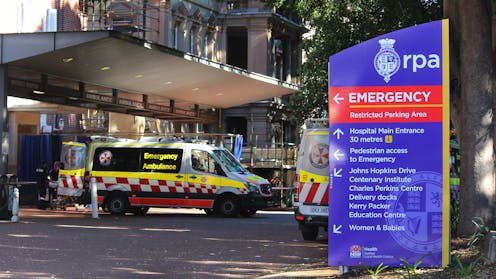
Around 4 million Australians experience back problems and people are increasingly calling ambulances and presenting to emergency departments to manage back pain.
Yet most of these cases of back pain don’t require emergency care. Back pain is a symptom rather than a disease. When symptoms last more than 12 weeks it is referred to as chronic back pain. The most common form of back pain is non-specific back pain – this term is given when no tissue or structure can be identified as the cause.
Non-specific back pain usually best managed in primary care, by GPs and allied health professionals.
Once people with non-serious back pain contact emergency health services, they are more likely to receive care that isn’t recommended and is considered low-value and, sometimes, harmful.
This may include unnecessary laboratory investigations, such as blood tests, and imaging, such as x-rays, CT scans or MRIs. One-third of imaging requests for back pain in emergency departments aren’t clinically warranted and are judged as inappropriate.
However, in some instances it is recommended that people with back pain contact an ambulance or present to the emergency department. This includes when back pain is a result of trauma, when people live alone without access to carers, when people have other complex presentations, and when people show signs of potentially serious conditions.
Unnecessary hospital admissions are costly to the health system and can cause patients harm. Almost one in four (24%) of those admitted to hospital for back pain acquire infections or experience falls.
Medications prescribed in hospital can also have negative consequences for the patient. Nearly one in ten patients with back pain are still taking opioids after discharge, with risk of dependency and overdose. One in three patients continue to use opioids one month after their emergency department visit.
Read more: Opioids don't relieve acute low back or neck pain – and can result in worse pain, new study finds
The influx of back pain presentations to emergency health services also has ramifications for emergency department overcrowding and ambulance ramping. This means other ambulance patients cannot enter the emergency department and results in longer waiting times.
Why is this happening?
In primary health care, the management of back pain is well established in clinical practice guidelines. But emergency health services don’t have guidelines specific to low back pain. This is likely due to the lack of evidence from these settings (though the evidence-base has increased over the past five years).
The lack of specific guidance means there is a high likelihood of people both missing out on the right care and receiving the wrong care.
A key challenge for emergency clinicians is discriminating between patients with back pain that require emergency care from those who do not.
One Australian study found 38% of patients in the emergency department who were initially diagnosed with non-serious back pain were later found to have a specific pathology, such as an infection, during hospital admission. In cases such as these, further diagnostic investigation and emergency care is necessary.
But nearly half of ambulance and emergency department patients without serious pathology receive unnecessary care. Our recent study found 81% of people who presented to ambulance service with non-traumatic back pain were transferred to the emergency department.
Once in the emergency department, 46% of ambulance patients received opioids, 59% received imaging and 50% were admitted. However, it’s unclear what proportion actually required emergency department care.
Clinicians are required to make quick decisions about patient care. For paramedics, limited scope of medications and access to community health services, particularly outside of business hours, ultimately leaves them with no other option but to transport the patient to hospital.
Emergency department clinicians have to manage people with complex presentations and multiple conditions and address patient expectations about opioids and imaging. This can influence their decisions about care.
How can emergency back pain care be improved?
A key area for improvement is reducing the use of opioids. An New South Wales trial reduced opioid use for back pain in emergency departments by 43% by introducing a new model of care. The model involved clinician education, implementation of non-opioid provisions such as heat packs, and timely referrals to outpatient services such as specialist back clinics.
This approach will now be scaled up to include 44 emergency departments across NSW. If successful, it could be rolled out across the country.
Virtual hospitals have also been implemented to reduce in-person presentations to emergency departments for back pain, which often means people with back pain can receive care while remaining in their home. However, the effectiveness and safety of this new service has not yet been established, though research is underway.
The Australian government has promised to open more Urgent Care Clinics, where people with urgent but not life-threatening complaints can be managed by a doctor, nurse, or in some cases, a physiotherapist. The service allows people with back pain to still receive in-person care while diverting them away from the emergency department. But while they seem like a good idea, we have little or no evidence on their value.
To reduce the burden that back pain places on emergency health services, changes need to be made across all health system-levels. But these changes must be backed by reliable research evidence.
Better information for patients and clinicians
The general public needs to be aware when and where to seek appropriate care for back pain. This can be achieved through successful health promotion initiatives.
For clinicians, specific guidelines for back pain need to be developed and implemented into ambulance and hospital emergency departments to improve decision-making and reduce unnecessary care escalation. Policymakers, health service managers and stakeholders need to revise current policy to align with the most recent evidence.
Additionally, easy-to-access referral pathways need to be developed between emergency health and community health services to keep people with non-serious back pain out of hospital, to reduce their risk of receiving unnecessary and costly care.
Authors: Simon Vella, Postdoctoral Research Fellow, Institute for Musculoskeletal Health, University of Sydney


 Daily Bulletin


