

Read The Times Australia

Daily Bulletin

Cardio and strength training boost health as you age. But don’t forget balance exercises to reduce your chance of falls

  • Written by: Anne Tiedemann, Professor of Physical Activity and Health, University of Sydney
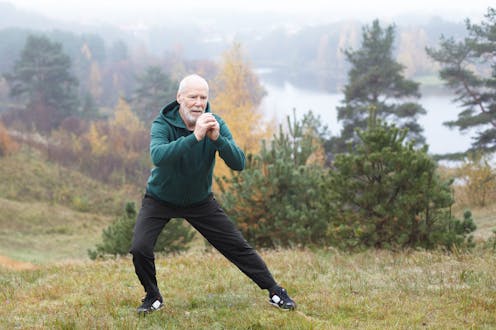
Cardio and strength training boost health as you age. But don’t forget balance exercises to reduce your chance of falls

We all recognise the benefits of regular aerobic or cardiovascular exercise to support our heart and lung health. Being active is also good for our social and mental health. And strength training promotes strong bones and muscles.

But as we age, we also need to train our balance to avoid falls.

Around one in three people aged 65 and over have a fall each year.

Falls are a common cause of disability and loss of independence in older age and can lead to an older person moving from living independently into living in a residential aged care facility. More than 6,000 older Australians die each year from falls.

But many falls are preventable. So exercise that targets balance and strength is crucial.

How much do we need to do?

International guidelines recommend all older people exercise to prevent falls, even if they’ve never fallen. Prevention is far better than cure.

Other guidelines recommend people aged 65 and over do “functional balance and strength training” on three or more days a week, to improve their ability to do day-to-day activities, stay independent, and prevent falls.

Since balance starts to decline at around age 50, it’s even better to start training balance before the age of 65.

In order to increase our muscle strength, we need to progressively lift heavier weights. Similarly, to boost our balance, we need to practise activities that progressively challenge it. This improves our ability to stay steady in difficult situations and avoid falling.

Functional training means doing a physical activity that imitates everyday activities, such as standing up out of a chair, or stepping onto a step.

When you practise the everyday activities necessary for living independently, you improve your ability to perform them. This reduces the likelihood of falling when doing those activities, and therefore helps you maintain your independence for longer.

What exercises can you do?

The best exercises to challenge our balance system and reduce the risk of falling are performed while standing, rather than seated.

For example, you can stand with your feet close together or on one leg (if it’s safe to do so) while also performing controlled upper-body movements, such as leaning and reaching. This is a functional balance exercise and it can be made progressively more challenging as your balance improves.

Here are some exercises you can practise at home:

Sit to stand

Practise standing up from a seated position ten times every hour or so. See if you can do it without using your arms for support. To increase the balance challenge, place a cushion under the feet.

Heel-raises

Rise up onto your toes and hold the position for a few seconds. Hold on to a bench or wall for support if you need to but gradually remove the support as your balance improves. To increase the balance challenge, try doing this with your eyes closed.

Person does heel-raises on spiky balls
You can make heel-raises progressively harder. Mary Rice/Shutterstock

Heel-toe walking

Practise walking along an imaginary line, with one foot placed in front of the other. Hold on to a bench or wall for support if you need to but gradually remove the support as your balance improves.

Stepping in different directions

Practise quickly stepping forwards, sideways and backwards. Being able to move our feet quickly can help avoid a fall if you trip on something. If you are able, more challenging activities include stepping up or jumping onto a box.

Squats and lunges

Squats and lunges improve balance and leg strength. Add some hand weights to increase the challenge.

Older exercisers squat
Squats improve balance and leg strength. LightField Studios/Shutterstock

These examples and others can be found on the Safe Exercise at Home website.

Make it regular – and tailor it to your needs

It’s important that balance challenging exercises are performed regularly, at least three times per week. The benefits of exercise are lost if you stop doing them, so ongoing practice is important.

People of all abilities can safely undertake balance training exercise, however extra guidance and support is recommended for people who have physical limitations, are frail, or who are at a higher risk of falls.

For younger or fitter people, agility activities such as rapid stepping, dancing and running are likely to improve co-ordination and balance too.

So next time you are carrying out your exercise routine, ask yourself: what am I doing to improve my balance? Investing in balance training now can help you avoid falls, and lead to greater independence in older age.

Authors: Anne Tiedemann, Professor of Physical Activity and Health, University of Sydney

Read more https://theconversation.com/cardio-and-strength-training-boost-health-as-you-age-but-dont-forget-balance-exercises-to-reduce-your-chance-of-falls-249375

Business News

Designing Eco-Friendly Custom Water Bottles for Your Next Event

The Evolution of Sustainable Event Merchandise Event planning has undergone a massive transformation over the last decade. Gone are the days when organizers could hand out cheap, single use plastic...

Daily Bulletin - avatar Daily Bulletin

Why Choosing a Professional Florist Melbourne Makes Flower Delivery Impactful

Flowers have a great power to speak when humans cannot express their feelings with right words. Flowers are the best gifts when you are celebrating a birthday or welcoming a newborn child into your fa...

Daily Bulletin - avatar Daily Bulletin

The Business Case for Choosing Australian Fabricators Over Imported Alternatives

For a long time, you might have defaulted to overseas suppliers when sourcing fabricated metal components for a project. The unit price was lower on paper, and the maths seemed straightforward. That...

Daily Bulletin - avatar Daily Bulletin

Australian organisations are relying on business continuity plans built for a far more predictable world

Tariff escalations, supply chain fragility, geopolitical events, and the ongoing threat of cyber disruption have reshaped the risk environment facing Australian organisations. The problem is that ma...

Daily Bulletin - avatar Daily Bulletin

How to Rent a Car for Uber in Melbourne: What Every New Driver Needs to Know

Starting out as an Uber driver in Melbourne is not as complicated as it sounds but getting the vehicle right is where most new drivers get stuck. Uber has strict requirements around vehicle age, condi...

Daily Bulletin - avatar Daily Bulletin

When Should You Speak to a Lawyer About a Legal Issue?

Legal issues can begin with a simple question, then become harder to manage once formal steps are involved. Many people wait until a matter feels urgent before seeking guidance, even though earlier ...

Daily Bulletin - avatar Daily Bulletin

The strategic rise of Bali as Australia’s next essential healthcare support hub

As Australian healthcare providers grapple with unprecedented operational bottlenecks, a new nearshore model is quietly transforming patient care delivery. Forward-thinking organisations,  including...

Daily Bulletin - avatar Daily Bulletin

Cost Savings and Benefits of Using Used Pallets in Logistics

In today’s competitive logistics and supply chain industry, businesses are constantly looking for ways to reduce operational costs without compromising efficiency and reliability. One of the most prac...

Daily Bulletin - avatar Daily Bulletin

How Fulfilment Services in Australia Help Businesses Scale Efficiently

The growth of e-commerce and modern retail has transformed customer expectations. Consumers now expect fast shipping, accurate order processing, and seamless delivery experiences regardless of where...

Daily Bulletin - avatar Daily Bulletin

The Daily Magazine

Why CCTV Alone Is Not Enough for Modern Business Security

Cameras are usually the initial step that companies take to strengthen their physical security. If...

Why Every Workplace Should Take Emergency Preparedness Seriously

Emergency planning is one of those things many workplaces know they should think about, but it oft...

Why Clearer Communication Still Matters in a Digital-First Business

It’s never been easier for businesses to communicate, but that doesn’t mean they’re always communica...

What Happens After You Lodge a BYDA Enquiry? The Step Most Excavation Projects Miss

Every excavation project in Australia — from a backyard deck footing to a multi-storey commercial bu...

How to Choose the Right Dentist on the Gold Coast

Finding a dentist you trust is one of those decisions that quietly affects your health for years, ye...

The Hidden Engineering Problem Inside Australia's Older Housing Stock

A significant share of Australian homes were built for a way of living that no longer exists. Houses...

DIY Rodent Control Vs Professional Help: When Is It Time To Call The Experts?

Rodents are one of the most frustrating pest problems for Australian property owners. Rats and mic...

Lighting Shop in Perth: How The Right Lighting Can Transform Your Home And Business

The right lighting can completely change the look, feel, and functionality of any space. Whether it ...

Traffic Light System Solutions For Safer And More Efficient Traffic Management

Modern cities and growing communities rely heavily on effective traffic management to ensure safety...