

A late start, then a big boom: why it took until 1975 for Australians to finally watch TV in colour
- Written by: Stephen Gaunson, Associate Professor in Cinema Studies, RMIT University
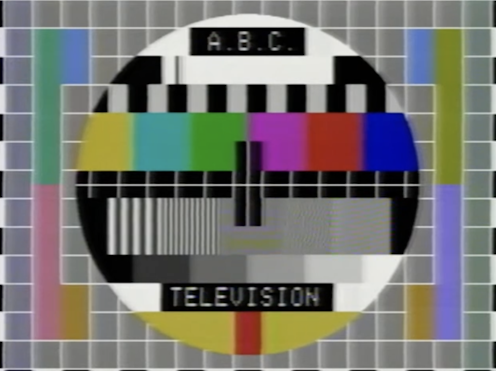
Some 50 years ago, on March 1 1975, Australian television stations officially moved to colour.
Networks celebrated the day, known as “C-Day”, with unique slogans such as “come to colour” (ABC TV), “Seven colours your world” (Seven Network), “living colour” (Nine Network) and “first in colour” (0-10 Network, which later became Network Ten). The ABC, Seven and Nine networks also updated their logos to incorporate colour.
For most viewers, however, nothing looked much different. The majority owned a black and white TV, while a coloured broadcast required a colour TV set.
Advertisers were initially reluctant to accept the change, which required them to re-shoot black and white commercials with colour stock at a significantly higher cost.
Many reasoned viewers were still watching the ads in black and white. And initially this assumption was correct. But by nine months later, 17% of Australian homes had a colour receiver. This rose to 31% by July 1976.
By 1978, 64% of Melbourne and 70% of Sydney households owned colour TV sets, making Australia one of the world’s fastest adopters of colour TV.
According to the Federation of Australian Commercial Television Stations (FACTS) annual report for 1975–76, colour TV increased overall viewership by 5%, with people watching for longer periods.
The 1976 Montreal Olympics also led to an increase in TV sales, with the colour broadcast shared between the ABC, Seven and Nine.
Highlights from the Montreal 1976 Olympic Games marathon event.A late start
With the United States introducing colour TV from 1954, it’s peculiar that Australia took so long to make the transition – especially since conversations about this had been underway since the 1960s.
In 1965, a report outlining the process and economic considerations of transitioning to colour was tabled in parliament.
Feedback from the US highlighted problems around broader acceptance in the marketplace. Colour TV sets were expensive and most programs were still being shot in black and white, despite the availability of colour.
Networks were the most hesitant (even though they’d go on to become one of the most major benefactors). In 1969, it was estimated transitioning to colour would cost the ABC A$46 million (the equivalent of $265,709,944 today) over six years.
The federal government, led by then prime minister Robert Menzies, decided to take a cautious approach to the transition – allowing manufacturers, broadcasters and the public time to prepare.
The first colour “test” broadcast took place on June 15 1967, with live coverage of a Pakenham country horse racing event in Victoria (although few people would have had coloured TV sets at this point).
Other TV shows also tested broadcasting in colour between 1972 and 1974, with limited colour telecasts aired from mid-1974. It wasn’t until March 1975 that colour TV was being transmitted permanently.
‘Aunty Jack Introduces Colour’ was a one-off television special of The Aunty Jack Show, broadcast on the ABC on February 28 1975.The cinema industry panics
Australia’s involvement in the Vietnam War created further urgency to televise in colour. With the war ending in April 1975, Australians watched the last moments in colour.
Other significant events broadcast in colour that year included the December federal election, in which Malcolm Fraser defeated Gough Whitlam after the latter was dramatically dismissed as prime minister on November 11.
With the public’s growing interest in colour TV, local manufacturers began lobbying for higher tariffs on imports to encourage domestic colour TV production.
In the mid 1970s, a new colour set in Australia cost between $1,000 and $1,300, while the average full-time annual income was around $8,000. Still in the throes of a financial recession, customers began seeking out illegally-imported colour TV sets – which were appearing at car boot markets across the country.
British childrens show The Wombles came to Australian screens shortly after colour TV was introduced.The government also created an advertising campaign warning the public of scammers who would offer to convert black-and-white TVs to colour. These door-to-door “salesmen” claimed to have a special screen which, when placed over a TV, would magically turn it colourful.
By 1972, the estimated cost of upgrading broadcasting technology to colour had reached $116 million. The cinema industry, in a panic, even questioned whether colour TV could damage a viewer’s eyesight.
The industry had previously suffered huge losses in cinema attendance with the introduction of black-and-white TV from 1956. Cinemas had a monopoly on colour and were petrified over what the introduction of colour to television could do to their attendances.
Such fears were founded. In 1974 Australia had 68 million admissions to the cinema. By 1976, there were just 28.9 million admissions. Never again would yearly cinema admissions reach above 40 million.
But despite the complaints – from the cinema industry, advertisers, broadcasters and manufacturers – audiences were ready for colour. And any network that dared to program in black and white would subject itself to a barrage of annoyed viewers.
Colour TV was here to stay.
Authors: Stephen Gaunson, Associate Professor in Cinema Studies, RMIT University


 Daily Bulletin


