

24 years of life lost: people placed in state care have died earlier, more violent deaths – new study
- Written by: Belinda Borell, Kairangahau/Researcher, Te Kunenga ki Pūrehuroa – Massey University
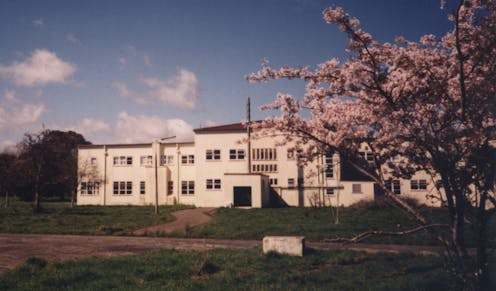
A new study using a large collection of demographic data has revealed the lasting and damaging consequences for children placed in state care between 1950 and 1999 – including huge disparities in life expectancy compared with the general population.
The study utilised the Stats NZ Integrated Data Infrastructure – a large collection of linked data sets about people and households from across many government agencies, Stats NZ surveys, and non-government organisations.
From a substantial sample of approximately 20,000 children placed in care between 1950–1999, the study also found about 11% of this group had subsequently died, on average much younger than the rest of the population.
The causes of death were also generally more violent, though self-harm, motor vehicle accidents and assaults, at rates greater than the general population.
These findings support the conclusions of the Royal Commission of Inquiry into Abuse in State Care, which exposed significant harms experienced by Māori tamariki (children) and whānau (families), revealing systemic failures and breaches of te Tiriti o Waitangi/Treaty of Waitangi.
Inside the demographic data
The Integrated Data Infrastructure (IDI) allows researchers to conduct cross-sector research, to track a broad range of outcomes, compare them with the general population, and potentially explore links across generations.
We examined a range of social and health outcomes for a group of children in state care between 1950–1999. Information about these children was collected from handwritten records of state care institutions.
These lists were matched by officials in the Ministry of Health and the Department of Corrections. All identifiable information (names, birth dates, addresses, etc.) were removed or encrypted and made available to our research team from Stats NZ.
We linked this initial group to the IDI and retrieved records of available socio-demographic, health and life-event data. We were left with a list of just over 20,000 children, a substantial sample of the many hundreds of thousands of children placed in care during this time.
Life expectancy and cause of death
Basic demographic information reflects what is already widely known about children placed in state care: they are overwhelmingly male and Māori.
The birth years of the children are also significant. We see an increase in placement into state care of children who were born between 1960 and 1989. The Royal Commission’s final report records that the disproportional representation of Māori children in state care begins at this point, as shown in the graph below.
The government approach of the times, as espoused in the 1961 Hunn report into the Department of Māori Affairs, was to assimilate Māori into the European way of life. The effects of state action to deal with Māori perceived to have fallen short of these expectations can clearly be seen in these data.
By 2018, the sample group of children in our study were in their late 40s. Using mortality data, we know that approximately 11% of this group have died. Astonishingly, they have an average age at death of 46 years, compared to an average age of 70 for people in the general population born at the same time.
This corresponds to an average 24 years of life lost for those in state care. We can extrapolate this further when we examine the primary causes of death in this group and compare them with the general population.
Cancer, heart disease and strokes are the primary causes in the general population. These causes tend to increase with age; you are more likely to be affected the longer you live. As those in state care are less likely to reach old age, they have lower rates of death from these conditions.
Rather, we see they are subject to much more violent deaths through self-harm, motor vehicle accidents and assaults, at rates many times greater than the population at large.
Historical context and modern policy
As the Royal Commission of Inquiry documented so thoroughly, tamariki Māori were placed in environments where tikanga Māori was disregarded, their whakapapa and whenua were disconnected, and their identity as Māori denied.
Many faced neglect, abuse, and the loss of connection to mātauranga and wairua, leaving trauma that continues to affect whānau today.
The royal commission’s report coincided with the National-led government’s reintroduction of military-style youth training academies for young offenders, colloquially known as “boot camps”.
In mid-2024, Prime Minister Christopher Luxton dismissed concerns from the chief commissioner for children about the policy:
I don’t care what you say about whether it does or doesn’t work. We can have that intellectual conversation all day long, but we are […] going to try something different because we cannot carry on getting the results that we’ve been getting.
Based on our research findings – together with the royal commission’s report and significant international and local evidence about the real risks of such policies – we would argue the current approach in New Zealand needs to be revisited.
More broadly, extensive international scholarship demonstrates Indigenous people are particularly and uniquely affected by longstanding trauma through colonisation. Specific acts of oppression that remain unaddressed often result in the inter-generational transfer of trauma and trauma responses.
In Aotearoa New Zealand, as with many other colonised Indigenous territories, the forced removal of Māori children from their families to be placed in a range of state and church institutions was a key plank of colonial policy and practice.
We must accept that poor outcomes across a range of areas in health, welfare, education and justice exist within a historical and contemporary context. Those impacts are linked across generations and affect whānau to this day.
A paper based on these findings will be submitted for publication shortly. Research is continuing to expand the analyses explored here and to link outcomes across affected generations.
We would like to acknowledge Tui Barrett, Professor Tim McCreanor and Professor Helen Moewaka Barnes for their input and guidance.
If this article has raised issues for you, or if you’re concerned about someone you know, call Lifeline on 0800 543 354 (0800 LIFELINE) or free text 4357 (HELP)
Authors: Belinda Borell, Kairangahau/Researcher, Te Kunenga ki Pūrehuroa – Massey University


 Daily Bulletin


