

Is bioenergy ever truly green? It depends on 5 key questions
- Written by: Jessica Allen, Senior Lecturer in Chemical and Renewable Energy Engineering, University of Newcastle
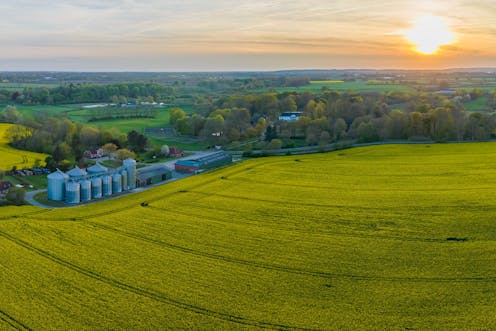
Plans to revive an old coal-fired power station using bioenergy are being considered in the Hunter region of New South Wales. Similar plans for the station have previously not gone ahead. As we grapple with decarbonisation, bioenergy (energy derived from harvested trees and other plants) is often put on the table as an environmentally friendly alternative to fossil fuels.
But is it environmentally sound? The annoying answer is: it depends.
Trees and other plants soak up carbon from the atmosphere and store it as biomass. When they are burnt for electricity production the same carbon is released. This would suggest bioenergy is “carbon-neutral”.
But it’s not that simple. Many things can change the environmental credentials of a bioenergy project. Every project is unique and must be considered independently.
So let’s break down the five key questions we should ask about every bioenergy project.

1. What is the source of the biomass?
The bewildering array of plants on our planet means a huge amount of biomass “feedstock” is available. So what should we use?
First, we do not want to be cutting down native forests. Even using native forestry “residues” (by-products like bark and ends of trees that can’t be directly used) is problematic. The residues are made regardless of the bioenergy project, but tethering a power station to the native forestry industry, and creating a reliance on it continuing, is contentious. Some states have already flagged the end of native logging.
Fast-growing biomass species such as mallee could instead be harvested as purpose-grown energy “crops”. This can seem like an attractive option, but the sheer amount of land needed for energy crops on any reasonable scale can be prohibitive.
Agricultural residues and “waste” biomass, such as organic material sent to landfill (from household bins, for example), are also readily available. The Australian Bioenergy Roadmap shows large amounts of potentially usable waste biomass nationally.
In most cases waste biomass would otherwise go into landfill, be burnt in an open field or be left to decompose without emission controls. The most pressing issues for using waste biomass then come from our next question.
2. How much energy is needed to collect the biomass?
Biomass energy literally grows on trees. But it’s spread out over a large area and requires a central processing facility.
Collecting biomass, processing it and getting it where it needs to go takes energy. At present, that’s mostly fossil-fuelled energy, including diesel trucks and chippers.
The more spread out the biomass is, the more energy is used for harvest and collection. Transport and processing usually accounts for most bioenergy-related emissions.
And the need for biomass is continuous. It must be collected and delivered to the central facility every day without fail.
The electrification of transport, including electric or hydrogen-fuelled trucks, might help offset this energy use. However, this is still a costly option and not often considered in bioenergy projects.
3. What would happen without the bioenergy project?
What would happen to the biomass if it wasn’t being used for bioenergy? If it is expected to remain in a stable carbon form (such as a tree), burning it would be a comparative net-positive carbon release.
If, however, the biomass is contributing to emissions or causing local environmental problems, such as invasive weeds, using it for bioenergy might be a better environmental outcome. The Hunter Valley project proposes to use woody weeds cleared from rural properties for part of its inputs.
What about the land used? Should we use land to harvest energy (bioenergy or otherwise)? Or can it be used to restore habitat?
We need to minimise land use for energy and be as efficient as possible. We need to be thinking regeneratively and taking back wild places for vulnerable fauna and flora.
4. What are the (real) alternatives?
If we compare a bioenergy plant with a coal-fired power station, biomass is usually greener. But new coal-fired electricity is not on the table in Australia.
Solar and wind are the true competitors for future electricity generation. These energy sources are readily available and have very low associated costs and emissions.
Solar and wind are inherently variable. Biomass electricity generation is more like traditional coal-fired power, operating continuously. That might sound like a good way to produce an energy “baseload”. However, it might not be particularly useful in a future grid where variation is a design feature, not a flaw.
We can make things other than electricity with biomass. Sustainable aviation fuels, methanol, or gases like hydrogen and biomethane are some examples. These products can replace fossil fuels in hard-to-abate sectors.
Biochar, a charcoal-like product made by heating biomass without air, could also be produced. It has several environmental advantages when used to improve soil, including increasing the carbon content. Even so, suggestions to use biochar as a strategy to reduce emissions must be approached with great caution.
Since biomass is made of carbon, hydrogen and oxygen, the same starting elements as fossil fuels, more advanced bio-derived products can also be made as substitutes for petrochemical products.
5. What other impacts would the project have?
Irrigating bioenergy crops can create water stress. Soil quality and land degradation must also be considered.
And transporting and processing biomass might create other emissions such as particulates that would affect project neighbours.
The reality is that modern-day humans and our technologies are bad for the environment, full stop. Every technology will have an impact. So the question is: which option has the least impact?
Getting bioenergy right is a challenge
The best bioenergy projects should make useful products or offer a substitute to fossil fuels. They should complement renewable energy generation.
They should use readily available waste or sources of biomass that would otherwise cause environmental problems. They should also minimise (or electrify) energy use for collecting and processing biomass.
Yes, bioenergy can be environmentally sound. It’s not impossible. But it’s not always easy to get it right.
Authors: Jessica Allen, Senior Lecturer in Chemical and Renewable Energy Engineering, University of Newcastle
Read more https://theconversation.com/is-bioenergy-ever-truly-green-it-depends-on-5-key-questions-228202


 Daily Bulletin


