

The consequences of the government’s new migration legislation could be dire – for individuals and for Australia
- Written by: Jane McAdam, Scientia Professor and Director of the Kaldor Centre for International Refugee Law, UNSW Sydney
The Albanese government came to power with a promise to be “strong on borders without being weak on humanity”.
But there was little humanity in parliament yesterday as the government tried to force through some of the most draconian migration laws this country has seen in decades. The draft legislation was distributed to MPs and introduced in the lower house for debate just hours later.
Today, the senate stopped the bill in its tracks, referring it to a committee instead of passing it just before a parliamentary break.
In a radical departure from the existing framework, the government is seeking to further criminalise the migration system. The consequences could be disastrous.
What would the laws do?
The Migration Amendment (Removal and Other Measures) Bill proposes amendments to the Migration Act to deal with situations where non-citizens subject to removal are not cooperating with government authorities, or where their own government refuses to take them back.
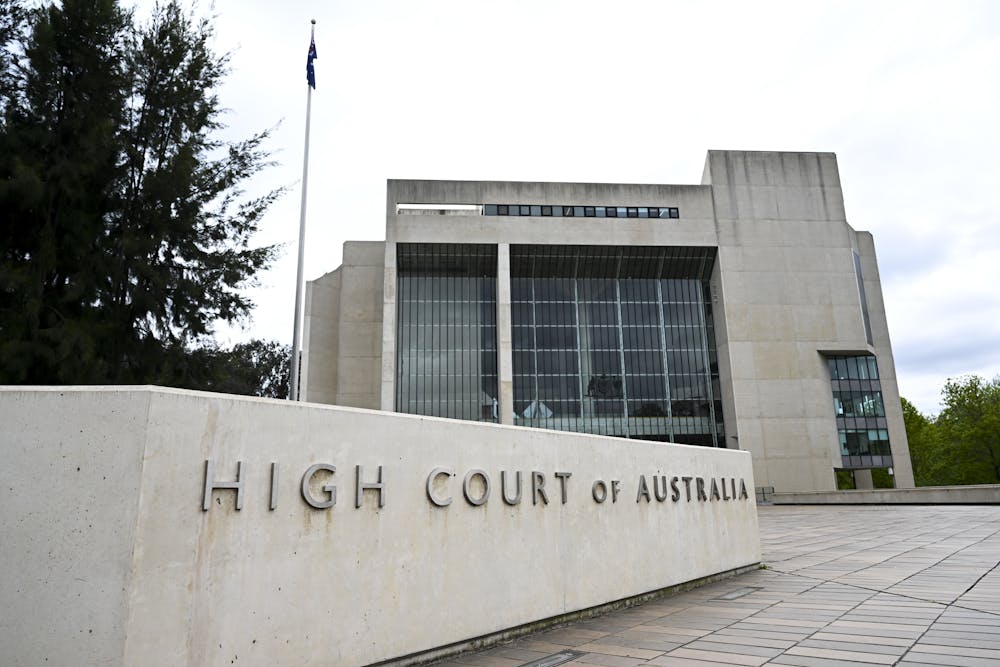
It is widely understood to be a response to the High Court’s ruling in November 2023 that found indefinite immigration detention to be unlawful.
It’s also considered an attempt to pre-empt further litigation scheduled in the High Court. The case of an Iranian man refusing to cooperate in his deportation is due before the court next month.
However, the amendments introduced in the bill go far beyond addressing this issue. They have wide-ranging impacts for how non-citizens are treated in Australia, and indeed for Australia’s relationship with governments around the world.
As such, it is particularly concerning the government tried to rush the bill through parliament without the opportunity for proper scrutiny or review. While a senate committee hearing is a welcome development, it won’t fix everything.
Criminalising non-cooperation
The bill gives the minister new powers to compel people who have exhausted their options to stay in Australia to cooperate and take steps towards their own removal. This would apply not only to people affected by the High Court’s ruling last year, but also to certain bridging visa holders.
Extraordinarily, it would also apply to “any other non-citizens” the minister might seek to designate through the migration regulations.
The powers include directing individuals to sign and submit documents to facilitate their departure, attend appointments, and provide any other information as required. In the case of families, if the parents are affected non-citizens, they can be directed to help facilitate the removal of their children, irrespective of whether it is in the child’s best interests.
Read more: Government rushing through bill to crack down on 'uncooperative' non-citizens it is trying to remove
Anyone who fails to comply with these directions without a “reasonable excuse” will face a mandatory jail term of between one and five years, a A$93,900 fine, or both. The fact that someone faces a real risk of persecution or other serious harm will not be considered a reasonable excuse.
These are extraordinary provisions without precedent in Australia. Even in the context of terrorism offences, a failure to comply with a direction does not result in mandatory imprisonment.
The closest comparisons are offences under various state laws concerning failure to disclose identity, which may be punished by up to 12 months’ imprisonment. In some states, reportable offenders, such as child sex offenders, who fail to produce electronic devices when directed by police, may face up to five years in prison.
However, in all these cases, these are maximum sentences, not a mandatory minimum sentence. As the Law Council of Australia President put it: “In effect, this Bill will implement mandatory sentencing”.
Concerns for fast-track asylum seekers
Section 199D of the bill attempts to ensure that the new powers are not used to remove individuals to a country where they would face a real risk of persecution or other serious harm.
But there is a risk the bill could still lead to people who do have protection claims being forced to return to countries where their life or freedom is threatened. There are particular concerns for people assessed under Australia’s fast-track asylum processes.
The Labor party has acknowledged these processes have not been “fair, thorough and robust”, meaning people with genuine refugee claims may have been denied protection.
Others could also be at risk of removal contrary to Australia’s protection obligations if their personal circumstances or the situation in their home country has changed since their original protection claim was determined.
The Refugee Council of Australia has warned about these risks and shared its concerns that “those who do have strong claims, but have not had a fair hearing or review, will be sent back to real harm.”
Countries can be blacklisted
The bill also gives the minister a new power to “blacklist” entire countries and prevent their citizens from applying for Australian visas.
This is a discretionary power that requires little consultation and is unlikely to be subject to administrative or judicial review. The only limitations on this power are that the minister first consults with the prime minister and minister for foreign affairs. The immigration minister must also detail why they think it is in the national interest to make such a decision.
The travel bans are intended to force targeted countries to cooperate and accept the return of their own nationals. But in practice, they will prevent people who may wish to work, study in or visit Australia from leaving – through no fault of their own.
Travel bans could also have unintended consequences. Diplomatic relations between countries may sour following such decisions, and countries may opt to retaliate in other ways, whether through trade, tourism or other matters of international concern.
The issue of international cooperation concerning the return of nationals to their home country is a diplomatic one that should be negotiated in good faith between political leaders. It is quite likely that inducements rather than threats would work better.
Other countries may also simply be unmoved to take any further steps to facilitate returns, or may even welcome their citizens not being able to visit Australia. It is important to remember that not all countries wish for their citizenry to be able to leave.
Walking the walk
At a time when the immigration minister has emphasised the “importance of lived experience in shaping national and international dialogue and policy” and claimed that the “government walk the walk on meaningful participation for refugees”, it is disappointing to see attempts to rush this bill through parliament without any consultation with refugee communities and other stakeholders, and very limited scrutiny.
The Albanese government is continuing the tradition of governments before it by attempting to ram legislation through parliament that severely curtails human rights and is disproportionate to its stated objectives. Both the government and the opposition have a vested interest in passing laws that further expand the minister’s discretionary powers, which are already ill-suited to a liberal democracy.
But the changes will have far-reaching consequences for both our migration program and our foreign policy objectives, and demand further democratic scrutiny.
Authors: Jane McAdam, Scientia Professor and Director of the Kaldor Centre for International Refugee Law, UNSW Sydney


 Daily Bulletin


