

China wanted to become a football powerhouse to inspire the nation. Instead, its team has been an embarrassment
- Written by: Ye Xue, Research Fellow, International Relations, China Institute, University of Alberta
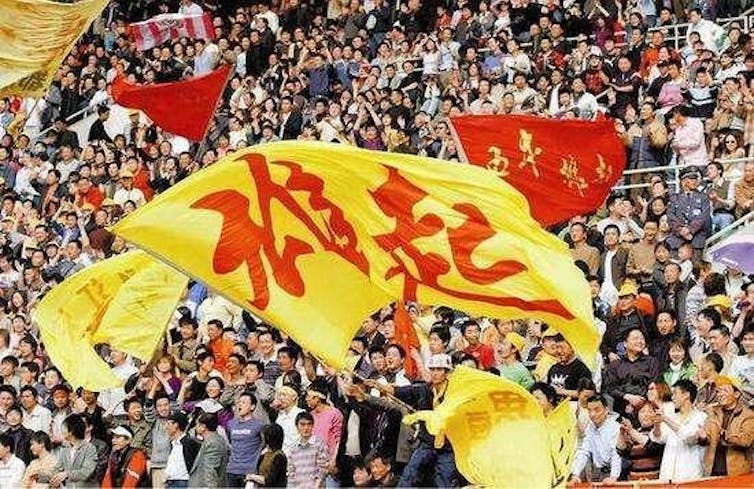
China’s football dreams have again suffered a huge blow, with the men’s national team exiting the 2024 Asian Cup in the group stage without scoring a goal.
It’s just the latest embarrassment on the international stage for a team that last qualified for the World Cup more than 20 years ago.
After China’s top leader Xi Jinping declared a decade ago that he wanted the country to become a football superpower, billions of dollars were spent to lure top talent from abroad to China’s domestic football league and to build schools and football fields around the country.
But the journey since then has been tumultuous. Once-prominent Chinese players and top-level officials became entangled in corruption, eroding public trust in the sport. The foreign stars in China’s Super League all departed and prominent teams were unable to pay their players. The progress of the national men’s team has sputtered.
How did the Chinese men’s football team reach this dismal state, and where does it go from here?
Economic short-termism leads to mismanagement and corruption
In response to former leader Deng Xiaoping’s famous 1992 “Southern Tour”, which reinvigorated the country’s economic reform agenda, the Chinese Football Association (CFA) decided to detach from the National Sports Committee and embrace market forces.
Before that, Chinese football operated under the so-called “whole nation system”, relying on the government to allocate resources to teams, including athlete training and funding. Although player salaries weren’t high, the system helped produce the the so-called “golden generation” of Chinese football stars and made China a major contender in Asia.
The establishment of the Chinese Professional Football League in 1994 led local football associations and teams to break away from the central government administration and source their own funding.
This, in turn, ignited the passions of Chinese football fans, who rallied behind local clubs. Football players became celebrities overnight. For instance, among fans of the team Sichuan Quanxing, a saying about two players became popular: “Girls should aspire to marry a hero like Wei Qun and aim to raise a son who follows in the footsteps of Yao Xia.” (嫁人要嫁魏大侠,生儿要生小姚夏).
Generous investments and sponsorships led to a significant increase in players’ incomes. By 1998, top-division players were earning a minimum annual income of 100,000 yuan (A$18,000), a staggering 20 times more than the average citizen. Some star players earned more than 1 million yuan (A$180,000).
Amid this flourishing environment, from 1996 to 2000, the number of registered youth football players in China surged beyond 600,000. Chinese fans believed the dynamic domestic football scene would propel their national team to greater heights internationally.
However, beneath the surface, the relationship between capital and clubs was unhealthy, as the teams became heavily reliant on funding from parent companies. This laid the groundwork for the eventual downfall of Chinese professional football.
The focus on short-term gains led to much mismanagement and corruption. By the early 2000s, the Super League faced issues such as match-fixing, biased refereeing, waning public interest and a constant reshuffling of club ownership. This pushed some clubs to the brink of dissolution and left players grappling with unemployment.
The aftermath was swift – registered youth football players in China reportedly dropped to a mere 180,000 in 2005 and reached just 7,000 by 2010.
Political opportunism foils another reform attempt
After the Evergrande Group, a massive real estate company, took over the Guangzhou Football Club in 2010, numerous companies entered the football market and spent lavishly on internationally renowned players.
This renewed enthusiasm was believed to be fuelled by the eagerness of local governments and businesses to align with Xi’s personal interest in the sport and his aspirations for the advancement of Chinese football.
In 2015, a key agenda-setting commission in the Communist Party sanctioned a central reform plan to boost the development of football in China. This approval underscored the belief that the “Chinese dream” of achieving the great rejuvenation of the nation was closely tied to the development of football.
This new government attention on football encouraged financial investment (again) to revitalise the Chinese football industry, resulting in a significant surge in salaries and benefits for players.
In 2018, the average annual income for men’s football players reached more than US$1 million per year (A$1.5 million), exceeding the average wage in China by more than 160 times.
While the professional league’s revival didn’t immediately elevate the men’s national team’s performance, it improved the perception of the sport among parents. In 2016, the number of registered youth players under the CFA surged to more than 40,000. The organisation set a target of reaching one million young players by 2020.
However, this prosperity, rooted in political opportunism, proved to be delicate and unsustainable. The economic downturn in China, the introduction of transfer cap, the COVID pandemic and the CFA’s decision to remove corporate references from club names significantly subdued investors’ enthusiasm for football.
Read more: Will the Evergrande crisis doom China's grandiose, big-spending football dreams?
Consequently, the Chinese professional league once again faces intractable obstacles. Since 2020, professional clubs have been disbanding annually as investors have withdrawn their funding. The former CFA chairman, Chen Xuyuan, has been charged with bribery, while former national team coach Li Tie has admitted to paying bribes and match-fixing.
All of this will only further undermine the public’s confidence in Chinese football. Parents are again questioning whether to encourage their children to play the sport. There are many signs that youth participation has declined sharply over the past three years.
Chinese football authorities should know now what doesn’t work. The marketisation of football and rampant financial investment driven by political opportunism didn’t work. Flooding the league with foreign stars didn’t work, either.
Perhaps it’s time for the state to take a more prominent role again, possibly even revisiting the “whole-nation system”. Transforming football into a stable and visible career pathway could, at the very least, inspire more Chinese youth to actively engage in the sport.
And this, in turn, could one day create a winning men’s national team, as well.
Authors: Ye Xue, Research Fellow, International Relations, China Institute, University of Alberta


 Daily Bulletin


