

Can we eat our way through an exploding sea urchin problem?
- Written by: John Keane, Research Fellow (Dive Fisheries), University of Tasmania
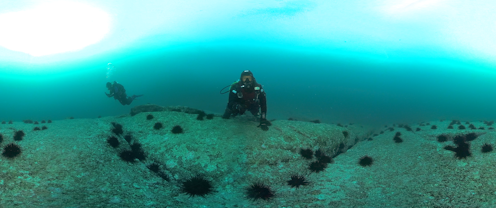
Longspined sea urchins are native to temperate waters around New South Wales. But as oceans heat up, their range has expanded more than 650km, through eastern Victoria and south to Tasmania. Their numbers are exploding in the process, clear-felling kelp forests and leaving “urchin barrens” behind.
The species (Centrostephanus rodgersii) is now the single largest and most urgent threat to kelp forests along the southeastern coast of Australia’s Great Southern Reef.
What can we do? Here’s one excellent solution: eat their roe, a buttery delicacy that can fetch hundreds of dollars per kilogram. Tasmania already has a government-backed urchin fishery. When combined with a mix of other tools, as outlined in our submission to the invasive marine species Senate inquiry, harvesting urchins can put the brakes on this overabundant, range-extending marine species.
Today, the Senate handed down its findings, identifying investment in commercial harvesting as a frontline climate-ready tool to combat the urchin. It presents a win-win opportunity by maximising socioeconomic and environmental returns for kelp ecosystems, while lessening the ongoing cost of control.
Strategies for urchin control.Read more: The Great Southern Reef is in more trouble than the Great Barrier Reef
Dealing with urchins is urgent
Almost 200 marine species have been documented shifting range in Australian seas as climate change heats the oceans. But longspined sea urchins are the most damaging so far.
The waters along hundreds of kilometres of coastline have now warmed above a winter average of 12°C. This is the temperature at which urchin larvae can develop during spawning. The ocean is warming faster than land, heating at a rate of 4°C per century.
The Senate inquiry shows the government is listening. The inquiry and accompanying five-year plan for control methods are based on more than two decades of scientific research.
The tragedy of the barrens
Urchins chew through entire forests of kelp. Once the big kelp is gone, they switch to feeding on tiny encrusting seaweeds that can regrow rapidly and persist in the face of intensive grazing. This creates “hyper-stable” urchin barrens.
The damage is dramatic, with the local loss of hundreds of kelp-associated species ranging from valuable abalone to the iconic leafy seadragon.
Barrens in southern NSW, eastern Victoria and Tasmania can now be measured in the scale of kilometres, with whole reefs turned into underwater deserts.
They expand fast, too. In Tasmania, early sightings off the northeast in 1978 have turned into a population estimated at 20 million around the eastern coastline. Barren areas now cover 15% of Tasmanian reefs. If left unchecked, 50% of reef habitat could be lost by the 2030s, as we’ve seen in southern NSW and eastern Victoria.
Correcting an imbalance of nature
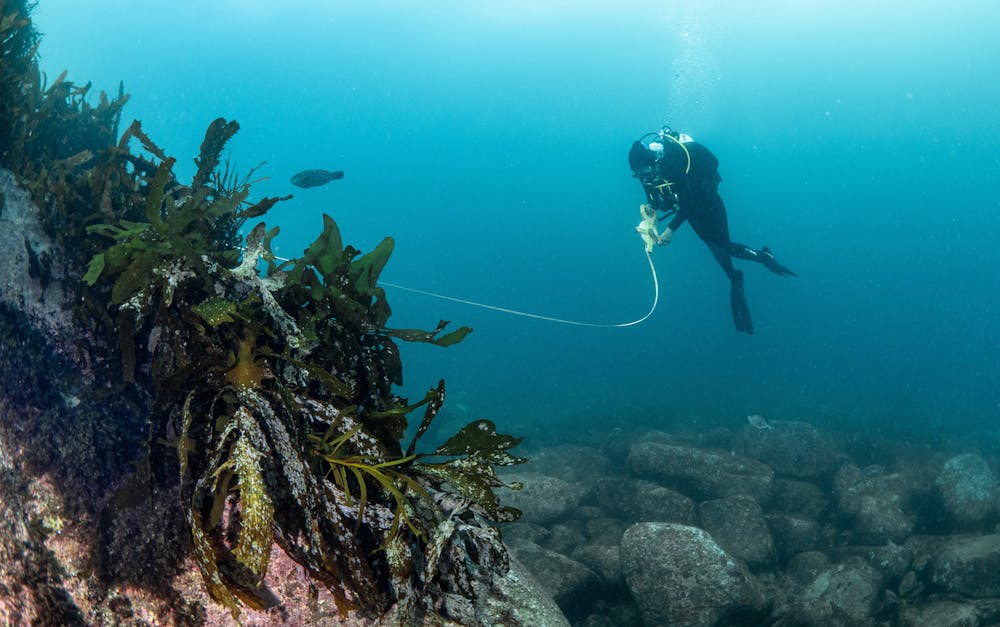
Rock lobsters are a natural predator of urchins. They boost kelp bed resilience and even prevent barren expansion in some areas off limits to lobster fisheries.
The Tasmanian East Coast Rock Lobster Rebuilding Strategy focuses on rebuilding stocks to help combat the urchin. However, the lobsters’ strong preference for local prey such as abalone, their negligible capacity to rehabilitate extensive barrens once urchins reach hyperabundance, and high recreational and commercial fisheries value, constrains the scale of effectiveness.
Another option is culling, where divers kill urchins underwater. The upshot is that kelp can grow back quickly, within just 18 months, if all visible urchins are culled. But it’s extremely expensive and urchins can reemerge, meaning culling needs to be ongoing.
An affordable, scalable, long-term solution?
Yes. Make it profitable. The main game here isn’t the urchins themselves but their roe, known as “uni” in Japan. Urchin roe is a delicacy, renowned for its sweet, buttery, umami flavours and bright golden colour. Premium roe returns top dollar in markets from across South East Asia, the United States and the Middle East.
If commercial fisheries are viable, we can remove vast quantities of urchins from reefs in a low-cost urchin control program over large areas.
But there are challenges here too. Extracting the roe is labour-intensive. Roe quality can vary greatly, dropping as overgrazing ensues. To date, infrastructure, access to markets, and detailed knowledge of processing techniques has been a limiting factor.
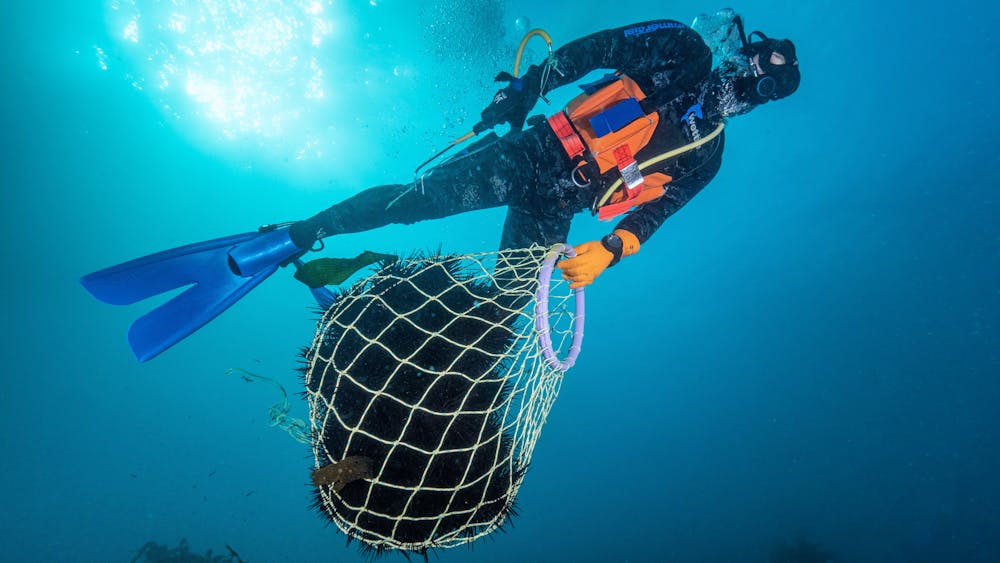 A commercial diver removes a haul of sea urchins destined for international markets.
Matt Testoni
A commercial diver removes a haul of sea urchins destined for international markets.
Matt Testoni
Tasmania is showing it can be done. In 2018, the state government invested in a fledgling urchin fishery in conjunction with the abalone industry by offering harvest subsidies.
These gave urchin processors the financial certainty to invest. In a few years, annual urchin fishery yields have grown from 40 tonnes to 500 tonnes, all harvested by hand by divers.
To date, the fishery has created more than 100 jobs and boosted regional economies. It’s starting to work too. The fishery has not only slowed the expansion of urchin barrens, but allowed recovery of kelp habitats in some heavily fished areas.
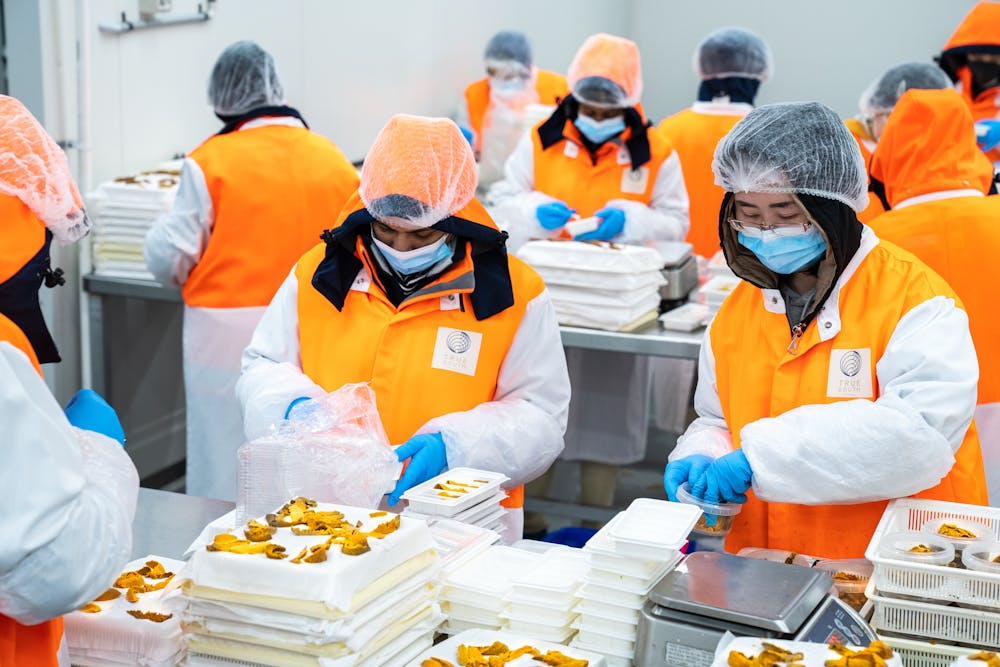 Sea urchins are processed at the True South Seafood factory, south of Hobart.
True South Seafood, Author provided (no reuse)
Sea urchins are processed at the True South Seafood factory, south of Hobart.
True South Seafood, Author provided (no reuse)
Read more: Sea urchins have invaded Tasmania and Victoria, but we can’t work out what to do with them
Expanding urchin fisheries
Tasmania’s example shows the potential of fishery-led control of overabundant, problematic species. Making the most of it means adding value, such as by expanding the international market, developing new uses for low-grade urchin roe and selling waste products. If it’s more profitable, divers will be able to travel farther from port and fish down urchin stocks.
We can also direct fishery efforts for better urchin control by offering subsidies to fish high priority areas.
Other states hit hard by urchins too, such as Victoria, could benefit from control-by-fishery.
Achieving national, widespread urchin control will require challenging coordination. We need to:
- support dive fisheries to become the heavy lifter of urchin control
- add extra urchin control measures on high-value reefs
- begin restoring degraded barrens to a mosaic of urchin fisheries or kelp forests
- boost populations of urchin predators on healthy reefs, to increase resilience in the first place.
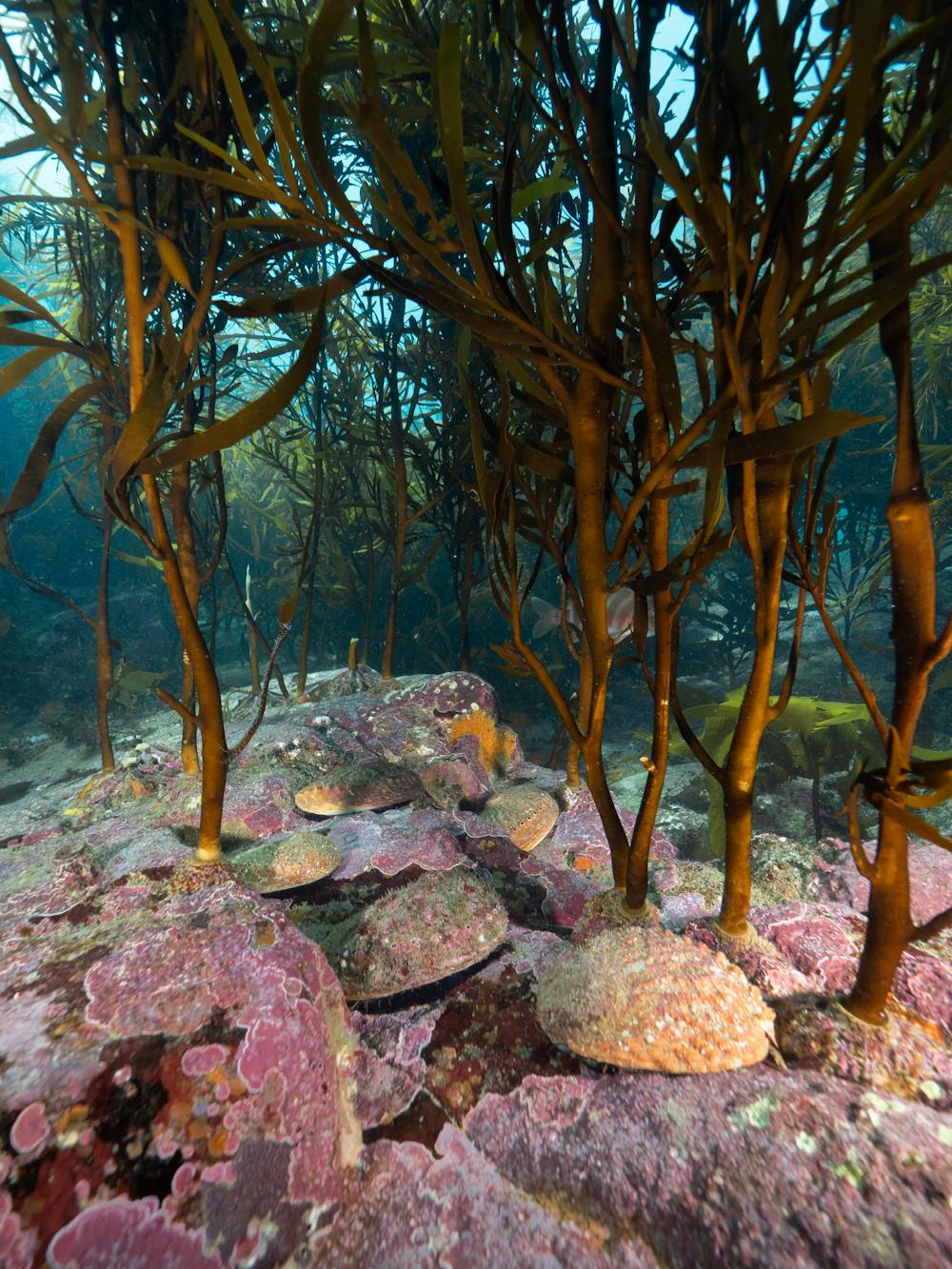 Healthy kelp ecosystems are vital for abalone.
Matt Testoni
Healthy kelp ecosystems are vital for abalone.
Matt Testoni
If we do this right, Australia’s control of the longspined sea urchin could be a global exemplar of climate-ready management of overabundant and range extending species, boosting rural economies and social wellbeing. As species keep moving, finding low- or zero-cost control measures will be essential to keeping ecosystems intact.
Controlling troublesome species is often seen as a major cost to government. Our work and the work of many others has shown it doesn’t have to be. Creating viable urchin fisheries turns a cost into a benefit.
Authors: John Keane, Research Fellow (Dive Fisheries), University of Tasmania
Read more https://theconversation.com/can-we-eat-our-way-through-an-exploding-sea-urchin-problem-214389


 Daily Bulletin


