

How dangerous is insomnia? How fear of what it's doing to your body can wreck your sleep
- Written by: Leon Lack, Emeritus Professor of Psychology, Adelaide Institute for Sleep Health, Flinders University

This article is the next in The Conversation’s six-part series on insomnia, which charts the rise of insomnia during industrialisation to sleep apps today. Read other articles in the series here.
I (Leon) have recently seen several patients who were concerned their insomnia symptoms would increase their risk for dementia. They were in their 70s and were awakening two or three times a night, which they took to be insomnia. But they were not impaired in the daytime in a way typical of insomnia.
Their brief awakenings are normal for most people and completely harmless. Brief awakenings emerge from the periodic phases of light sleep that occur naturally between the four or five 90-minute deep sleep cycles. If you’re unaware of this “rollercoaster” of 90-minute cycles, you might think such awakenings are a sign of disease. In fact, they are perfectly normal and experienced more as people age when sleep naturally becomes lighter and shorter – with no ill effect.
Therefore, I reassured them their sleep patters were normal and they did not have insomnia. This requires daytime impairments – fatigue, cognitive problems, mild depression, irritability, distress or anxiety – in addition to night time symptoms.
I trust they were reassured, and so they avoided the type of fear and worry that would have triggered a cascade of events leading to insomnia.
Read more: Broken sleep? It's a rollercoaster ride
Is it really insomnia?
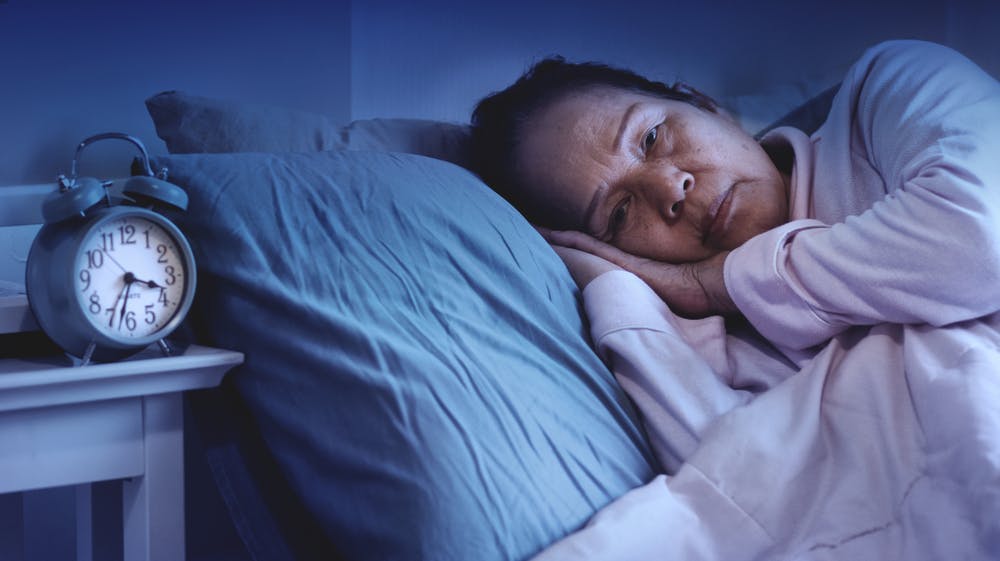
So where did my patients get the notion their sleep symptoms could lead to dementia? Let’s pick apart this tsunami of alarming information.
It usually starts with very large surveys that find a statistically significant relationship between measures of sleep problems and subsequently developing dementia.
First, most of these studies ask participants to report how long they typically sleep. Those reporting less than six hours a night show a small but statistically elevated risk of developing dementia.
These studies do not say if people have clinical insomnia diagnosed by a health professional. Instead they rely solely on participants guessing how long they’ve slept, which can be inaccurate.
The studies would have also included many people without insomnia who are not allowing themselves adequate opportunity for sleep. Perhaps they’d been in the habit of socialising or playing computer games late at night.
In other words, we don’t know what proportion of these short-sleepers are simply over-estimating their sleep problems, or restricting their sleep and experiencing chronic sleep loss rather than insomnia.
Read more: Is it possible to catch up on sleep? We asked five experts
What do the numbers really mean?
A second problem is with interpreting the meaning of “statistically significant”. This only means the results were unlikely to be due to pure chance. If a single study shows a 20% increased risk of a physical health problem associated with insomnia, how worried should we be? This single finding does not necessarily mean it’s worth considering in our everyday lives.
Studies relating insomnia to health risks are also typically inconsistent. For example, although some studies have found small increases in dementia risk with having insomnia, a very large UK study did not find any relationship between the amount of sleep or sleeping difficulties and dementia risk.
Read more: Study links insomnia with increased heart failure risk
What’s the context?
A third problem is communicating a balanced perspective to the public about the potential dangers of insomnia. Some in the mainstream media, with the help of the researcher’s institution, will report on studies showing a statistically significant increase in the risk of a frightening disease, such as dementia.
But not all media reports ask about how clinically meaningful the risk is, whether there are alternative explanations, or how this result compares with what other researchers have found. So the public is left with no context to temper the scary, “increased risk” narrative. This narrative is then shared on social media, amplifying the scary finding.
 Scary headlines about the health impacts of insomnia don’t always reflect the actual risk.
Shutterstock
Scary headlines about the health impacts of insomnia don’t always reflect the actual risk.
Shutterstock
Read more: Essays on health: reporting medical news is too important to mess up
Obesity, diabetes, high blood pressure
We’ve used dementia as one example of how fears about potential risks to physical health from insomnia arise and are magnified. But we could have used a potential increased risk of obesity, diabetes or high blood pressure. All have been associated with shorter sleep, but researchers are debating whether these links are real, meaningful or related to insomnia.
When we looked at the impact of sleep problems on life expectancy, we found no evidence sleep symptoms alone shorten your life. Only when daytime symptoms such as fatigue, memory problems and distress are included is there a small increased risk of dying prematurely. However, it’s difficult to know if that excess mortality can be explained by undiagnosed heart, kidney, liver or brain disease causing those daytime symptoms.
Read more: Does picking your nose really increase your risk of dementia?
We should be talking about mental health
However, there is stronger evidence of increased mental health problems, especially depression, with insomnia.
The typical daytime impairments of fatigue, distress, cognitive impairments and irritability certainly lower the quality of life. Life becomes more of a challenge and less enjoyable. Over time, this can trigger hopelessness and depression in some people. This is enough reason to seek help to improve sleep and quality of life.
People with these problems should seek help from a health practitioner. The good news is there is an effective, long-term, non-drug treatment with no side effects – cognitive behavioural therapy for insomnia or CBTi. Even better, successful CBTi also decreases symptoms of depression and other mental distress.
What is not helpful is unnecessary fear triggered by reports suggesting serious physical health dangers of insomnia. This fear is only likely to increase insomnia rather than mitigate it.
If this article has raised issues for you, or if you’re concerned about someone you know, call Lifeline on 13 11 14.
Authors: Leon Lack, Emeritus Professor of Psychology, Adelaide Institute for Sleep Health, Flinders University


 Daily Bulletin


