

Peter Polites maps war, migration, familial love and gay identity from mid-century Greece to western Sydney
- Written by: Anthony Macris, Professor of Creative Writing, University of Technology Sydney

A popular image of modern Greece is of glittering, blue seas dotted with islands of idyllic beauty. Another is of the ancient Acropolis towering above Athens, cradle of Western civilisation. But when I think of Greece, I also think of its violent and traumatic history, in particular the series of wars and conflicts throughout the first half of the 20th century that left the country in ruins.
In quick succession, events such as the Greek Genocide, the Asia Minor Catastrophe, the second world war and the Greek Civil War inflicted untold damage on the country, decimating the population through death and mass migration. Amongst those who fled their homeland were my parents. Along with hundreds of thousands of other Greeks, they migrated to Australia in the wake of this relentless turmoil.
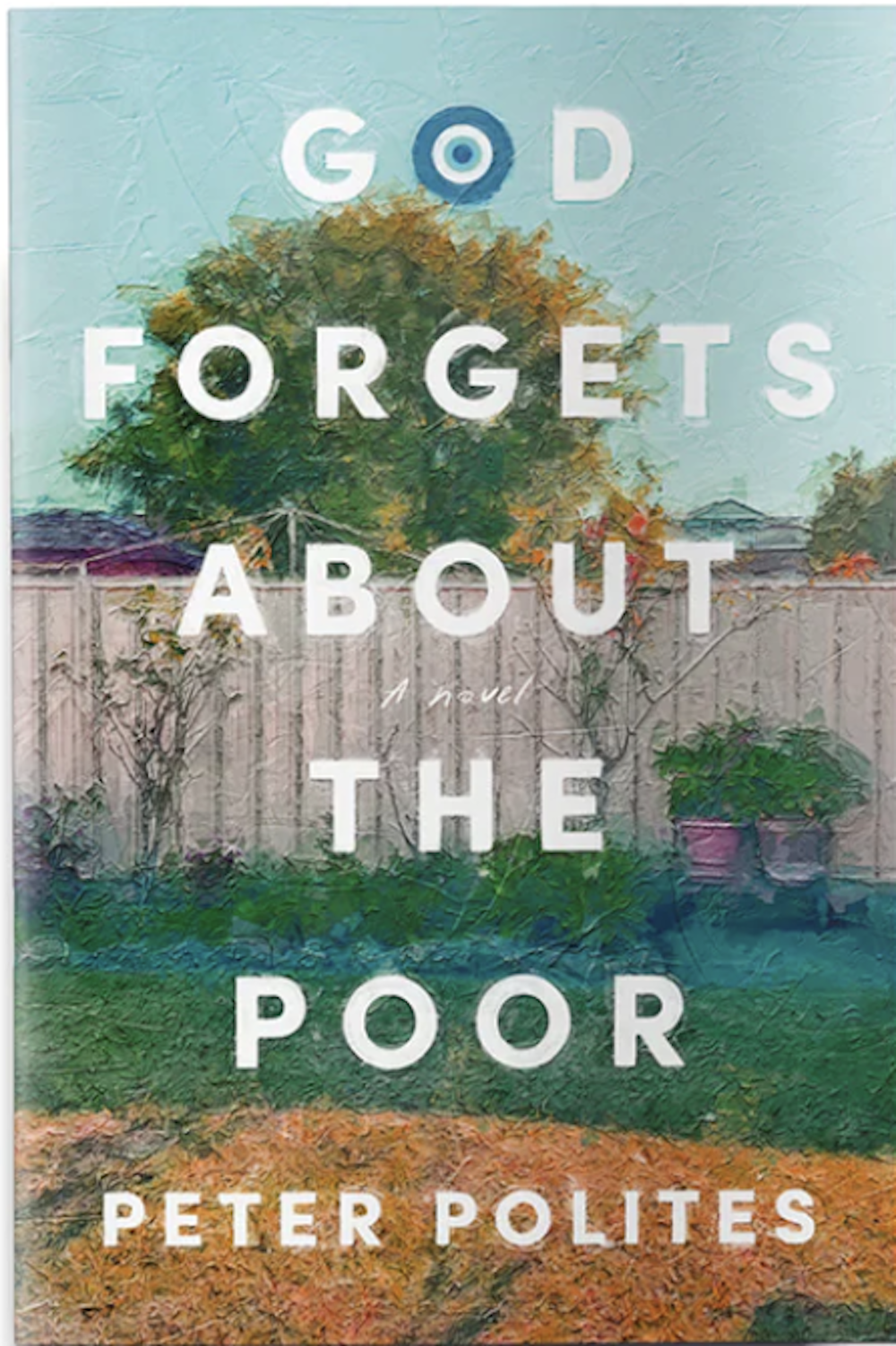
God Forgets About the Poor – Peter Polities (Ultimo)
So too did the parents of Sydney writer Peter Polites. God Forgets About the Poor, his third novel, takes as its larger context this watershed period in Greek history. The son of migrants from the Greek island of Lefkada, Polites has fashioned a powerful, moving novel derived from his mother’s story and those of extended family.
One part family saga, one part autofiction, one part Proustian journey through memory, God Forgets About the Poor stretches back to the Greece of the early-mid 20th century, and finishes up in the western Sydney suburb of Belmore, 2022.
The novel’s opening is both ingenious and clever. “Start when I was born,” the mother, Honour, tells her son in monologue addressed directly to him, launching a voice that is by turns warm, bold, and impassioned.
Describe the village and how beautiful it was. On the side of a mountain but in the middle of a forest […] My island, our island, our island […] Make it magical in the way artists do. You’re supposed to be a writer, try and write something good this time. Be interesting!
In a single stroke, Polites gives voice to the many Greek women whose lives started in the poverty of rural Greece, only to find themselves trapped within a very different kind of poverty in the promised land of suburban Australia.
And make it magical and interesting Polites does. Magical in the sense that he knows how to cast a spell that holds the reader through the force of personality of his characters, the poignancy of their situations, and a prose style that conjures the elegiac from lived experience and the vault of memory.
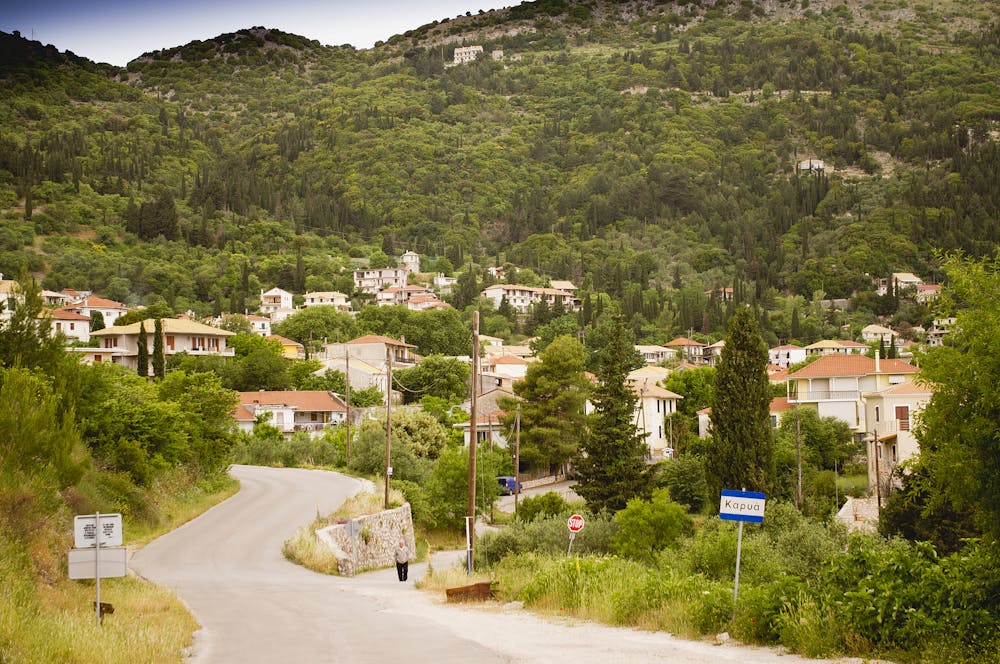
Honour, one of five sisters, is born in a tiny mountain village ravaged by the fighting of the second world war. Polites draws village life in deft, vivid strokes. This setting, steeped in death and hardship, is made up of wild mountain landscapes redolent of the scent of pine trees. For all its apparent simplicity, village life is complex and multilayered, full of religious belief and superstition.
“Village life,” Honour declares, “is being in a forest and running past the cemetery so the undead won’t rise.”
Read more: Young women's memoirs of migration, dispossession and Australian 'unbelonging' demand to be heard
Athens in flux
As the lives of Honour and her family unfold, the various strata of Greek history and society are exposed: ancient and Byzantine Greece, the Ottoman period, the abrupt and belated shift to 20th century urbanisation. At the core of the novel is Honour’s journey from what Polites calls “agrarian” Greece to modernity.
By 1970 Honour, like so many other rural Greeks, finds herself in Athens, seeking a better life through education. Her father, flawed but also progressive, strongly believes in education for his daughters. He has arranged for her to stay with a family friend, an older married woman who takes her under her wing. With the blessing of Honour’s family, the woman wastes no time in attempting to find a suitable match for this intelligent young woman of marrying age.
The lengthy chapter that describes this process of matchmaking shows Polites’ considerable skill as a dramatist and social observer. 1970s Athens is a city in flux, crammed with new apartment blocks housed with those flooding in from the countryside. Its local squares are filled with tavernas, fountains, and chestnut sellers, and are purpose-built for romance.
Honour’s suitors, vetted by the extended family network, seem decent enough young men. One is a solider, another a businessman. Polites’ ability to enter into Honour’s most intimate feelings, his rendering of her curiosity, her awakening desire, her hopes and disappointments, demonstrates an empathic reach and authenticity that few contemporary writers achieve without lapsing into triteness and confected emoting.
Eventually, Honour will end up married and living in Australia. The perfume of Lefkada’s mountain pines will be replaced by her love of wattle and the suburban landscape of Belmore as she comes to create deep connections with her adopted country.
She will find rewarding work as a library assistant and teaching. And she will give birth to two children, a daughter who will achieve the academic success she couldn’t attain, and a son who will go on to become a writer. In this multi-perspective novel, we hear both children’s voices, and experience the generational layers that constitute Australia from the late 20th century up to the 2020s.
A counter-narrative
The voice of the son is particularly compelling. As the novel progresses, we realise that it is artfully positioned in a way that is central to the novel’s dramatic architecture. In the mother’s opening monologue, she berates him for the subject matter of his previous books.
“You can’t keep writing your gay things. And a son writing a story about his mother is not a gay thing.” This is a reference to Polites’ two previous well-received novels, Down the Hume (2017) and The Pillars (2020), both of which deal with gay themes.
Polites makes his mother’s scolding wry and funny: there is no doubt of their deep mutual affection. Thankfully, he doesn’t fully heed her advice. The reference to gay identity in this context carries a particular significance, one he goes on to develop.
 Running as a counter-narrative to the heteronormativity that characterises the novel’s main line of action is the story of this son. Raised in affluent Australia, the son is keenly aware of the suffering and poverty of his mother’s generation and it all implies. We see him in glimpses throughout the body of the book, as a dreamy but smart young boy drawn to beauty, as a young man at times struggling with how he can fit into contemporary Australia as Greek, gay and a writer.
He finally takes centre stage in the book’s closing monologue.
“Last night I worked until 2am earning minimum wage. I put a suburban and Coke on the counter of the bar and copped a perve at a gay guy’s chest through his open shirt,” he begins.
The next night he is sitting at his ageing mother’s bedside in Sydney’s Canterbury Hospital, where he draws a stark, tender portrait of their relationship. As he keeps vigil, he also reflects on a relationship he had with an Athenian man on a visit to that city.
Running as a counter-narrative to the heteronormativity that characterises the novel’s main line of action is the story of this son. Raised in affluent Australia, the son is keenly aware of the suffering and poverty of his mother’s generation and it all implies. We see him in glimpses throughout the body of the book, as a dreamy but smart young boy drawn to beauty, as a young man at times struggling with how he can fit into contemporary Australia as Greek, gay and a writer.
He finally takes centre stage in the book’s closing monologue.
“Last night I worked until 2am earning minimum wage. I put a suburban and Coke on the counter of the bar and copped a perve at a gay guy’s chest through his open shirt,” he begins.
The next night he is sitting at his ageing mother’s bedside in Sydney’s Canterbury Hospital, where he draws a stark, tender portrait of their relationship. As he keeps vigil, he also reflects on a relationship he had with an Athenian man on a visit to that city.
 Canterbury Hospital in Belmore, Sydney.
Dan Himbrechts/AAP
The episode is a mirror of the early courtship narrative of his mother set in 1970s Athens, only this time focalised through male desire, with the action taking place in a contemporary Athens dominated by tourists. Once again, it is a deeply moving account of the need for connection, the danger and risks taken when we reach out for love.
Read more:
Friday essay: homosexuality was still illegal when Frank Moorhouse started writing – but it was there from his earliest fiction
Poetic sensibilities
The recounting of this brief, emotionally unresolved attachment also brings to the fore Polites’ poetic sensibilities, well in evidence throughout the novel, and here suffused with a rich melancholy. Stylistically, there is a flow to the language and imagery that is modified by sharp angles that temper and enliven the prose. Polites’ language is well-crafted but it isn’t always neat and tidy, and is all the better for it. It is always alive, searching for an intensity, the not-quite-seen, while remaining lucid and direct.
Mothers, fathers, sons, daughters, they all come together into a whole, a collectivity that shows how we shape and influence each other, how we are not only the positive and negatives of each other, but everything in between.
Yet there is another layer to the novel. Polites also depicts a world that is shaped by the social and historical, by bloody wars and the longueurs of urban stability, all refracted through the prism of time, memory and sensation.
In his novel he maps out the complexities of an Australia that, well into the 21st century, still struggles, or perhaps refuses, to understand itself. Such bravery and insight are to be applauded and for this reason, as well as many others, God Forgets About the Poor stands as an important literary achievement.
Authors: Anthony Macris, Professor of Creative Writing, University of Technology Sydney
Canterbury Hospital in Belmore, Sydney.
Dan Himbrechts/AAP
The episode is a mirror of the early courtship narrative of his mother set in 1970s Athens, only this time focalised through male desire, with the action taking place in a contemporary Athens dominated by tourists. Once again, it is a deeply moving account of the need for connection, the danger and risks taken when we reach out for love.
Read more:
Friday essay: homosexuality was still illegal when Frank Moorhouse started writing – but it was there from his earliest fiction
Poetic sensibilities
The recounting of this brief, emotionally unresolved attachment also brings to the fore Polites’ poetic sensibilities, well in evidence throughout the novel, and here suffused with a rich melancholy. Stylistically, there is a flow to the language and imagery that is modified by sharp angles that temper and enliven the prose. Polites’ language is well-crafted but it isn’t always neat and tidy, and is all the better for it. It is always alive, searching for an intensity, the not-quite-seen, while remaining lucid and direct.
Mothers, fathers, sons, daughters, they all come together into a whole, a collectivity that shows how we shape and influence each other, how we are not only the positive and negatives of each other, but everything in between.
Yet there is another layer to the novel. Polites also depicts a world that is shaped by the social and historical, by bloody wars and the longueurs of urban stability, all refracted through the prism of time, memory and sensation.
In his novel he maps out the complexities of an Australia that, well into the 21st century, still struggles, or perhaps refuses, to understand itself. Such bravery and insight are to be applauded and for this reason, as well as many others, God Forgets About the Poor stands as an important literary achievement.
Authors: Anthony Macris, Professor of Creative Writing, University of Technology Sydney


 Daily Bulletin


