

Homemade and cosmopolitan, the idiosyncratic writing of Gerald Murnane continues to attract devotees
- Written by: Brigid Rooney, Associate Professor (Affiliate), Australian Literature, University of Sydney
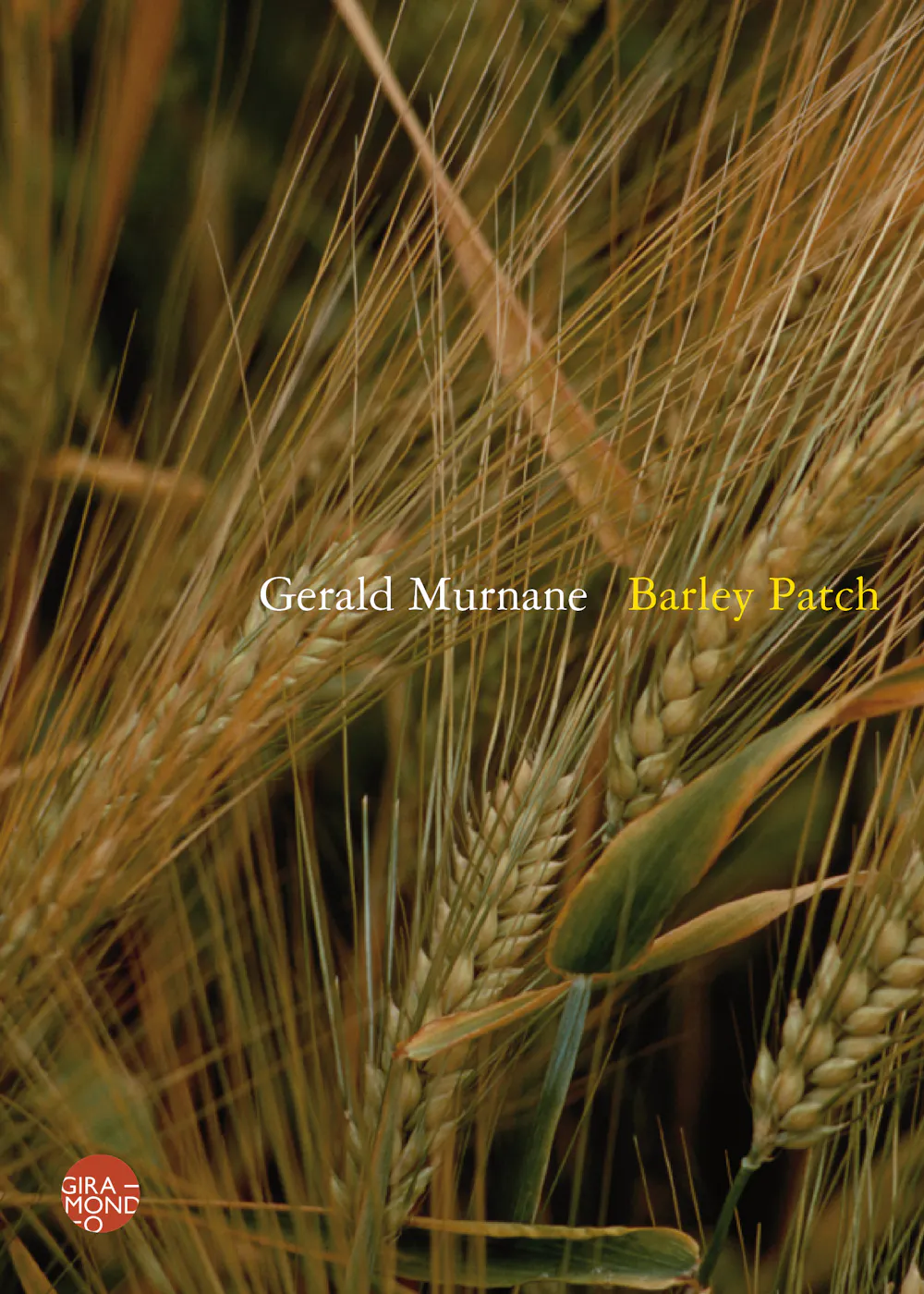
Some time ago, I taught Gerald Murnane’s Barley Patch (2009) and then, a little later, The Plains (1982) in two separate undergraduate courses. Each course was concerned, in specific ways, with postmodernism.
Already by then a rather outdated term, “postmodernism” never quite gelled with Murnane’s writing. But what I really wanted was for my students to read these unusual books in which “very little happens”.
Review: Murnane – Emmett Stinson (Miegunyah Press)

 A 2018 New York Times article described Murnane as “the greatest living English-language writer most people have never heard of”. Full recognition has indeed been slow to arrive. Murnane has never won the Miles Franklin Literary Award. It was not until 2018 that one of his books (Border Districts) made the shortlist.
He has, however, received other awards, including the 1999 Patrick White Award for a writer whose work lacks adequate recognition.
Now in his eighties, Murnane lives in Goroke, a small town in the Wimmera close to the north-western Victorian border. Although he seems to have ceased writing for publication, he still works on what he calls his “Literary”, “Chronological” and “Antipodean” archives, held in fastidiously organised filing cabinets.
Murnane’s many self-imposed rules, such as never wearing sunglasses, never using a computer, and never travelling in a plane (see his 2002 essay “The Breathing Author” for a full list), seem to mirror the contents of his fiction. His books are populated by shy, eccentric, isolated narrators whose proclivities and demeanours align with their author’s self-presentation.
Keen to pique my students’ interest, I succumbed to the temptation to show a video or two of Murnane, then available on YouTube, in which his idiosyncratic persona is on display. Murnane gives viewers a tour of his writing room, explains his self-designed system for learning Hungarian, and describes some of the contents of his filing cabinets. He shows us the ironing board he once used as a writing desk, and a row of pebbles lined up on his windowsill like horses poised for a race.
His performance teasingly invites readers to connect the real-life (“breathing”) author with the narrators (or “implied authors”) of his fiction.
Stinson’s study meditates on the dynamics of this blurring of fiction and autobiography, alongside other paradoxes. In Murnane’s writing, the intricacies of fiction’s mirroring of life can seem a kind of game. But if it is a game, it is one played with absolute seriousness.
This can fox readers, inducing frustration, impatience or even boredom. So while Murnane’s videos did indeed grab my students’ initial attention, their essays (aside from a superb few) suggested many remained perplexed by his fiction.
Inventive and playful
Murnane’s 15 or more books (depending on how they’re counted) include works of fiction and non-fiction and a book of poetry. All manifest his distinctive rigour, exemplified by his famously “chiseled sentences”, as J.M. Coetzee once described them.
His work is technically and conceptually inventive, even playful, and it has attracted admiring readers at home and abroad. In recent decades, his readership has grown significantly, enhanced by the internet and social media, which have allowed niche readers to connect with each other. Murnane is now regularly touted as a candidate for the Nobel Prize for Literature.
A 2018 New York Times article described Murnane as “the greatest living English-language writer most people have never heard of”. Full recognition has indeed been slow to arrive. Murnane has never won the Miles Franklin Literary Award. It was not until 2018 that one of his books (Border Districts) made the shortlist.
He has, however, received other awards, including the 1999 Patrick White Award for a writer whose work lacks adequate recognition.
Now in his eighties, Murnane lives in Goroke, a small town in the Wimmera close to the north-western Victorian border. Although he seems to have ceased writing for publication, he still works on what he calls his “Literary”, “Chronological” and “Antipodean” archives, held in fastidiously organised filing cabinets.
Murnane’s many self-imposed rules, such as never wearing sunglasses, never using a computer, and never travelling in a plane (see his 2002 essay “The Breathing Author” for a full list), seem to mirror the contents of his fiction. His books are populated by shy, eccentric, isolated narrators whose proclivities and demeanours align with their author’s self-presentation.
Keen to pique my students’ interest, I succumbed to the temptation to show a video or two of Murnane, then available on YouTube, in which his idiosyncratic persona is on display. Murnane gives viewers a tour of his writing room, explains his self-designed system for learning Hungarian, and describes some of the contents of his filing cabinets. He shows us the ironing board he once used as a writing desk, and a row of pebbles lined up on his windowsill like horses poised for a race.
His performance teasingly invites readers to connect the real-life (“breathing”) author with the narrators (or “implied authors”) of his fiction.
Stinson’s study meditates on the dynamics of this blurring of fiction and autobiography, alongside other paradoxes. In Murnane’s writing, the intricacies of fiction’s mirroring of life can seem a kind of game. But if it is a game, it is one played with absolute seriousness.
This can fox readers, inducing frustration, impatience or even boredom. So while Murnane’s videos did indeed grab my students’ initial attention, their essays (aside from a superb few) suggested many remained perplexed by his fiction.
Inventive and playful
Murnane’s 15 or more books (depending on how they’re counted) include works of fiction and non-fiction and a book of poetry. All manifest his distinctive rigour, exemplified by his famously “chiseled sentences”, as J.M. Coetzee once described them.
His work is technically and conceptually inventive, even playful, and it has attracted admiring readers at home and abroad. In recent decades, his readership has grown significantly, enhanced by the internet and social media, which have allowed niche readers to connect with each other. Murnane is now regularly touted as a candidate for the Nobel Prize for Literature.
 Noting all this, as well as the vagaries of Murnane’s publishing history, Stinson ponders his subject’s somewhat divided Australian reception. It is another of Murnane’s paradoxes that he is a profoundly Australian writer who deploys the most localised of materials, but an anomaly in “Australian literature”. The latter is (arguably) a self-consciously – or self-critically – national project. Yet Murnane’s books appear supremely uninterested in either politics or nation.
Critics of Murnane have also pointed to his ideological conservatism, his solipsistic or obsessive tendencies and, as Stinson notes, an idealisation of women that, for some, verges on misogyny.
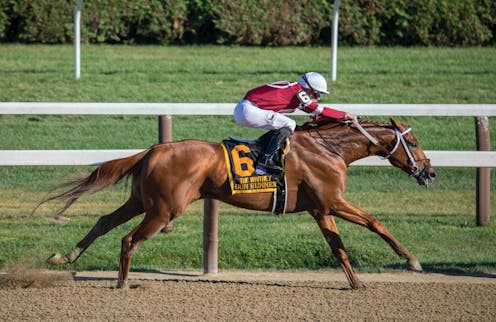
At times, Stinson concedes the validity of such criticisms. But he generates fresh perspectives capable of disrupting easy assumptions. On the question of gender, for instance, he draws attention to the ironic framing of masculinity in Murnane’s fiction and its subtle subversions of the repressive sexual mores associated with the author’s Catholic upbringing in the 1950s. He contests the view that Murnane’s writing does not attract women readers or critics and makes a case for recognising Murnane’s creative investment in working-class cultural pursuits, such as horse racing.
Stinson neither apologises for Murnane, nor resiles from asking readers to view his subject’s sophisticated body of work in more considered and careful ways.
He also offers arresting ideas that illuminate individual works and Murnane’s oeuvre as a whole. In his introduction, for example, Stinson describes Murnane’s writing as at once “homemade” and “cosmopolitan”. He connects this with a group of mid-century American writers – including William Faulkner, Wallace Stevens and F. Scott Fitzgerald – whom the American critic Hugh Kenner described as homegrown modernists. These were writers who adapted local, mundane, domestic American material in their modernist experimentation.
“Homemade” accords well with Murnane’s interest in everyday suburban or domestic surroundings and local geographies. The intricate, desiring, inner worlds of his books are built from homemade materials: his recollections of childhood reading; the fantasies and unrequited loves of his teenage years; his riffing on horse-racing colours; his narrators’ attempts to glimpse endless plains from the upper storeys of inaccessible manor houses.
Read more:
Bad art friends – Jen Craig may be the best Australian writer you've never heard of
Post-break
Noting all this, as well as the vagaries of Murnane’s publishing history, Stinson ponders his subject’s somewhat divided Australian reception. It is another of Murnane’s paradoxes that he is a profoundly Australian writer who deploys the most localised of materials, but an anomaly in “Australian literature”. The latter is (arguably) a self-consciously – or self-critically – national project. Yet Murnane’s books appear supremely uninterested in either politics or nation.
Critics of Murnane have also pointed to his ideological conservatism, his solipsistic or obsessive tendencies and, as Stinson notes, an idealisation of women that, for some, verges on misogyny.
At times, Stinson concedes the validity of such criticisms. But he generates fresh perspectives capable of disrupting easy assumptions. On the question of gender, for instance, he draws attention to the ironic framing of masculinity in Murnane’s fiction and its subtle subversions of the repressive sexual mores associated with the author’s Catholic upbringing in the 1950s. He contests the view that Murnane’s writing does not attract women readers or critics and makes a case for recognising Murnane’s creative investment in working-class cultural pursuits, such as horse racing.
Stinson neither apologises for Murnane, nor resiles from asking readers to view his subject’s sophisticated body of work in more considered and careful ways.
He also offers arresting ideas that illuminate individual works and Murnane’s oeuvre as a whole. In his introduction, for example, Stinson describes Murnane’s writing as at once “homemade” and “cosmopolitan”. He connects this with a group of mid-century American writers – including William Faulkner, Wallace Stevens and F. Scott Fitzgerald – whom the American critic Hugh Kenner described as homegrown modernists. These were writers who adapted local, mundane, domestic American material in their modernist experimentation.
“Homemade” accords well with Murnane’s interest in everyday suburban or domestic surroundings and local geographies. The intricate, desiring, inner worlds of his books are built from homemade materials: his recollections of childhood reading; the fantasies and unrequited loves of his teenage years; his riffing on horse-racing colours; his narrators’ attempts to glimpse endless plains from the upper storeys of inaccessible manor houses.
Read more:
Bad art friends – Jen Craig may be the best Australian writer you've never heard of
Post-break
 Four of the seven or eight books that appeared after Murnane paused his writing career in 1995 are fiction. These four are the focus of Stinson’s study.
For Stinson, the four post-break fictions – Barley Patch, A History of Books (2012), A Million Windows (2014) and Border Districts (2017) – are not just an addition to or extension of the earlier works. They are characterised by a “summative” intention. Their purpose is to revisit, reorder, ramify and complete Murnane’s body of work as a whole.
Stinson wants us to recognise “Murnane’s desire to frame and shape his own literary legacy”. He also emphasises the dynamism and continuity of Murnane’s writing. As I like to say, his books produce an evolving “Murnaniverse”. If this term conjures the “Marvel Cinematic Universe”, it is not necessarily a strange analogy, given Murnane’s liberal mixing of literary and popular cultural materials in Barley Patch and elsewhere.
Murnane’s books are so consistently Murnanian that it is possible to overlook their distinctive, individual features. Stinson’s chapters on the post-break novels avoid this pitfall. I came away from them with a sharpened sense of each book, even as I could see continuities across the whole.
Four of the seven or eight books that appeared after Murnane paused his writing career in 1995 are fiction. These four are the focus of Stinson’s study.
For Stinson, the four post-break fictions – Barley Patch, A History of Books (2012), A Million Windows (2014) and Border Districts (2017) – are not just an addition to or extension of the earlier works. They are characterised by a “summative” intention. Their purpose is to revisit, reorder, ramify and complete Murnane’s body of work as a whole.
Stinson wants us to recognise “Murnane’s desire to frame and shape his own literary legacy”. He also emphasises the dynamism and continuity of Murnane’s writing. As I like to say, his books produce an evolving “Murnaniverse”. If this term conjures the “Marvel Cinematic Universe”, it is not necessarily a strange analogy, given Murnane’s liberal mixing of literary and popular cultural materials in Barley Patch and elsewhere.
Murnane’s books are so consistently Murnanian that it is possible to overlook their distinctive, individual features. Stinson’s chapters on the post-break novels avoid this pitfall. I came away from them with a sharpened sense of each book, even as I could see continuities across the whole.
 The chapter on Barley Patch highlights (among other things) modes of reading and writing that are evident in Murnane’s work. The reading of A History of Books examines the intricacies of the fiction-autobiography dynamic. In his chapter on A Million Windows – which he characterises as a satire on the creative writing manual – Stinson unravels the idiosyncrasies of Murnane’s concept of the “implied author”, while the chapter on Border Districts examines the no less crucial (and paradoxical) concept of “retrospective intention”.
Drawing on US critic Merve Emre, Stinson describes Murnane’s approach to reading as “paraliterary”. This useful term provides a way think about Murnane’s preference for seemingly “untutored” reading practices, at odds with academic criticism, but no less complex and layered.
Late style, late recognition
In his substantial conclusion, subtitled “Gerald Murnane’s Late Style”, Stinson brings these elements together, succinctly and effectively explaining his larger argument.
“Late style” is a concept developed by Theodor Adorno and, later, Edward Said. It is marked by the artist’s decision to withdraw from the world, follow his or her own desires, and opt “for complexity over resolution”.
Admitting that this may be true of all Murnane’s writing, Stinson nonetheless argues for its special applicability to the four post-break fictions.
Beyond this conclusion, we encounter one more component: the transcript of Stinson’s recent interview with Murnane himself. Questions about the author’s experience of his “late recognition” are broached and considered. The book comes to an end with Murnane’s own words. Beyond the books, the writing continues: “I am still filling the archives”.
Can literary criticism produced by an academic be of interest to general readers? A publisher once said to me, of a proposal I had submitted, that readers only want to read the author’s work or what the author has to say, not some critic’s interpretation.
And yet today we are witnessing the incredible proliferation of book clubs and reviewing cultures – though the “literary criticism” practised by social media “influencers” (on BookTube, BookTok and the like) may be something else entirely.
Either way, it seems to me that Stinson’s book, which will certainly interest those who are already Murnane readers, may well interest some curious general readers. Despite his rising visibility and reputation, Murnane is still a cult figure. He is the kind of a writer who is unlikely to appeal to a wider reading public. But he does attract devotees.
It is not hard to see that Stinson is himself an unabashed devotee. At one point, he makes the bold call that Gerald Murnane is the best Australian writer since Christina Stead. Such partisanship, with which I am in sympathy, is nonetheless tempered by Stinson’s careful and rigorous reasoning, and the elegance and lucidity of his approach.
Authors: Brigid Rooney, Associate Professor (Affiliate), Australian Literature, University of Sydney
The chapter on Barley Patch highlights (among other things) modes of reading and writing that are evident in Murnane’s work. The reading of A History of Books examines the intricacies of the fiction-autobiography dynamic. In his chapter on A Million Windows – which he characterises as a satire on the creative writing manual – Stinson unravels the idiosyncrasies of Murnane’s concept of the “implied author”, while the chapter on Border Districts examines the no less crucial (and paradoxical) concept of “retrospective intention”.
Drawing on US critic Merve Emre, Stinson describes Murnane’s approach to reading as “paraliterary”. This useful term provides a way think about Murnane’s preference for seemingly “untutored” reading practices, at odds with academic criticism, but no less complex and layered.
Late style, late recognition
In his substantial conclusion, subtitled “Gerald Murnane’s Late Style”, Stinson brings these elements together, succinctly and effectively explaining his larger argument.
“Late style” is a concept developed by Theodor Adorno and, later, Edward Said. It is marked by the artist’s decision to withdraw from the world, follow his or her own desires, and opt “for complexity over resolution”.
Admitting that this may be true of all Murnane’s writing, Stinson nonetheless argues for its special applicability to the four post-break fictions.
Beyond this conclusion, we encounter one more component: the transcript of Stinson’s recent interview with Murnane himself. Questions about the author’s experience of his “late recognition” are broached and considered. The book comes to an end with Murnane’s own words. Beyond the books, the writing continues: “I am still filling the archives”.
Can literary criticism produced by an academic be of interest to general readers? A publisher once said to me, of a proposal I had submitted, that readers only want to read the author’s work or what the author has to say, not some critic’s interpretation.
And yet today we are witnessing the incredible proliferation of book clubs and reviewing cultures – though the “literary criticism” practised by social media “influencers” (on BookTube, BookTok and the like) may be something else entirely.
Either way, it seems to me that Stinson’s book, which will certainly interest those who are already Murnane readers, may well interest some curious general readers. Despite his rising visibility and reputation, Murnane is still a cult figure. He is the kind of a writer who is unlikely to appeal to a wider reading public. But he does attract devotees.
It is not hard to see that Stinson is himself an unabashed devotee. At one point, he makes the bold call that Gerald Murnane is the best Australian writer since Christina Stead. Such partisanship, with which I am in sympathy, is nonetheless tempered by Stinson’s careful and rigorous reasoning, and the elegance and lucidity of his approach.
Authors: Brigid Rooney, Associate Professor (Affiliate), Australian Literature, University of Sydney


 Daily Bulletin


