

Don't blame workers for falling productivity – we're not the ones holding it back
- Written by: Peter Martin, Visiting Fellow, Crawford School of Public Policy, Australian National University

Suddenly Australians are being told we need to produce more if we want our wages to merely keep up with inflation.
Reserve Bank Governor Philip Lowe has begun referring to “productivity” in each of the statements he makes after each Reserve Bank board meeting.
Whereas in the past he has only said we needed to boost productivity to lift real wages (to lift wages growth above price growth), he has begun saying we need to boost productivity to justify wage increases well below inflation.
The Governor is right to say that labour productivity (output per hour worked) is falling. He’s also right to say that’s unusual. But it would be wrong to conclude that the solution is for workers to simply work harder.
A tougher line for workers than for business
Lowe has been suggesting he will only tolerate the wages growth we’ve got “provided that trend productivity growth picks up”.
Inflation is officially 7%. The Reserve Bank’s best guess is that the update, due in six weeks, will show it has fallen to 6.3%.
Wages growth is only 3.7%, and the bank’s best guess is the update, due in nine weeks, will show it little changed at 3.8%.
This means wages growth is below inflation and set to stay that way. But Lowe is concerned enough about wage increases that aren’t backed by productivity growth that he is prepared to push up interest rates further to bring them down.
Read more: Why RBA Governor Philip Lowe wants to damage the economy further
As it happens, this isn’t something he has said about businesses. Last month, Telstra said it would lift its mobile and data charges “in line with the consumer price index, rounded to the nearest dollar”.
That’s an increase of 7%, allowing Telstra to boost its charges in line with inflation in a way Lowe doesn’t want workers to. And Telstra won’t need to show it is more productive. It won’t need to offer anything extra.
Productivity is slipping
The official figures show labour productivity (output per hour worked) falling. Although it usually increases, and increased very fast in the 1990s, GDP per hour worked has been falling since March 2022. Since then, it’s down 4.6%.
But it’s the sort of thing that would be expected when there’s a surge in employment. All other things being equal, the more hours that are worked, the less GDP per hour worked should be.
In the past year, hours worked have surged an extraordinary 5% to an all-time high. When a cafe puts on an extra staff member it doesn’t immediately mean it’ll sell more food. When a childcare centre or a school puts on extra staff it mightn’t produce more at all.
Short-term, more jobs means lower productivity growth
In the short term, the quickest way to boost measured productivity is to bring on recession and throw people out of work.
In 2009, productivity jumped in the United States after what people there called “The Great Recession”. In Australia, we know that period better as “the global financial crisis” – because there was no local recession. Employment stayed strong, while productivity growth slumped.
As a rule, getting people into paid work is something to be welcomed, and as a rule there’s not much anyone can do to stop it. This means that a key driver of measured productivity is beyond anyone’s direct control.
And there’s another driver that’s hard to control.
When mining booms, non-mining productivity slumps
One of the biggest direct drivers of measured productivity is automation. The more that employers put in machines to increase output per worker, the greater the output per worker.
One of the reasons it’s hard to increase output per worker these days might be that the industries that are growing are those such as aged care that are hard to automate. The Productivity Commission says after growing 2.2% per year through the 1990s, labour productivity grew by just 1.1% per year in the decade to 2020.
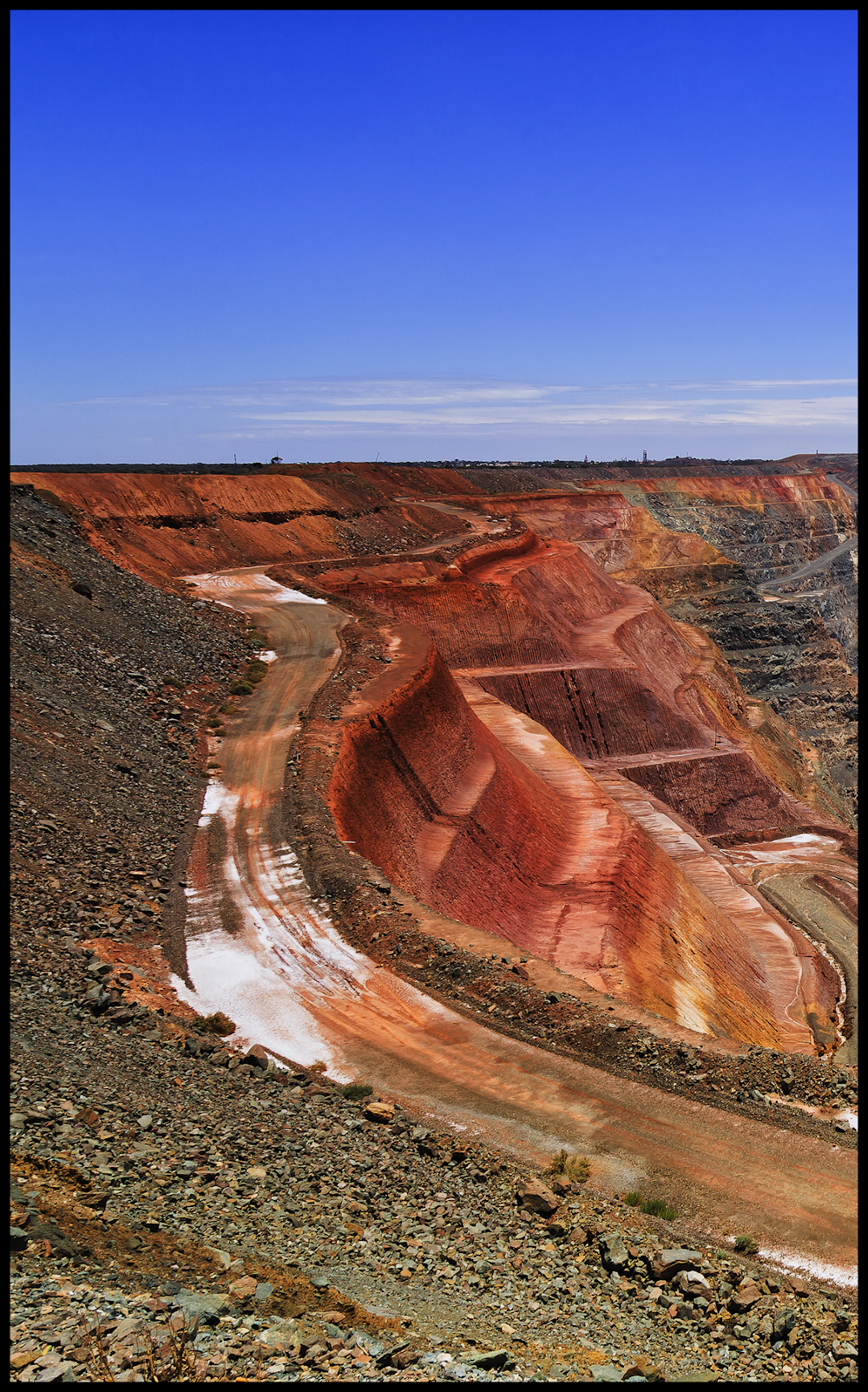
And there’s something else. When the price of Australia’s mineral exports booms, which it does from time to time for reasons beyond Australia’s control, other non-mining businesses tend to spend less money installing machines. To use the approved terminology, there’s less “non-mining business investment”.
Former Treasury Secretary Ken Henry believes the two are connected. He says high prices for mineral exports push up the value of the Australian dollar, which makes Australian non-mining businesses less able to compete with imports and less able to see the sense in installing machines.
Henry says that’s what’s happening at the moment. Australians and foreigners are finding better opportunities overseas.
Australia has become a net exporter, rather than a net importer, of investment funds – a change Henry says isn’t only because superannuation has boosted household savings.
There are all sorts of things we can do to boost labour productivity. Earlier this year, the Productivity Commission published a nine-volume report outlining them.
But they won’t pay quick dividends, and it’ll be hard going while employment remains robust (which is something we want) and minerals prices remain high (which is something we probably want).
In what has to be his most re-quoted observation ever, Nobel Prize-winning economist Paul Krugman famously said
productivity isn’t everything, but in the long run it is almost everything. A country’s ability to improve its standard of living over time depends almost entirely on its ability to raise its output per worker.
There are all sorts of things we can do to boost productivity. But to the extent that productivity is in anyone’s hands, it is in the hands of employers and broader forces beyond anyone’s ability to easily control.
Telling us to work harder is unlikely to make much difference.
Authors: Peter Martin, Visiting Fellow, Crawford School of Public Policy, Australian National University


 Daily Bulletin


