

Read The Times Australia

Daily Bulletin

Why taxing the world's biggest companies at 15% won't fix the gaping hole in global tax rules

  • Written by: Kerrie Sadiq, Professor of Taxation, QUT Business School, and ARC Future Fellow, Queensland University of Technology
Why taxing the world's biggest companies at 15% won't fix the gaping hole in global tax rules

Australia’s federal government has a plan to discourage companies from shifting profits to tax havens. The idea is to impose a “global minimum tax” on large Australian and foreign-owned companies with subsidiaries in low or no-tax countries.

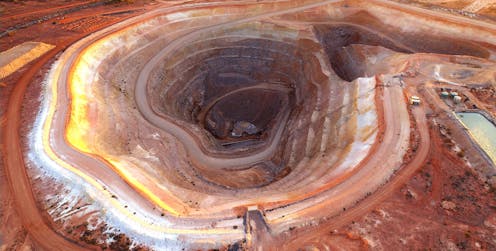
Australia’s largest mining companies are notorious for shifting profits to avoid the 30% company tax rate. It is common to use marketing hubs in Singapore, where the headline tax rate is 17% but various incentives often lower the effective rate to about 5%. Paying Singaporean subsidiaries for “services” performed, such as marketing or to use trademarks or patents owned by the group, can reduce a company’s Australian profits, and its tax bill.

The Albanese governent’s proposal, announced in the federal budget, embraces an OECD/G20 program to reduce profit shifting by multinationals through a uniform global 15% tax on all companies. Almost 140 countries have agreed to implement the tax, though to date only a handful have enacted it.

Read more: $1 trillion in the shade – the annual profits multinational corporations shift to tax havens continues to climb and climb

Any locally or foreign owned company in Australia that has overseas subsidiaries and annual global group revenue of more than €750 million (about A$1.2 billion) will be taxed the difference between the rate paid by the associated entities overseas and the 15% rate.

A 15% minimum tax rate will also apply to domestic companies with revenue of €750 million. Currently generous tax concessions – such as generous deductions or credits for activities like research and development – allow Australian businesses to reduce their tax burden from the headline 30% rate to less than 15%.

At first glance, these new taxes seem like a good idea. Proponents argue that putting a floor on corporate tax rates will slow “the race to the bottom”, which has seen governments lower corporate tax rates to attract or keep corporate capital.

However, for Australia it is likely to accelerate the problem. By implicitly accepting the legitimacy of profit shifting, the government does nothing to address the fundamental problem that enables multinationals to exploit the global tax system.

Recouping a pittance

The budget papers don’t say how many companies will be affected, but globally the OECD says no more than 100 corporations will have to pay the tax.

The budget estimates the Australian government will raise an extra $160 million in 2025-26, and $210 million in 2026-27. This is less than 0.5% of the $93 billion in company tax revenue in 2023-24, and a pittance compared with the tax lost through profit shifting by multinationals

For example, in the Australian Taxation Office’s most recent settlement with a company over disputed profit shifting, fuel company Ampol agreed to pay $157 million for avoided taxes dating back to 2014. This arose from Ampol Australia unnecessarily paying for oil imports acquired through a related Singapore procurement hub, instead of buying oil directly.

Rio Tinto, the world’s second-biggest mining company, agreed in 2022 to pay almost $1 billion to the tax office over money channelled to its Singapore marketing hub.

BHP, the world’s biggest mining company, agreed in 2018 to pay the tax office $529 million in extra taxes for profit-shifting arrangements between 2003 to 2018. This dispute also related to transactions between its Australian headquarters and marketing operations in Singapore.

In each of these settlements the companies admitted no wrongdoing. Details are confidential, so it is impossible to know how much tax the Australian Tax Office claimed was due. But it seems likely Australian taxpayers got less than the tax avoided.

Read more: The Pandora Papers show the line between tax avoidance and tax evasion has become so blurred we need to act against both

Fundamental problem remains

Rather than ending the race to bottom from international profit shifting, the 15% tax is likely to entrench it. It ensures companies that successfully shift profits out of Australia will pay no more than a 15% tax rate.

This will continue so long as different parts of a multinational corporation are treated as if they are separate entities for tax purposes. This is nothing more than a legal fiction.

The only way to prevent this is through real and substantive changes in the way governments tax multinationals.

The obvious solution is to treat multinationals as the global entities they are. Then allocate profits for tax purposes to the countries in which real activities creating those profits take place.

In the case of Australian mining companies, that should be where they dig their riches out of the ground.

Authors: Kerrie Sadiq, Professor of Taxation, QUT Business School, and ARC Future Fellow, Queensland University of Technology

Read more https://theconversation.com/why-taxing-the-worlds-biggest-companies-at-15-wont-fix-the-gaping-hole-in-global-tax-rules-206400

Business News

How Telematics Helps Australian Companies Improve Productivity

Operating a commercial fleet in Australia is a uniquely demanding endeavour. Between the sprawling urban sprawl of cities like Sydney and Melbourne and the immense, unforgiving stretches of the Outb...

Daily Bulletin - avatar Daily Bulletin

Inside the Icon: The BridgeMuseum Officially Opens at the Sydney Harbour Bridge

A bold new way to experience one of Australia’s most recognisable landmarks has arrived, with BridgeClimb Sydney officially opening the all-new BridgeMuseum.  Located inside the Sydney Harbour Brid...

Daily Bulletin - avatar Daily Bulletin

Is Your Brand Showing Up in AI Search? Most Melbourne Brands Aren't.

The New Front Door Nobody Told You About Something changed. Quietly. Without a press release. The way buyers find businesses in Australia has been rewired. Not replaced, rewired. Google isn't dead...

Daily Bulletin - avatar Daily Bulletin

How Australian Businesses Can Measure SEO ROI

SEO can feel vague when you are staring at a dashboard full of numbers that do not clearly connect to revenue. The key is to measure the right signals in the right order, then tie them back to outcome...

Daily Bulletin - avatar Daily Bulletin

How Commercial Roller Shutters Improve Site Security Without Slowing Operations

Security upgrades can be frustrating when they make everyday work harder. A door that takes too long to open, creates bottlenecks at shift change, or fails at the worst time can turn “better protectio...

Daily Bulletin - avatar Daily Bulletin

Why a Document Destruction Service Still Matters for Modern Businesses

Businesses generate large volumes of information every day, from staff records and contracts to invoices, reports and customer files. While attention often focuses on how documents are stored, the way...

Daily Bulletin - avatar Daily Bulletin

Bicycle Rack Safety and Space-Smart Storage

Bike storage problems usually show up as small annoyances first: tangled handlebars, scratched frames, and bikes that topple when you pull one out. Over time, those issues become safety risks, especia...

Daily Bulletin - avatar Daily Bulletin

How to Tell if a Childcare Centre Is a Good Fit for Your Child

Choosing childcare can feel like you’re making a huge decision with limited information. Tours are short, centres are often on their best behaviour, and your child might act differently in a new space...

Daily Bulletin - avatar Daily Bulletin

Car Import Timeline: What Usually Happens at Each Stage

Importing a car into Australia can feel confusing because multiple agencies and checkpoints are involved, and the timeline is shaped as much by paperwork quality as it is by shipping speed. The most u...

Daily Bulletin - avatar Daily Bulletin

The Daily Magazine

Gold Migration Lawyers in Liquidation: How the Closure Affects Your ART Appeal

If your appeal was with Gold Migration Lawyers, a recent change to how the Tribunal decides cases ...

The pressure cooker: life in urban Australia in 2026

Australian cities have always been demanding. Long commutes, rising housing costs, busy schedules a...

What Actually Makes a Good Criminal Lawyer in Melbourne

Most people only think about this question once. That is usually too late. Most people charged wi...

Why Working With A Chatswood Tutor Can Improve Academic Performance

Academic expectations continue increasing for students across primary school, high school, and senio...

Is It Worth Getting Solar Panels in Melbourne?

The real question is not whether solar works in Melbourne. It works. The question is what it is co...

How A Diploma Of Project Management Builds Practical Skills For Modern Work Environments

Developing the ability to plan, execute, and deliver outcomes efficiently is a key requirement in to...

How to Choose the Right Football for Every Level

Choosing a football may seem straightforward, but the right option depends on who will be using it a...

What to Ask a Wedding Photographer Before You Book

Booking a wedding photographer can feel deceptively simple: you like the photos, you like the vibe...

Why Stress Relief For Dogs Is Essential For Emotional Balance And Long-Term Wellbeing

Managing emotional health is just as important as physical care when it comes to pets, which is why ...