

Home support work in NZ is already insecure and underpaid – automation may only make it worse
- Written by: Leon Salter, Postdoctoral Fellow, Center for Culture-Centered Approach to Research and Evaluation, Massey University
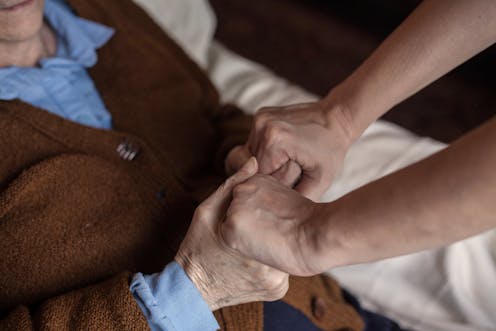
The number of number of people aged 65 years or older living in New Zealand is likely to hit one million by 2028, according to the latest statistics – up from under 300,000 in 1980. Caring for this ageing population will become increasingly important.
Research has shown New Zealanders prefer to retain independence for as long as possible with the help of home-based care. Yet home support workers (HSWs) – those who assist older people, as well as people with disabilities and long-term conditions – have been underpaid and underappreciated for decades.
This is affecting the long-term sustainability of the workforce. According to a 2019 survey, over 35% of care workers were aged 55-64. Only 11% were aged 25-34. In other words, care workers are getting older too.
Partly to address this, care provider companies (predominantly for-profit) are introducing platform technologies – or “care apps”. The rationale is that these empower care workers, create efficiencies for cost-conscious government agencies, and offer autonomy for clients.
It’s been claimed automation in the homecare sector will lower overhead costs and allow for staff pay to increase. Provider companies say it will also streamline the management of timesheets, salary payment, leave applications and access to client notes.
Our research and recently launched report critically interrogates these claims, as well as the broader impact of these platform technologies on the working lives of HSWs, and their resulting ability to provide dignified care.
Rather than support claims of empowerment and efficiency, our interviews and focus groups with HSWs suggest the care apps, as they are currently used, are exacerbating pre-existing systemic failures. These lead to disempowering underpayment, declining professional autonomy and alarming health and safety risks.
Trust and communication
Our interviewees’ experiences describe four broad themes:
Digital frustration: a lack of input into the design of the technology affects not only worker wellbeing, but also the quality of care that can be provided.
For example, one participant described how sudden changes to her roster made through the app disrupt the client trust she has established over time. This affects her ability to provide tailored care based on detailed knowledge of the client’s needs and personal circumstances, as well as contributing to a feeling of having little professional autonomy or control:
Sometimes [the app] doesn’t work that well because suddenly they change your roster. So I can ring my clients I’ve had the night before and say, yep I’m coming, I’ll see you around about 10 o'clock. And then the next day suddenly your roster has changed and that person now is not on your roster.
You now don’t have the phone number, so you can’t ring them to say my roster’s changed, I’m not going to come now, and then they’re gonna get somebody else turn up unexpectedly.
Precarity: care apps add to the already significant burden of unpaid labour, while cementing trends towards deskilling and loss of professional autonomy. One participant described how she had to log into the app four times for a single client. Another described how she would have to phone a call centre and explain if she forgot to log in.
Care workers are paid per client in a piecemeal way. Rather than receiving a salary, they don’t get paid for time spent on these other activities.
Several participants described how the requirement to log in often interrupted their ability to provide client care, taking focus away from often urgent tasks, as well as the skilled work of building a trusting relationship.
Read more: The coronavirus crisis shows why New Zealand urgently needs a commissioner for older people
Communication inequality: care apps (and smart phones more broadly) mean HSWs are always accessible to employers who can track their location with GPS technology. They can also add, remove and change clients with minimal notice (often causing distress to HSWs and their clients).
Meanwhile, participants described a lack of access to decision-makers, with local offices often having been closed and centralised into call centres. Functions for contacting managers or payroll departments through the app were often broken. As one participant said:
It’s difficult to get through to them […] You’ll ring the call centre, ask them to do something, or you leave a message […] and it just doesn’t happen. These are huge breakdowns in communication.
Health and safety: communication inequality exposes HSWs and their clients to undue risks, made even greater in the context of COVID-19. On top of insecure working conditions during the pandemic and difficulty getting adequate personal protective equipment, HSWs lacked access to up-to-date information about the COVID status of their clients, or access to expert support during medical emergencies.
Incorporating workers’ voices
According to the HSWs we interviewed, there is little recognition by their employers of the highly skilled work they do. Their valuable knowledge of the mechanics of providing care in the community has not been incorporated into the design of the care apps.
To ensure the new technology contributes to a sustainable workforce and to high-quality care in future, significant improvements to home care in general must be made.
Currently there are significant concerns about how home care is funded, delivered and accounted for. The lack of professional control, autonomy or trust experienced by workers, as well as the piecemeal pay system, must be addressed as part of the development of care apps if they are to be truly empowering.
This would deliver real improvements for clients and workers. Our evidence suggests that care apps imposed on a workforce without their professional input cannot be a magic bullet that solves the long-term challenges of demographic change and systemic inefficiency.
Read more: After COVID: why we need a change in care home culture
Protecting the vulnerable
Home care is complex and messy, and things can change from minute to minute. Worker and client voices should be actively incorporated in both the design and evaluation of the technology.
This will protect their interests and ensure the right balance is struck between privacy protection and the provision of up-to-date information on client needs. Any data that are extracted and stored must also uphold the principles of Te Tiriti o Waitangi.
Ensuring the voices of HSWs and their unions inform the technological parameters of their work will help prevent the worsening of their already fragile workplace conditions.
Ultimately, failure to ensure the sustainability of this vital workforce would be a collective failure to care for our most vulnerable people.
Authors: Leon Salter, Postdoctoral Fellow, Center for Culture-Centered Approach to Research and Evaluation, Massey University


 Daily Bulletin


