

Heidegger in ruins? Grappling with an anti-semitic philosopher and his troubling rebirth today
- Written by: Matthew Sharpe, Associate Professor in Philosophy, Deakin University
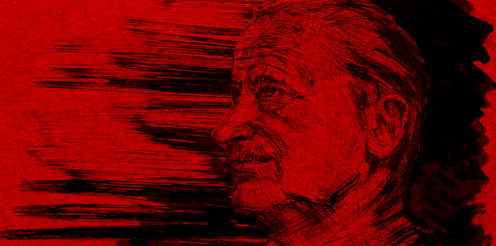
The story of German philosopher Martin Heidegger (1889-1976) and his posthumous reception almost reads like the plot of an airport spy thriller.
Heidegger rose to global fame with Being and Time (1927). This work, which shaped philosophical existentialism, claimed Western culture had lost touch with what he portentously called the “meaning of Being”. We have become too preoccupied with material things and the ephemera of fast-moving modern societies, forgetting the larger significance of our lives.
Review: Heidegger in Ruins: Between Philosophy and Ideology – Richard Wolin (Yale University Press)
In Heidegger’s view, this was due to Western philosophy’s overly-rational approach to existence. In subsequent works, he would develop his position into a deep scepticism of modern technology. Technology, he claimed, embodies a way of seeing reality that robs everything of intrinsic value. Instead, we treat everything (including human beings) as raw materials to control, buy and sell.
Heidegger joined Adolf Hitler’s Nazi Party on 1 May, 1933. In the following months, he gave a series of fiery public speeches in favour of the Nazi regime. In lectures and seminars, Heidegger linked his thought, and his aim of “overcoming” all of previous Western philosophy, with the Nazis’ attempts to reshape Germany and the European order.
After the war, Heidegger was subject to a teaching ban under denazification. His philosophical activism during Hitler’s reign, he told the Allies, had been an insignificant “blunder”. But he never apologised for his role in legitimising the Nazi seizure of power.
Heidegger was long imagined to have remained silent about the Holocaust, in ways we now know to be untrue. In the four decades after Nazism’s “zero hour” in 1945, his works appeared in many languages. Yet, they did so with the most openly political passages redacted. Almost all of Heidegger’s Nazi-era works were withheld from publication until the 1980s in Germany and elsewhere.
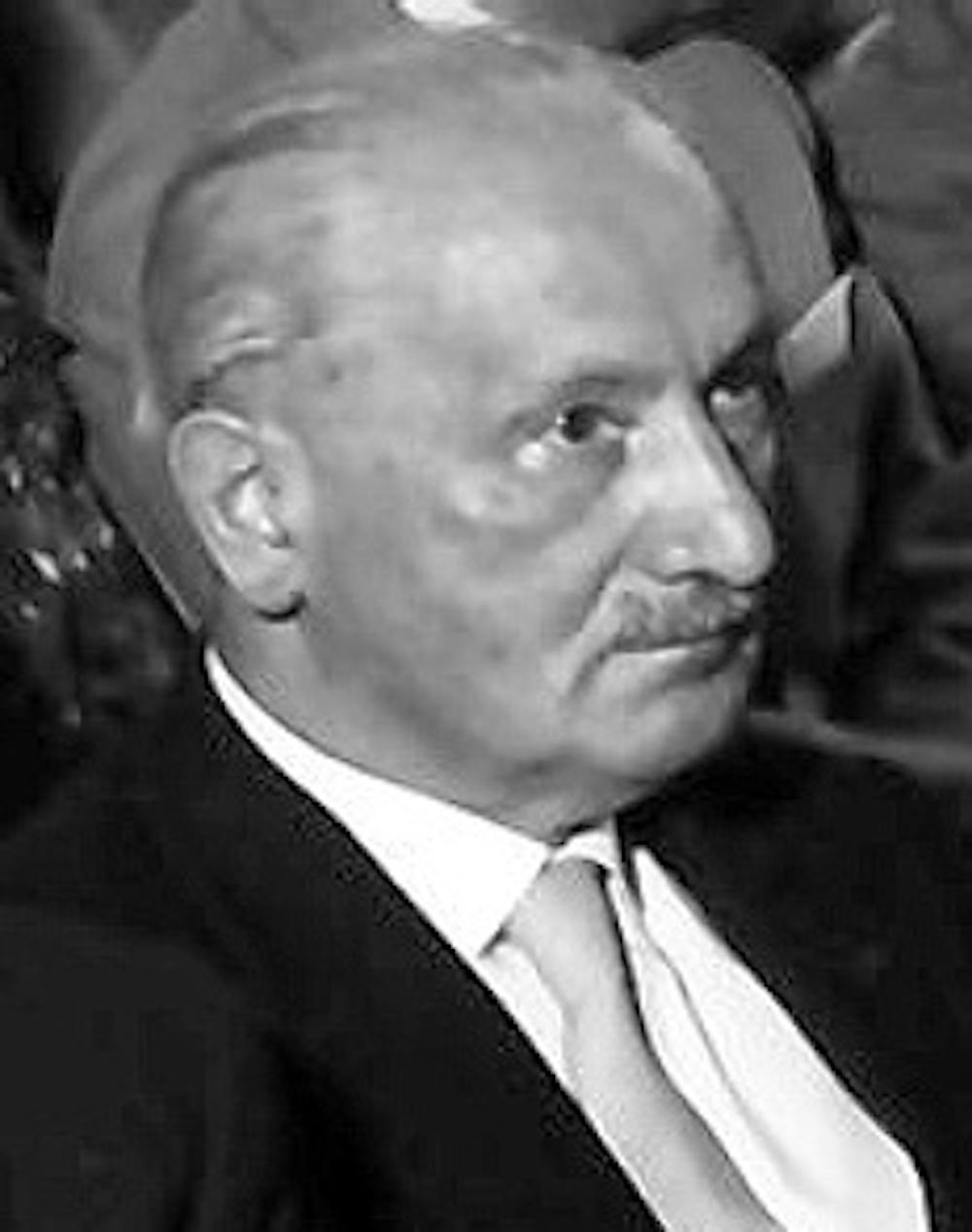
On this basis, Heidegger’s thought reemerged as an unlikely inspiration for the “French theory” of the 1960s-70s. As many intellectuals sought alternatives to the Marxist tradition discredited by Stalin’s crimes, Heidegger’s later criticisms of Western philosophy as robbing the world of meaning inspired many left-liberal, ecological, even postcolonial writings.
Heidegger, formerly a National Socialist Party member, became a forefather of postmodernism, an intellectual currency reviled in some media for its alleged, intransigent leftism.
Read more: Explainer: what is postmodernism?
The plot thickens
It was only years after the philosopher’s death, starting in 1983, that Heidegger’s pro-Nazi addresses reappeared in print. Over the ensuing decades, his Nazi-era lectures, seminars, correspondence, and finally, in 2014, his infamous Black Notebooks became available for scholarly assessment. In these Notebooks, the depth of Heidegger’s anti-semitism, and its link with his criticisms of the modern technological world’s alleged loss of meaning (or “nihilism”), was finally made public.
By the time the first critical works on Heidegger’s Nazism began to appear in the mid-1980s, Heidegger had become one of most celebrated intellectuals in the world. Many left-leaning scholars had built their reputations, and dedicated journals, on Heidegger’s work.
But they had done so by accepting Heidegger’s post-war underplaying of his Far Right politics, in unwitting ignorance of his estate’s suppression of many of his works and more disturbing views.
As the details and dimensions of his Nazism gradually appeared, some Heideggerians expressed disbelief, downplaying historical facts and denying their philosophical significance. Some, such as leading Heideggerian Thomas Sheehan, have attacked critics with suggestions of “fraud”, rather than challenging them for making contestable scholarly claims in an ongoing important and complex debate.
Heidegger in Ruins
A new book by intellectual historian Richard Wolin, Heidegger in Ruins: Between Philosophy and Ideology, is among the first English-language (rather than translated) books dedicated to reassessing Heidegger’s legacy since the publication of the Black Notebooks.
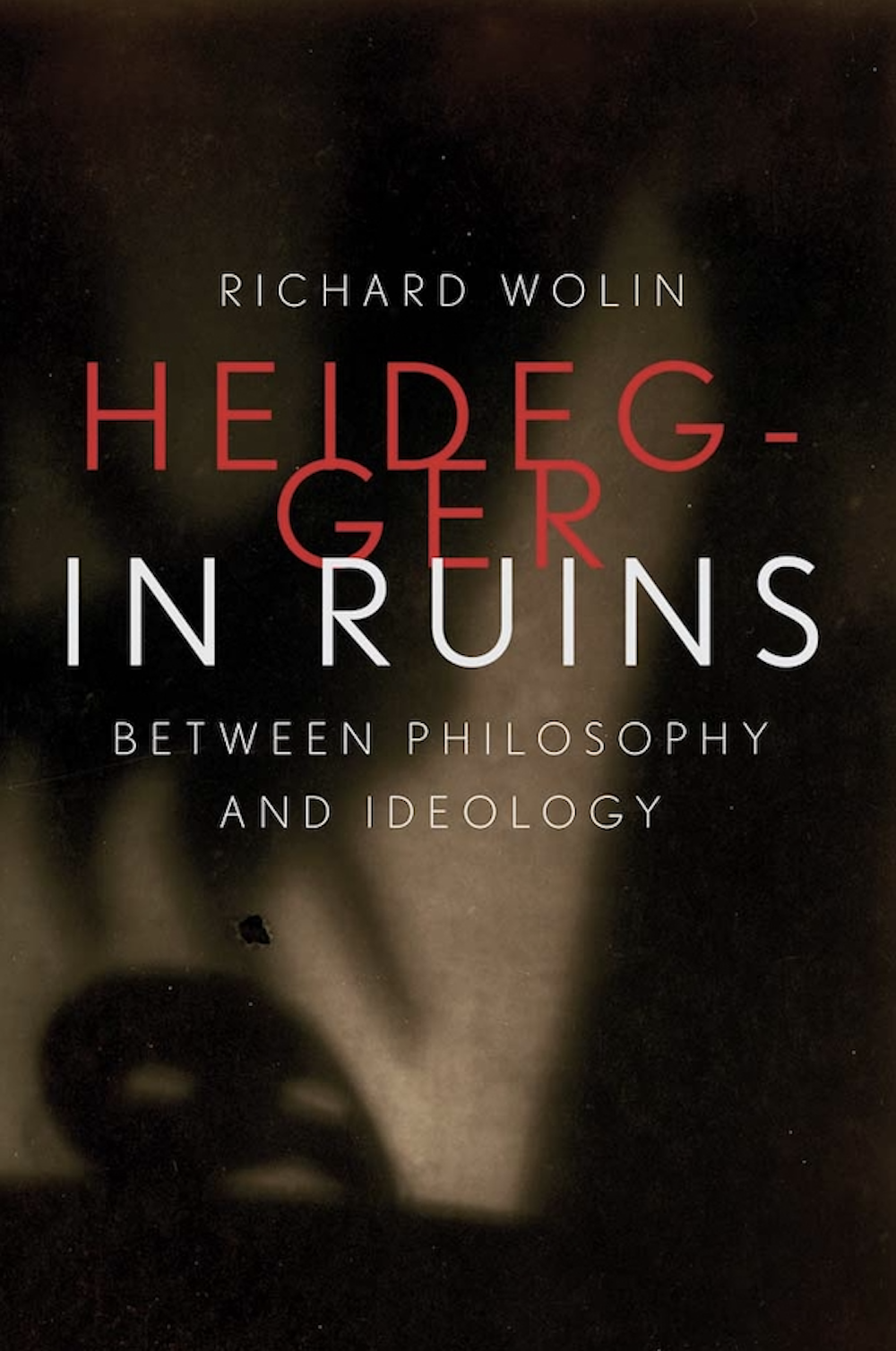 Dense with historical and philosophical content, the book will be impugned by some Heideggerians for not containing much that is “new”. (A standard justification for ignoring critics’ claims). What is new is firstly that Wolin brings together so much of the newer and older evidence, systematically, in one place.
The book’s opening chapter, for example, details the long record of editorial deceit, challenging basic scholarly norms, which meant many of Heidegger’s darkest passages were simply removed from his texts published between 1945 and the 1980s, and even more recently.
One especially notable example Wolin examines was Heidegger’s unbelievable 1939 advice to his students that “it would be worthwhile inquiring into world Jewry’s predisposition to planetary criminality”. In 2014, Peter Trawny, the editor of the lecture series in which Heidegger made this claim, revealed he had been pressured by Heidegger’s literary executors to excise this anti-semitic remark when publishing the lectures in 1998. As Wolin comments:
one would urgently like to know on what editorial grounds Trawny consented to this elision as well as why he waited 16 years before finally revealing the truth.
Wolin’s subsequent chapters examine Heidegger’s ideas concerning key Nazi subjects: race (Rasse), work (Arbeit), and “earth (Erde) and soil (Boden)”. These chapters show how deeply the celebrated philosopher’s thinking was shaped by the anti-democratic German milieu of his times.
Wolin removes the veil of “greatness” that has insulated the philosopher from historically-informed criticism. Once that veil is lifted, we see clearly how many of Heidegger’s celebrated positions – including his fascinations with the preSocratic Greeks and the German poet, Hölderlin – were not the products of his solitary, apolitical genius.
They reflect his immersion in what novelist Thomas Mann called the “revolutionary obscurantism” informing Nazism. This obscurantism hailed from Völkisch forms of German romanticism going back over a century before 1933. The Völkisch authors, mostly unread outside of Germany, expressed deep anxieties about modernisation and proud claims to German uniqueness. They also often harboured deep anti-semitic prejudices.
Heidegger’s Nazi-era speeches and lectures show a figure enthusiastically caught up in the propaganda and initiatives of the totalitarian regime.
He ruminates in philosophy classes on “Joy in Work (Arbeitsfreudigkeit)”, offering what Wolin calls a “discursive embellishment” to Nazism’s “strength through joy” programs. He philosophises in an advanced seminar about the Germans’ supposed right “to strike out into wider expanses”, giving philosophical support to Hitler’s planned expansion east, and military destruction of the international order created by the Treaty of Versailles.
Wolin’s book shows how Heidegger was far from resisting Nazism in any way. Rather, he was engaged in a struggle for influence within the regime, claiming to be able to teach others about the “inner truth and greatness” of the Nazi “movement”. Heidegger wanted to be the philosopher whose ideas could “lead the leaders”.
Read more:
World politics explainer: The Holocaust
The heart of the darkness
Wolin’s central chapters also offer a clear-sighted critical examination of how the Black Notebooks reveal Heidegger to be deeply anti-semitic in ways directly linked to his philosophical hostility to modernity.
Heidegger decried “world Jewry” for exercising a “temporary increase in power” in the modern world. Their “empty rationality and calculative ability”, a supposedly racial characteristic, he believed fitted the Jewish people especially well to profit from modern societies’ embrace of technology and cosmopolitan, universalist ideas.
The forms of “world reason” associated with ideas we now call human rights, the philosopher worried, were “uprooting” all peoples from the “forces … rooted in the soil (Boden) and blood (Blut)” of peoples with particular homelands, led by the Germans.
We need to be clear. Heidegger in no way dismissed what the
Nazis called the “Jewish question (Judenfrage)” as a barbarous prejudice far beneath the dignity of philosophy. He aimed to reframe this “question” in the light of his philosophical concerns about the modern West’s supposed “uprooting” of all things from their meanings, through technology.
Wolin’s analysis hence follows a growing number of commentators in confronting, most disturbingly, how Heidegger embraced philosophical rationalisations for the Shoah itself as an act of Jewish “self-destruction (Selbstvernichtung)”. (Readers interested can find these claims discussed here).
After May 1945, the philosopher defiantly claimed Nazi crimes were “1000-fold” less grave than the “thoughtlessness” of the Western powers. As his left-leaning admirers agonised unknowingly about why the great thinker would not express remorse, we now know that Heidegger in his Notebooks was impugning “world Jewry” for orchestrating a “revenge industry” against Germany, through their supposed conspiratorial control of “world journalism”.
Again, it is worth speaking as clearly as we can. Continuing attempts to present Heidegger as in any way meaningfully a pro-“Jewish” thinker need to take into account these, and many other, darkly anti-semitic and even revisionist positions. However great Heidegger’s thinking is supposed to have been, it did not prevent him from adopting the very worst, essentialised hatred of entire populations.
Heidegger’s second rebirth
Heidegger’s scheduling of his posthumous publications reflected his clear wish to finally get the whole truth out, concerning his political beliefs.
And alarmingly, the publication of his Nazi-era materials has coincided with Heidegger emerging as a far-right inspiration to ethno-nationalist radicals. In Russia, Germany, Austria, France, and the US, figures like Aleksandr Dugin, Martin Sellner, Steve Bannon, and Richard Spencer avow the philosopher’s guiding influence.
Read more:
Alexander Dugin, Eurasianism, and the American election
Dense with historical and philosophical content, the book will be impugned by some Heideggerians for not containing much that is “new”. (A standard justification for ignoring critics’ claims). What is new is firstly that Wolin brings together so much of the newer and older evidence, systematically, in one place.
The book’s opening chapter, for example, details the long record of editorial deceit, challenging basic scholarly norms, which meant many of Heidegger’s darkest passages were simply removed from his texts published between 1945 and the 1980s, and even more recently.
One especially notable example Wolin examines was Heidegger’s unbelievable 1939 advice to his students that “it would be worthwhile inquiring into world Jewry’s predisposition to planetary criminality”. In 2014, Peter Trawny, the editor of the lecture series in which Heidegger made this claim, revealed he had been pressured by Heidegger’s literary executors to excise this anti-semitic remark when publishing the lectures in 1998. As Wolin comments:
one would urgently like to know on what editorial grounds Trawny consented to this elision as well as why he waited 16 years before finally revealing the truth.
Wolin’s subsequent chapters examine Heidegger’s ideas concerning key Nazi subjects: race (Rasse), work (Arbeit), and “earth (Erde) and soil (Boden)”. These chapters show how deeply the celebrated philosopher’s thinking was shaped by the anti-democratic German milieu of his times.
Wolin removes the veil of “greatness” that has insulated the philosopher from historically-informed criticism. Once that veil is lifted, we see clearly how many of Heidegger’s celebrated positions – including his fascinations with the preSocratic Greeks and the German poet, Hölderlin – were not the products of his solitary, apolitical genius.
They reflect his immersion in what novelist Thomas Mann called the “revolutionary obscurantism” informing Nazism. This obscurantism hailed from Völkisch forms of German romanticism going back over a century before 1933. The Völkisch authors, mostly unread outside of Germany, expressed deep anxieties about modernisation and proud claims to German uniqueness. They also often harboured deep anti-semitic prejudices.
Heidegger’s Nazi-era speeches and lectures show a figure enthusiastically caught up in the propaganda and initiatives of the totalitarian regime.
He ruminates in philosophy classes on “Joy in Work (Arbeitsfreudigkeit)”, offering what Wolin calls a “discursive embellishment” to Nazism’s “strength through joy” programs. He philosophises in an advanced seminar about the Germans’ supposed right “to strike out into wider expanses”, giving philosophical support to Hitler’s planned expansion east, and military destruction of the international order created by the Treaty of Versailles.
Wolin’s book shows how Heidegger was far from resisting Nazism in any way. Rather, he was engaged in a struggle for influence within the regime, claiming to be able to teach others about the “inner truth and greatness” of the Nazi “movement”. Heidegger wanted to be the philosopher whose ideas could “lead the leaders”.
Read more:
World politics explainer: The Holocaust
The heart of the darkness
Wolin’s central chapters also offer a clear-sighted critical examination of how the Black Notebooks reveal Heidegger to be deeply anti-semitic in ways directly linked to his philosophical hostility to modernity.
Heidegger decried “world Jewry” for exercising a “temporary increase in power” in the modern world. Their “empty rationality and calculative ability”, a supposedly racial characteristic, he believed fitted the Jewish people especially well to profit from modern societies’ embrace of technology and cosmopolitan, universalist ideas.
The forms of “world reason” associated with ideas we now call human rights, the philosopher worried, were “uprooting” all peoples from the “forces … rooted in the soil (Boden) and blood (Blut)” of peoples with particular homelands, led by the Germans.
We need to be clear. Heidegger in no way dismissed what the
Nazis called the “Jewish question (Judenfrage)” as a barbarous prejudice far beneath the dignity of philosophy. He aimed to reframe this “question” in the light of his philosophical concerns about the modern West’s supposed “uprooting” of all things from their meanings, through technology.
Wolin’s analysis hence follows a growing number of commentators in confronting, most disturbingly, how Heidegger embraced philosophical rationalisations for the Shoah itself as an act of Jewish “self-destruction (Selbstvernichtung)”. (Readers interested can find these claims discussed here).
After May 1945, the philosopher defiantly claimed Nazi crimes were “1000-fold” less grave than the “thoughtlessness” of the Western powers. As his left-leaning admirers agonised unknowingly about why the great thinker would not express remorse, we now know that Heidegger in his Notebooks was impugning “world Jewry” for orchestrating a “revenge industry” against Germany, through their supposed conspiratorial control of “world journalism”.
Again, it is worth speaking as clearly as we can. Continuing attempts to present Heidegger as in any way meaningfully a pro-“Jewish” thinker need to take into account these, and many other, darkly anti-semitic and even revisionist positions. However great Heidegger’s thinking is supposed to have been, it did not prevent him from adopting the very worst, essentialised hatred of entire populations.
Heidegger’s second rebirth
Heidegger’s scheduling of his posthumous publications reflected his clear wish to finally get the whole truth out, concerning his political beliefs.
And alarmingly, the publication of his Nazi-era materials has coincided with Heidegger emerging as a far-right inspiration to ethno-nationalist radicals. In Russia, Germany, Austria, France, and the US, figures like Aleksandr Dugin, Martin Sellner, Steve Bannon, and Richard Spencer avow the philosopher’s guiding influence.
Read more:
Alexander Dugin, Eurasianism, and the American election
 Ultra-nationalist Russian thinker Aleksandr Dugin.
Alexander Zemlianichenko/AP
In May 2013, French far-rightist Domenique Vellner suicided publicly in Notre Dame Cathedral, protesting the supposed “great replacement” of white Europeans by immigrants. A longstanding admirer of the German philosopher, Vellner’s self-justifying screed was entitled: “The 26 May Demonstrators and Heidegger”.
This posthumous far-right rebirth is the subject of Heidegger in Ruins’ culminating chapter. It also makes Wolin’s title worryingly disputable. Heidegger is in ruins as a source of inspiration for any progressive thinking, for all but a diminishing few. In other circles, he is being reborn, closer to how he thought of himself.
What then?
So, how should we teach Heidegger today, given his huge historical influence, and far-right revival? How can philosophy, this “love of wisdom”, be consistent with the most abhorrent inhumanity, in someone often lauded as “the greatest thinker of the 20th century”?
It is surely not setting a prohibitive bar (Heideggerians wrongly accuse critics of wanting to “cancel” him, which no one proposes) to contend that teaching or “thinking with” Heidegger now, without seriously engaging with his self-assessment as a “spiritual Nazi” and “metaphysical” anti-semite, is iresponsible.
Heidegger in Ruins shows that teaching a Heidegger separate from his own historical context, has led to partial and naively misleading understandings of his thinking.
The failure of so many, for so long, to see the philosophical roots of Heidegger’s Nazism, suggests the continuing need for better education in democratic societies – across various disciplines – about the history and ideas of the far-right.
Authors: Matthew Sharpe, Associate Professor in Philosophy, Deakin University
Ultra-nationalist Russian thinker Aleksandr Dugin.
Alexander Zemlianichenko/AP
In May 2013, French far-rightist Domenique Vellner suicided publicly in Notre Dame Cathedral, protesting the supposed “great replacement” of white Europeans by immigrants. A longstanding admirer of the German philosopher, Vellner’s self-justifying screed was entitled: “The 26 May Demonstrators and Heidegger”.
This posthumous far-right rebirth is the subject of Heidegger in Ruins’ culminating chapter. It also makes Wolin’s title worryingly disputable. Heidegger is in ruins as a source of inspiration for any progressive thinking, for all but a diminishing few. In other circles, he is being reborn, closer to how he thought of himself.
What then?
So, how should we teach Heidegger today, given his huge historical influence, and far-right revival? How can philosophy, this “love of wisdom”, be consistent with the most abhorrent inhumanity, in someone often lauded as “the greatest thinker of the 20th century”?
It is surely not setting a prohibitive bar (Heideggerians wrongly accuse critics of wanting to “cancel” him, which no one proposes) to contend that teaching or “thinking with” Heidegger now, without seriously engaging with his self-assessment as a “spiritual Nazi” and “metaphysical” anti-semite, is iresponsible.
Heidegger in Ruins shows that teaching a Heidegger separate from his own historical context, has led to partial and naively misleading understandings of his thinking.
The failure of so many, for so long, to see the philosophical roots of Heidegger’s Nazism, suggests the continuing need for better education in democratic societies – across various disciplines – about the history and ideas of the far-right.
Authors: Matthew Sharpe, Associate Professor in Philosophy, Deakin University


 Daily Bulletin


