

A tonne of fossil carbon isn't the same as a tonne of new trees: why offsets can't save us
- Written by: Wesley Morgan, Research Fellow, Griffith Asia Institute, Griffith University
This week, the Albanese government is attempting to reform the safeguard mechanism to try to make it actually cut emissions from our highest polluting industrial facilities.
Experts and commentators see Labor’s plan as a cautious, incremental change that doesn’t yet rise to the urgency of the intensifying climate crisis. But it could generate momentum after a wasted decade of climate denial and delay under the previous government. Done right, it could set our biggest industrial polluters on a pathway to cut their emissions and be a springboard for more ambitious changes.
But there’s one glaring problem. Under the government’s proposed rules, there is still no requirement for polluters to actually cut their emissions at the sites where they are released into the atmosphere. Instead, companies can choose to buy carbon credits or offsets to meet their obligations. Incredibly, there would be no limit on the number of offsets companies can use.
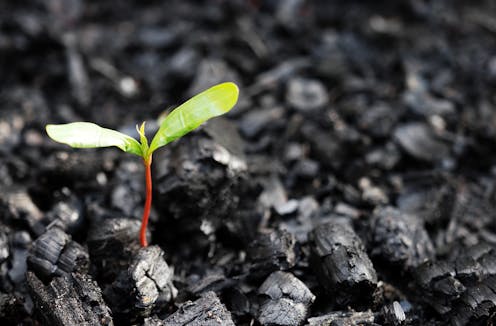
You’ve probably heard about Australia’s rubbery offset schemes and questions of integrity. But there’s an even more fundamental problem. One tonne of carbon dioxide pumped into the atmosphere by burning fossil fuels is not the same as one tonne of carbon stored in the tree trunks of a newly planted forest.
The carbon in coal, gas and oil has been safely stored underground for extraordinary lengths of time. But when trees take carbon dioxide back out of the atmosphere, they may only store it for a short period.
There is simply no way around it. Avoiding the worst of climate change means stopping the extraction and burning of fossil fuels. Offsets will not save us. In fact, unlimited use of offsets could see even more emissions, if coal and gas companies “offset” emissions and ramp up exports.

Why can’t we rely on nature to pull carbon dioxide from the air?
In 2023, many policymakers still believe we can adequately offset emissions. It would certainly be easier if we could keep burning fossil fuels and offsetting them by planting forests. But it doesn’t work. It’s simply not possible to fully “offset” billions of tonnes of greenhouse gas emissions from burning of coal, oil and gas by regrowing forests, increasing the amount of carbon in soils or other measures.
That’s because the carbon dioxide released by burning fossil fuels is fundamentally different to the way carbon is stored above ground in trees, wetlands and in the soil.
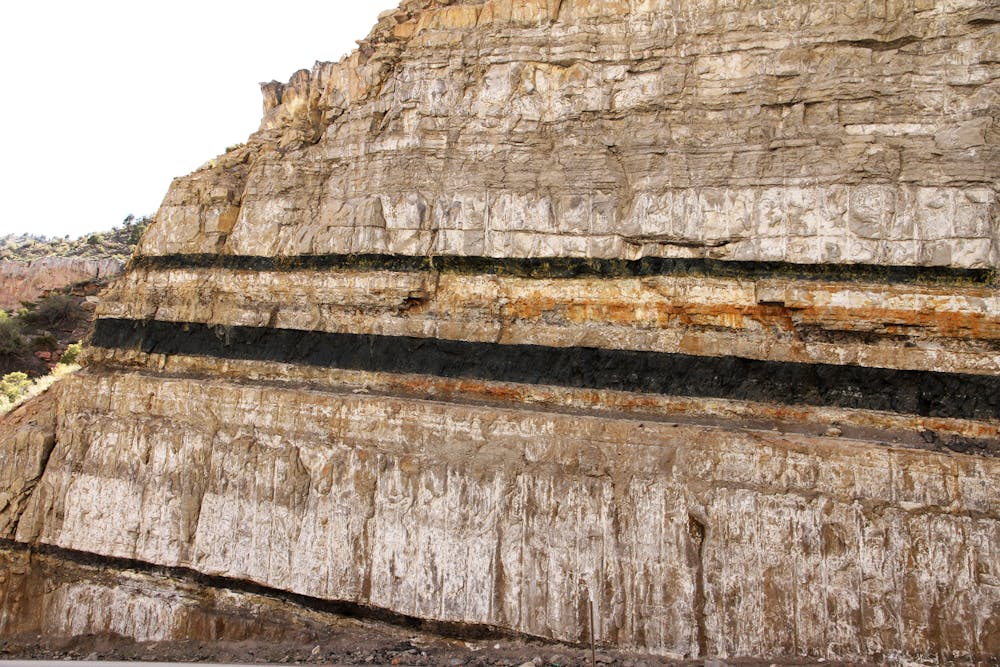 The only long term storage solution for fossil fuels like coal is to leave them precisely where they are.
Shutterstock
The only long term storage solution for fossil fuels like coal is to leave them precisely where they are.
Shutterstock
Carbon is everywhere on Earth — in the atmosphere, the ocean, in soils, in all living things, and in rocks and sediments. It is constantly being cycled through these different parts. Carbon is also being continually exchanged between the atmosphere and the ocean’s surface. Together these processes make up the earth’s “active” carbon cycle.
When we burn fossil fuels, we release carbon locked away for millions of years (hence “fossil” fuels), pumping vast new volumes of carbon into the active carbon cycle. This is very clearly altering the balance of carbon in the Earth system and faster than ever recorded in the Earth’s geological history. Planting trees does not lock carbon away again deep underground. Instead, the introduced fossil carbon remains part of the active carbon cycle.
To compound the problem, much of the carbon stored in land-based offsets does not stay stored. Forests can easily be destroyed by fire, disease, floods and droughts, all of which are increasing with climate change.
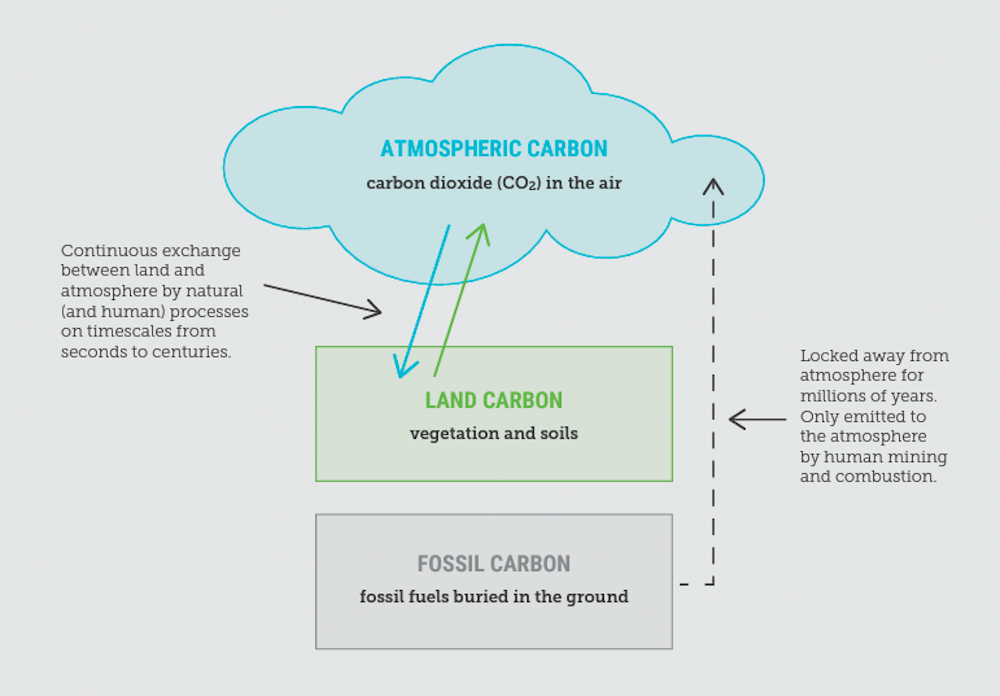 Carbon is continually exchanged between the land and the atmosphere on timescales of seconds, days, decades and centuries, whereas fossil carbon has been locked away from the atmosphere for millions of years.
Climate Council, CC BY
Carbon is continually exchanged between the land and the atmosphere on timescales of seconds, days, decades and centuries, whereas fossil carbon has been locked away from the atmosphere for millions of years.
Climate Council, CC BY
Offsets are a last resort – nothing more
Despite these issues, offsets will still have a small role. Some emissions cannot be avoided or reduced at present, given low-emissions technologies for industries like steelmaking are still scaling up. But these offsets must be strictly limited and set to progressively decline over time, as opportunities for genuine emissions reductions – at the source – are developed and rapidly scaled.
Unfortunately, paying for offsets is the first and only thing many large companies are doing about their harmful emissions.
Read more: The Greens aren't grandstanding on a new coal and gas ban – they're negotiating well
If we allow fossil fuel companies to offset their emissions without limit, they will keep along a business as usual track or even expand their operations. That, in turn, will mean significantly more emissions when Australian fossil fuels are burned overseas.
Our leaders must avoid the offset trap
It’s taken Australia decades too long, but we’re finally past climate denial, perhaps due to unprecedented fire and floods. Our leaders tell us it’s now about finding solutions. Well, offsets are not a solution. There is no substitute to actually ending the routine burning of fossil fuels.
We all want our comfortable lives to continue with a minimum of change. Offsets seem to deliver that. But all they really do is offset our guilt and responsibility. They cannot solve the central problem which is that every year, we add another 33 billion tonnes of carbon dioxide to the atmosphere by burning fossil fuels.
 Australia’s climate change minister Chris Bowen will have to negotiate serious scepticism about offsets to get the government’s safeguard mechanism changes through.
Lukas Coch/AAP
Australia’s climate change minister Chris Bowen will have to negotiate serious scepticism about offsets to get the government’s safeguard mechanism changes through.
Lukas Coch/AAP
The atmosphere doesn’t respond to good intentions or clever schemes. All it responds to is the volume of greenhouse gases which trap ever more heat.
If Labor is to make the safeguard mechanism fit for purpose, it must focus on genuine emissions reductions at the source.
What Australia does matters a great deal to the world’s efforts to tackle the climate crisis. If Australia became the first major fossil fuel exporter to embrace a future as a clean energy superpower, it will demonstrate it is possible – and that it comes with benefits like new industries, cleaner air and energy security.
First, though, we have to give up on offset pipe dreams. The only thing that matters is cutting emissions.
Read more: Now we know the flaws of carbon offsets, it's time to get real about climate change
Authors: Wesley Morgan, Research Fellow, Griffith Asia Institute, Griffith University


 Daily Bulletin


