

Read The Times Australia

Daily Bulletin

Palm kernel product imported for use on dairy farms may actually be harmful to cows

  • Written by: Hadee Thompson-Morrison, PhD Candidate in Environmental Science, University of Canterbury
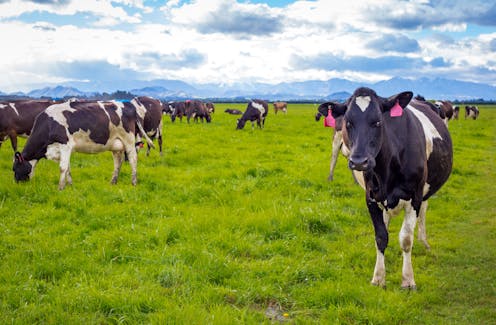
Palm kernel product imported for use on dairy farms may actually be harmful to cows

Each year, New Zealand imports about 2 million tonnes of palm kernel expeller (PKE), a by-product of palm-oil processing in Indonesia and Malaysia, to feed dairy cows, at a cost of NZ$800 million.

But our research shows PKE contains concentrations of some elements that may be harmful to cows.

We analysed the chemical composition of several batches of PKE imported into New Zealand over two years. We found it contained concentrations of iron, magnesium and phosphorus that exceeded safe levels for dairy cattle health. Some batches contained concentrations of aluminium, copper, sulphur and potassium within 90% of their safe limits.

These elements may have both positive and negative effects on the health of dairy cows and soils. But there is no monitoring and our research shows the chemical composition of different batches imported into New Zealand is highly variable.

Copper in PKE may be helpful in treating widespread deficiencies of this element in New Zealand’s farming systems. Similarly, magnesium in PKE may offset the need to supplement this element for lactating dairy cows.

PKE may be a source of fertilising nutrients into soils. It contains high concentrations of phosphorus, which will improve pasture growth when deposited on the soil in animals’ manure.

However, the concentrations of iron, aluminium, potassium and sulphur in PKE may cause nutrient imbalances in dairy cows. The actual effects on dairy farms, soils and milk are yet unknown. Other evidence suggests these chemical elements, when eaten by cows, may end up in milk.

Read more: 11,000 litres of water to make one litre of milk? New questions about the freshwater impact of NZ dairy farming

PKE in the New Zealand environment

Currently, environmental regulations require farmers to quantify every input to their farms in order to meet nutrient budgets to stay within freshwater quality standards. When the composition of PKE changes batch by batch, it becomes very difficult to quantify farm inputs and meet farm-nutrient budgets.

Fonterra and Synlait, two of New Zealand’s largest dairy companies, actively discourage the use of PKE because it can change milk composition, giving it a higher fat content.

However, it remains widely used due to feed shortages. Potentially, PKE use could be offset by reusing some of the more than 2 million tonnes of food and food-processing waste New Zealand produces annually.

Workers on a palm oil plantation
Palm kernel expeller is a by-product of palm oil processing. Shutterstock/Yogie Hizkia

Palm oil production

Even if PKE were proven to be beneficial to New Zealand agriculture, there is still the ethical question of whether New Zealand should be supporting an industry with unsustainable production patterns.

The production of palm oil has been linked to deforestation in tropical rainforests in Indonesia, as more and more land is needed to produce this increasingly common commodity used in everyday foods and personal-care products.

Even when PKE is certified by the Roundtable on Sustainable Palm Oil – a certification program for palm oil growers, suppliers and users – research has shown this palm oil is no different to any other in terms of social, environmental and economic outcomes for people and the environment.

Read more: In Papua, forests offer more economic benefits than oil palm plantations, research finds

Palm oil plantation next to rainforest
The production of palm oil has been linked to deforestation in tropical rainforests in Indonesia. Shutterstock/Rich Carey

In 2015 and 2019, Indonesia gained media attention for forest fires to clear land for palm oil production, resulting in air pollution in neighbouring countries.

An audit by the Indonesian government in 2018 found 81% of palm oil plantations were breaching environmental regulations. Breaches included failing to obtain permits, not complying with sustainability standards and encroachment into surrounding protected forests.

New Zealand’s support of this industry is controversial, especially when there are potential alternatives.

Possible alternatives to PKE

New Zealand imports more PKE than the European Union. There are possible alternatives made in New Zealand that currently end up in landfill, including biowaste from the food and beverage sector. This waste includes leftover products from potato processing, wine making, brewing and other food-processing industries.

By importing PKE, New Zealand is forgoing the opportunity to use these locally produced waste materials as animal feeds and to avoid greenhouse gas emissions produced when they are sent to the landfill.

There is an opportunity here to repurpose food waste and the nutrients it contains for New Zealand’s primary sector. This is the subject of ongoing research at the University of Canterbury, Lincoln University, Manaaki Whenua Landcare Research and ESR.

Authors: Hadee Thompson-Morrison, PhD Candidate in Environmental Science, University of Canterbury

Read more https://theconversation.com/palm-kernel-product-imported-for-use-on-dairy-farms-may-actually-be-harmful-to-cows-196569

Business News

How Immigration Lawyers Can Help

Introduction Visa decisions can shape employment, family life, study plans, travel, and future residence. A small omission can lead to delay, added expense, or refusal. Immigration lawyers assess l...

Daily Bulletin - avatar Daily Bulletin

How Industrial Drying Equipment Supports Efficient Processing

Many industrial processes require moisture to be removed from compressed air, products or process materials before they move to the next stage. Excess moisture can affect equipment performance, produc...

Daily Bulletin - avatar Daily Bulletin

Practical Ways a Whiteboard Can Improve Workplace Communication

Effective communication helps teams stay organised, share ideas and keep track of important information. While digital tools are now common in many workplaces, a whiteboard continues to provide a simp...

Daily Bulletin - avatar Daily Bulletin

Designing Eco-Friendly Custom Water Bottles for Your Next Event

The Evolution of Sustainable Event Merchandise Event planning has undergone a massive transformation over the last decade. Gone are the days when organizers could hand out cheap, single use plastic...

Daily Bulletin - avatar Daily Bulletin

Why Choosing a Professional Florist Melbourne Makes Flower Delivery Impactful

Flowers have a great power to speak when humans cannot express their feelings with right words. Flowers are the best gifts when you are celebrating a birthday or welcoming a newborn child into your fa...

Daily Bulletin - avatar Daily Bulletin

The Business Case for Choosing Australian Fabricators Over Imported Alternatives

For a long time, you might have defaulted to overseas suppliers when sourcing fabricated metal components for a project. The unit price was lower on paper, and the maths seemed straightforward. That...

Daily Bulletin - avatar Daily Bulletin

Australian organisations are relying on business continuity plans built for a far more predictable world

Tariff escalations, supply chain fragility, geopolitical events, and the ongoing threat of cyber disruption have reshaped the risk environment facing Australian organisations. The problem is that ma...

Daily Bulletin - avatar Daily Bulletin

How to Rent a Car for Uber in Melbourne: What Every New Driver Needs to Know

Starting out as an Uber driver in Melbourne is not as complicated as it sounds but getting the vehicle right is where most new drivers get stuck. Uber has strict requirements around vehicle age, condi...

Daily Bulletin - avatar Daily Bulletin

When Should You Speak to a Lawyer About a Legal Issue?

Legal issues can begin with a simple question, then become harder to manage once formal steps are involved. Many people wait until a matter feels urgent before seeking guidance, even though earlier ...

Daily Bulletin - avatar Daily Bulletin

The Daily Magazine

How Long Does Interstate Freight Take in Australia?

If you have ever arranged for stock, equipment or materials to travel from one Australian state to a...

How AEC Firms Can Scale Faster Without Sacrificing Project Quality

Growth presents a fundamental dilemma for architecture, engineering, and construction firms: expan...

What Makes an Aesthetic Clinic Worth Going Back To?

Trying an aesthetic clinic for the first time can feel like a bit of a gamble. You can read review...

Elevate Your Morning Routine with Cafe-Style Coffee at Home with the Right Coffee Machine

There's something magical about that first sip of coffee in the morning. It’s more than just a bev...

Top Garment Steamers for Busy Professionals in Australia

The gap between garment steamers built for a quick touch-up and ones built to keep pace with a wor...

Correct Sleeping Posture to Minimize Back Strain

Most people don’t pay much attention to how they sleep until they start waking up with a stiff bac...

Why Product Longevity Matters for Sustainable Australian Buildings

Sustainability in building design is often associated with recycled materials, renewable resources a...

NDIS Support Coordination Explained: What Does a Support Coordinator Actually Do?

NDIS support coordination explained means understanding how a professional can help participants n...

When Should You Speak with Divorce Lawyers in Sydney?

Divorce involves more than completing an online application. It can affect parenting arrangements, p...