

Misleading food labels contribute to babies and toddlers eating too much sugar. 3 things parents can do
- Written by: Jennifer McCann, Lecturer, PhD student, Deakin University
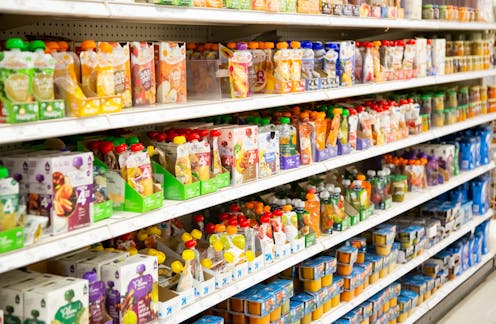
Australian infants and toddlers are eating unhealthy amounts of sugar. This is mostly because the products marketed and sold by the processed food industry are high in sugar.
Based on the last Australian National Nutrition Survey, children aged 2–3 years consumed 32 grams of added sugar per day equivalent to 8 teaspoons of white sugar.
Our research shows the increased availability of ultra-processed foods for very young children may be contributing to a sugary diet.
So what can parents do about it?
What too much sugar does to children
The problem with too much sugar in our diets is it provides kilojoules but little else nutritionally.
These extra kilojoules promote weight gain and obesity. They also contribute strongly to tooth decay in young children and often displace healthy options like fruits, vegetables, and dairy foods from a child’s diet.
One in every four Australian children has dental cavities in their baby or permanent teeth.
The World Health Organization (WHO) recommends “free sugar intake” be limited to less than 10% of our total daily kilojoules for everyone. In fact, the WHO is now considering reducing that amount down to 5% given the knowledge children’s sugar intakes remain high.
Free sugars are those added to foods and drinks, as well as sugars naturally present in honey, fruit juices, and fruit juice concentrates. Free sugars do not include natural sugars found within whole (unprocessed) fruits and vegetables or milk.
Results from the Australian National Nutrition Survey indicate toddlers aged 2–3 years consumed 11% of their total energy intake from free sugar on average. Half of the toddlers exceeded the current WHO free sugar recommendation.
Where is the sugar coming from?
The latest National Health survey also tells us sugar comes mostly from highly processed foods like bakery products, sugar-sweetened beverages, chocolate and confectionary, breakfast cereals and desserts.
These foods provide 80–90% children’s daily added sugar intake.
But it’s not just about treats. Commercial infant and toddler foods are a major source of hidden sugars in young children’s diets. These are largely ultra-processed foods that have undergone multiple industrial processes. They contain ingredients such as added sugar, salt, fat as well as additives to make them appealing. Ultra-processed foods often contain ingredients that would not be used if we made a similar product at home.
Our research shows, ultra-processed foods, particularly snack foods, are common. They comprise 85% of all foods marketed as for toddlers in Australia (as of 2019).
These ultra-processed toddler foods often contain ingredients like fruit pastes, purees or concentrates. They can sound healthy – with slogans like “made from real fruit” – but are very different from the whole fruit they come from.
Read more: Ultra-processed foods are trashing our health – and the planet
Consumers might assume these products are healthy due to the labelling and images of fruit on the package. But our body handles ultra-processed foods very differently than it does a whole food, which has had no or minimal processing.
Some toddler foods marketed as “no added sugar” or “all natural” are in some cases, up to 50% fruit sugar in the form of fruit purees or concentrates.
Some toddler milks, which are also ultra-processed, contain more sugar in the same volume than a soft drink. And nearly a third of savoury foods for toddlers contain fruit purees as well.
While this may make the food more palatable to a child, ensuring parents buy it again, it also ensures children will develop a preference for sweetness.
Read more: Food and drinks are getting sweeter. Even if it's not all sugar, it's bad for our health
3 things parents can do
While there is no need to remove all free sugar, the evidence tells us most children are consuming more than is good for them. So how can we cut that down?
1. Demand accurate labelling
Honest food labelling where food manufacturers are required to reveal how much added sugar is in food products is needed. For example, a clear “added sugar” definition would ensure that all harmful sugars are included in food labels, including the highly processed fruit-based ingredients used in infant and toddler foods. You can sign up to advocate for this via the Kids are Sweet Enough campaign.
2. Pantry swaps
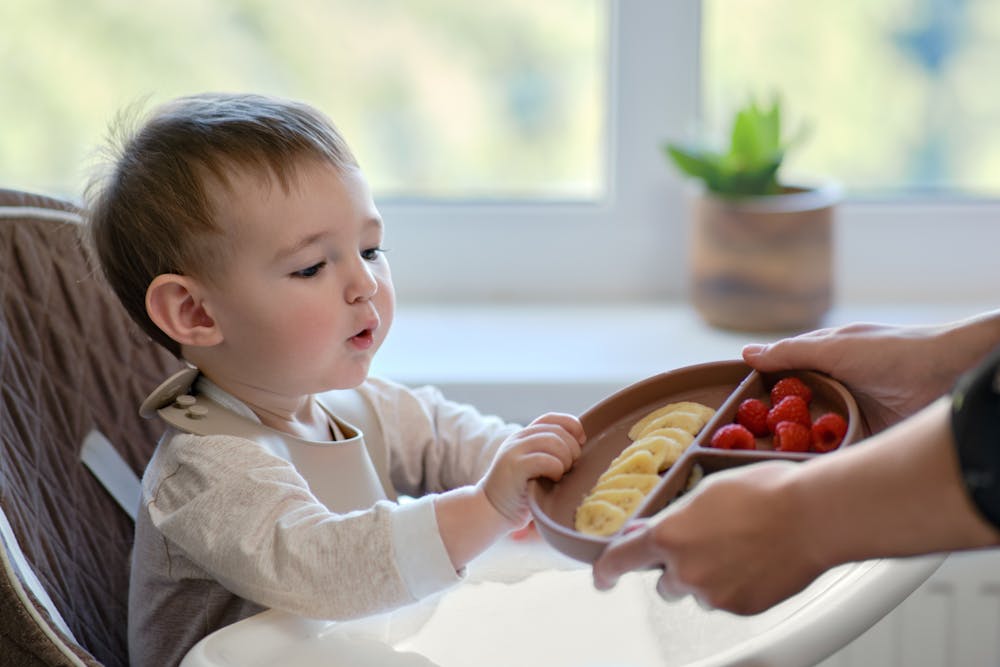
Replace sugar-sweetened foods with foods often already in the kitchen. Swap out the common sources of sugar including cakes, biscuits, pastries, sugar and sweet spreads with wholegrain breads, low sugar cereals (like porridge or Weet-Bix), vegetables and fruits (cut to safe swallowing size) and nut pastes.Swap sugar-sweetened beverages, sweetened dairy products and toddler milks with plain water (boiled and cooled for children over 6 months) and unflavoured cows milk (from 12 months of age).
3. Plug into places to learn more
For practical advice and support on feeding your baby or toddler, download the My Baby Now App from the App Store or Google Play.
Parents can join our free online course Infant Nutrition, or search here to see if the INFANT (INfant Feeding, Activity Play and NuTrition) Program is running in your area.
Read more: Sugar detox? Cutting carbs? A doctor explains why you should keep fruit on the menu
Authors: Jennifer McCann, Lecturer, PhD student, Deakin University


 Daily Bulletin


