

The book that changed me: how Augustine's Confessions has travelled with me for decades, bringing meaning and insight
- Written by: Dawn LaValle Norman, Research Fellow and ARC DECRA Fellow, Institute for Religion and Critical Inquiry, Australian Catholic University
In this series, writers nominate a book that changed their life – or at least their thinking.
Before me as I write lies a book – or should I call it a relic? Augustine’s Confessions in the Oxford paperback edition, translated by Henry Chadwick.
There are layers of different notes in the margins – black ink next to blue ink next to pencil, marking my changing thoughts over more than 20 years.
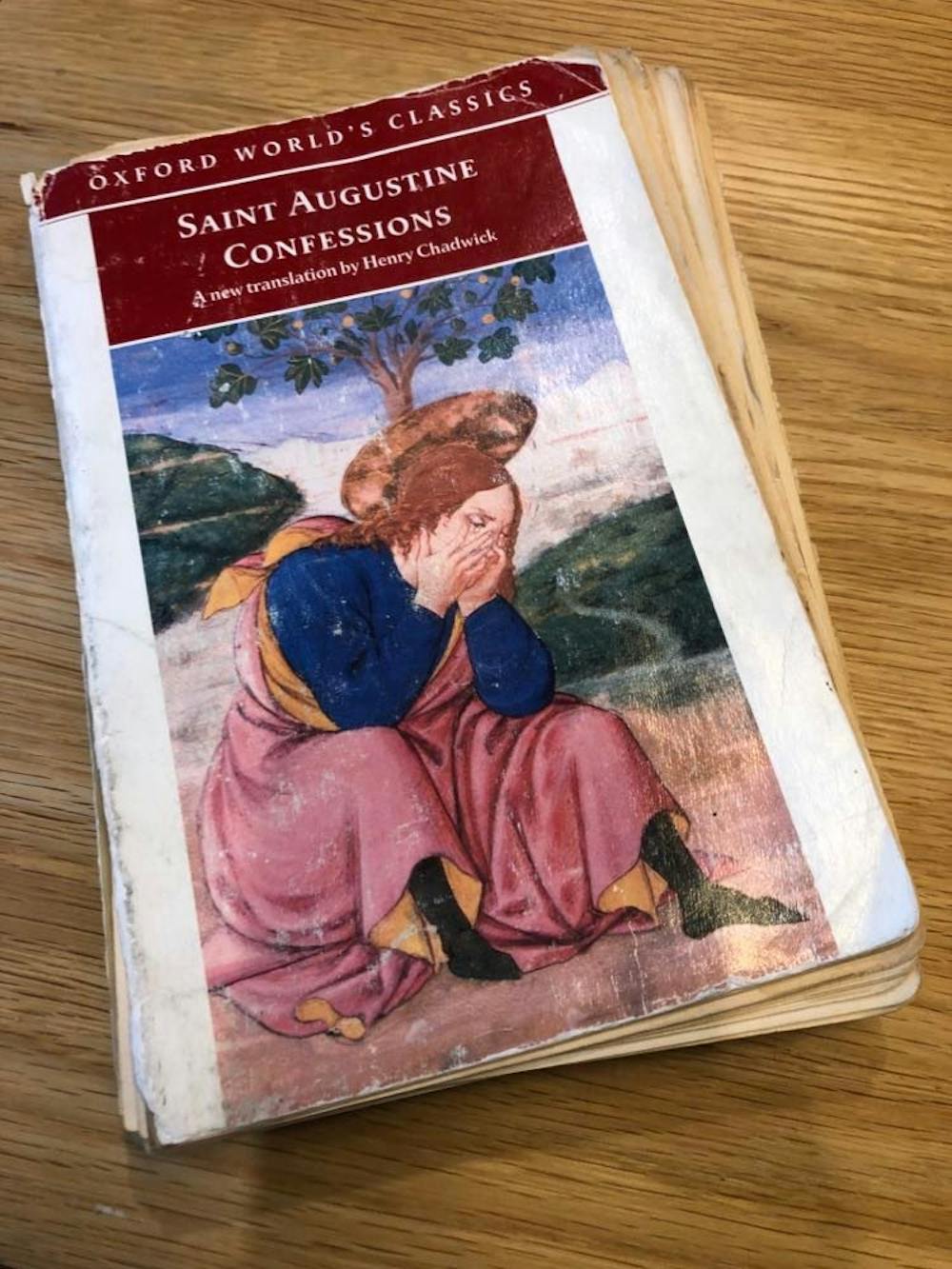
There are also notes about things completely unrelated to the thoughts of a man from the 4th century CE: old phone numbers and email addresses squished in when I couldn’t find another spot; notes about meetings that happened in another country and in another decade. We have certainly left our mark on each other, this book and I.
Pages one-132 have come out of their binding, making the edge as rough as the personal histories the volume tracks – both Augustine’s and my own. The book itself, as it gets older, acquires layers, holds more.
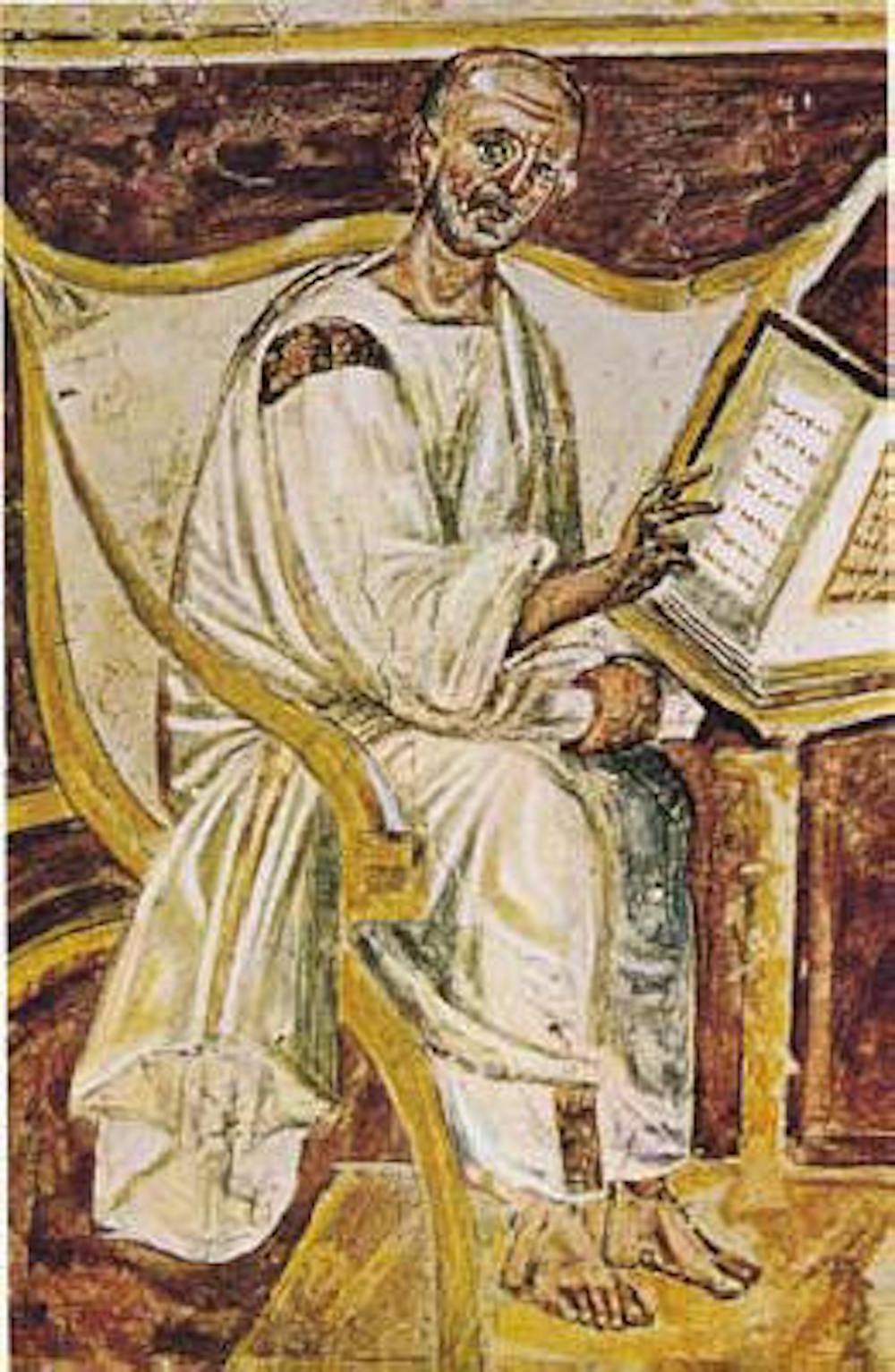 The earliest portrait of Saint Augustine in a 6th century fresco, Lateran, Rome.
Wikimedia Commons
The earliest portrait of Saint Augustine in a 6th century fresco, Lateran, Rome.
Wikimedia Commons
Augustine’s Confessions is a book about making meaning out of life, about looking back in order to find the right story. We do this as we get older – Augustine was in his late forties when he wrote this retrospective about how he came to be who he was: a Christian bishop in North Africa in the late 4th century CE.
There are 13 books in his Confessions; nine are biographical narrative, and the final four are a meditative analysis of Augustine’s state of mind and soul at his time of writing. Different books in Confessions have spoken to me at different times of my life, a sure sign of the richness of this ancient text. I’m going to talk about three of these moments, stretched over more than 20 years.
‘I felt like I was home’
I was 16 the first time I read Augustine’s opening paragraphs.
You are great, Lord, and highly to be praised … grant me, Lord to know and understand which comes first – to call upon you or to praise you, and whether knowing you preceded calling upon you. But who calls upon you when he does not know you?
My earliest layer of marginal notes say, “Why start with questions? He’s doing it because he’s human.”
Reading those first paragraphs of his questioning God, I felt like I recognised an author for the first time. I felt suddenly like I was home.
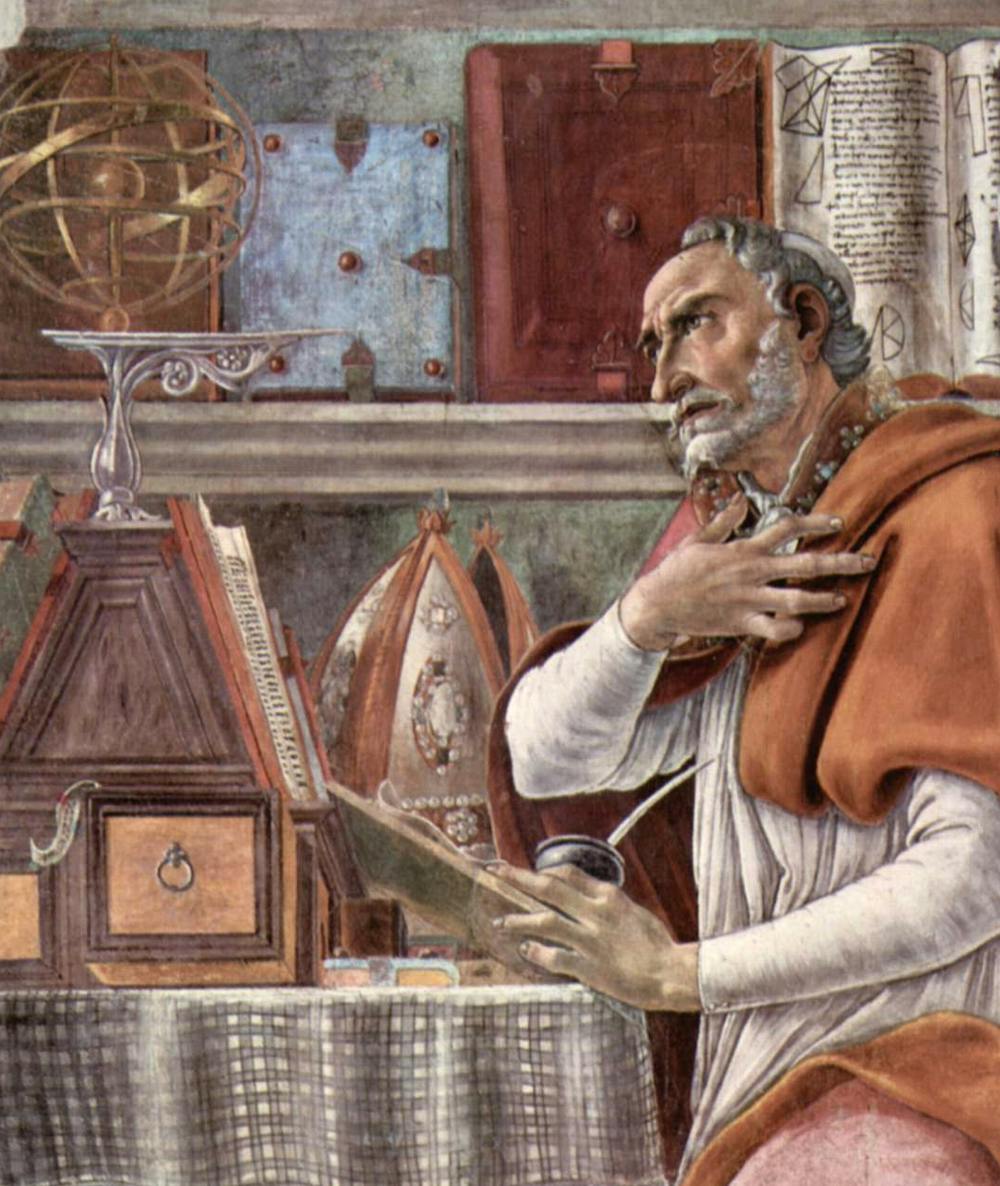 Augustine of Hippo Sandro Botticelli.
Wikimedia Commons
Augustine of Hippo Sandro Botticelli.
Wikimedia Commons
The Confessions begins with wonder and curiosity. It is full of questions. Augustine was the perfect writer for an earnest high schooler trying to figure out who she was and how she fit into the world. Especially Book 1, which focuses on Augustine’s own childhood and youth.
Augustine the writer
Augustine is one of the most important writers of early Christianity. Born in a small town in North Africa in 354 CE, he was a successful member of Roman society. By the time he was 30, he had reached the highest pinnacle of his professional life as a successful rhetorician in Milan.
But then something happened. He decided to return to the religion of his childhood and become a baptised Christian. And not only a baptised and practising Christian, but a monk.
Later he rose to be Bishop of Hippo, a medium-sized city in modern day Algeria. He died aged 76 while Hippo was under siege by the Vandals.
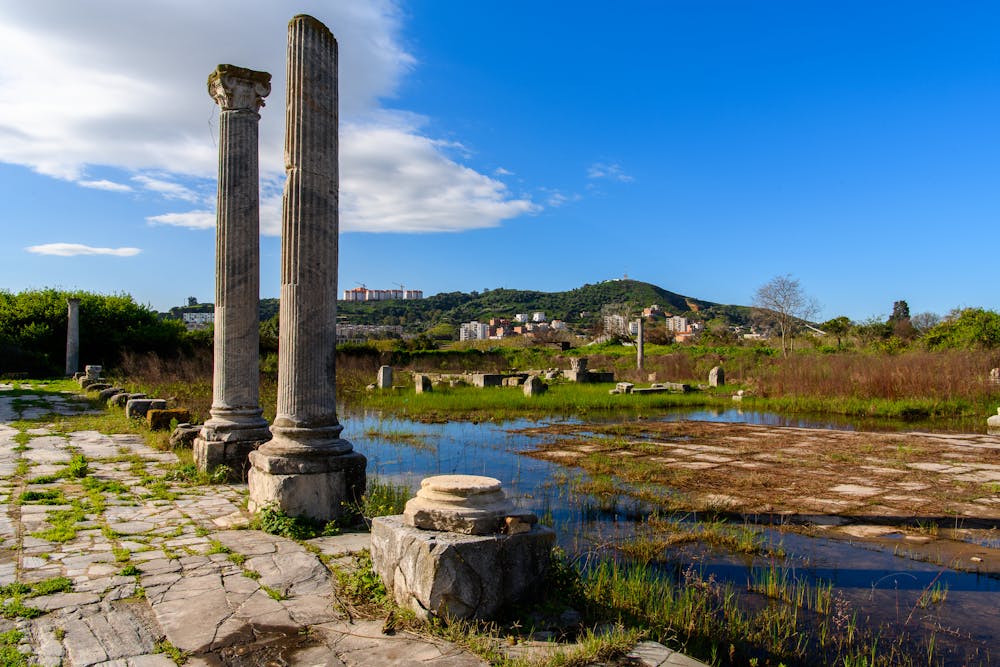 Roman ruins in Hippo, Algeria.
Shutterstock
Roman ruins in Hippo, Algeria.
Shutterstock
How do we know all these things? Because Augustine tells us himself.
Augustine wrote over five million words, or, more precisely, dictated them to professional scribes. These words are parts of all sorts of texts: doctrinal works on free will and providence, commentaries on books of the bible, debates with opponents, letters to all sorts of people.
Augustine set the agenda for Christian theology and was a profound influence on the development of human thought in the West. Yet, of all of these words, his Confessions has become the modern classic because it feels so immediate and familiar to our current desire for self-understanding.
The Confessions is written as a meditation on Augustine’s life, up to and including his baptism at the age of 31. He wrote his recollections about ten years later, with a bit of distance and ability to reflect.
The work is directly addressed to God as a prayer of thanksgiving for his guidance through all the twists and turns of Augustine’s life. It’s interlaced with constant scriptural quotation and questions.
Friendship and loss
As an undergraduate, I was assigned Confessions to read four times: thrice in English and once in Latin. Apparently, the University of Chicago, where I was studying, had something of an Augustine craze in the early 2000’s. By this time, my favourite book had moved on from Book 1 to Book 4: the tragic one where Augustine’s best friend from home dies after Augustine returns from his higher studies in the big city of Carthage.
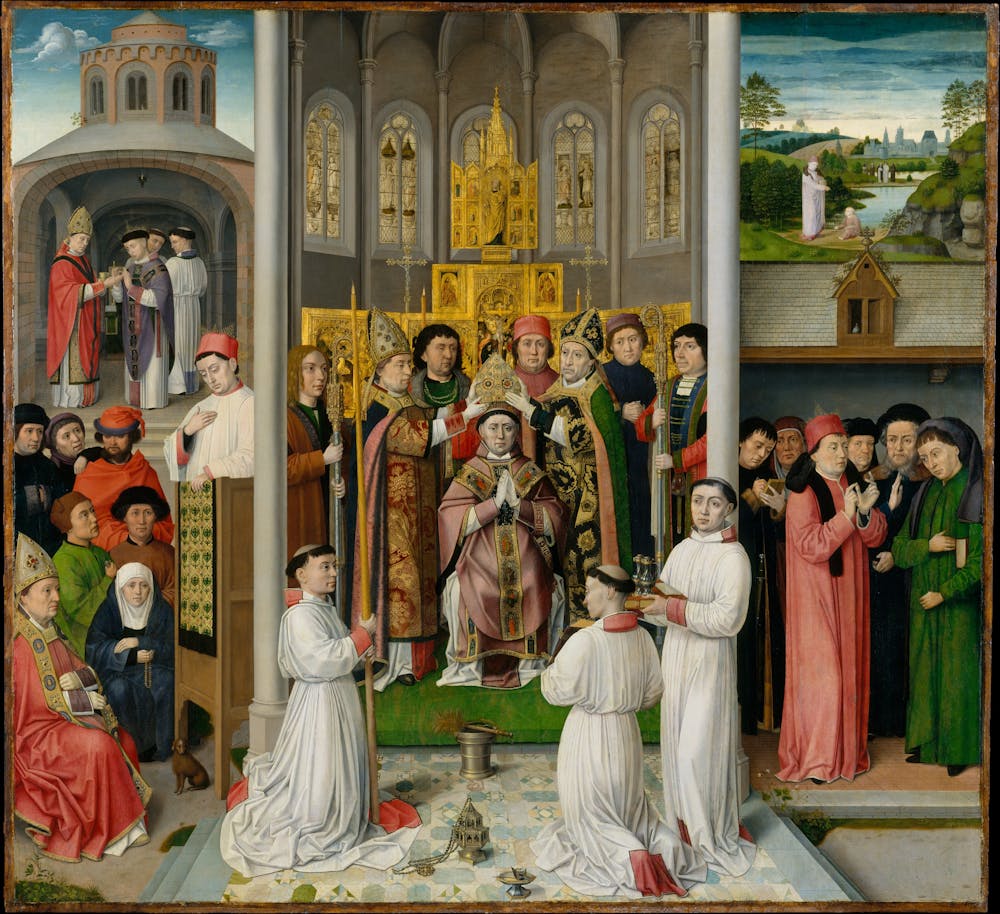 Scenes from the Life of Saint Augustine of Hippo, 490, Netherlandish, Northern Renaissance oil painting.
Shutterstock
Scenes from the Life of Saint Augustine of Hippo, 490, Netherlandish, Northern Renaissance oil painting.
Shutterstock
Like most people, Augustine included, I cared a lot about friendship at university. Augustine’s honest analysis of his love for his friend yet his retrospective awareness, too, of his own blindness and pomposity towards him, challenged me to think about what it meant to be a true friend.
Soon after, I tried to give away my beloved copy of the Confessions to a close friend. The remnants of this attempt remain in the book I am holding. I have written inside the front cover:
To –, dimidio animae suae (IV.vi), to be read yearly (or nearly so) until disintegration, with the strict requirement to add copious notes on each subsequent reading.
I interpreted our friendship with the words Augustine uses of his young friend: dimidio animae suae, “half my soul”.
I didn’t realise that I was about to lose my friend too. In the back cover of my book I’ve transcribed a bit of a letter my friend wrote in response to my present:
… I felt like I was holding your blood …
He gave the book back to me, because he said he couldn’t keep my blood. We didn’t see each other again for a decade.
Read more: Friday essay: on the ending of a friendship
Mothers as philosophers
I’m still thinking about Augustine’s Confessions. I’ve just finished writing a book about female philosophers in the early Christian tradition. One of them was Augustine’s mother, Monica.
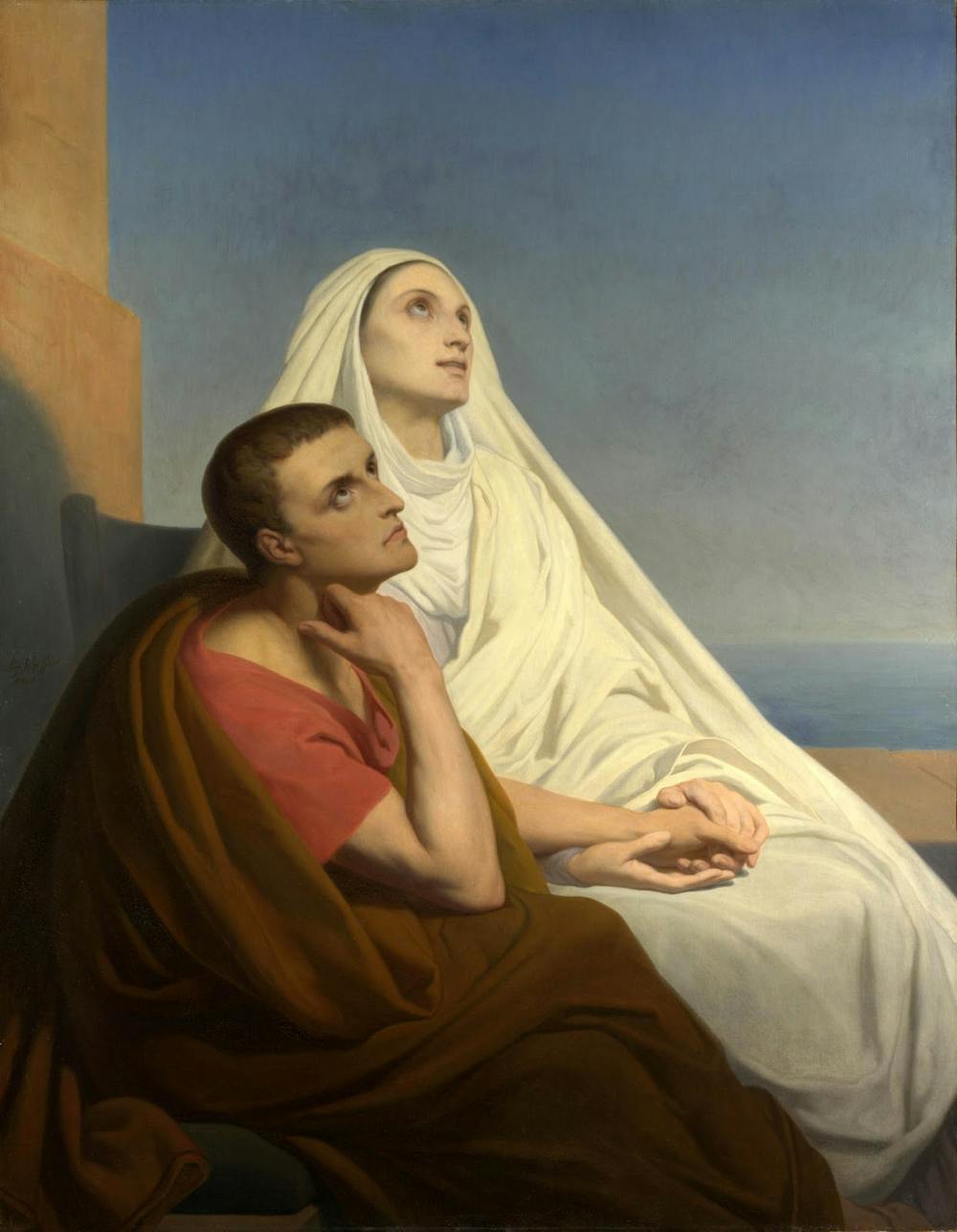 Ary Scheffer: Saints Augustine and Monica, 1854.
Wikimedia Commons
Ary Scheffer: Saints Augustine and Monica, 1854.
Wikimedia Commons
For this project, I spent a lot of time rereading Book 9 of Confessions, the “Monica book”. In this book, Monica dies, and Augustine tell us about her. Monica seemed like a typical North African wife and mother – taking care of her children, managing her husband. But Augustine knew better. He saw that his mother was a philosopher and wanted to tell the world.
Augustine gives his mother a mini-Confessions of her own, mapping her changing character from youth to death. And at the key moment of Augustine’s own mystical vision – the famous Vision at Ostia – Monica is by his side.
Read more: Wise women: 6 ancient female philosophers you should know about
Together they reach out for eternal wisdom. Augustine describes how they are “ravished” by it. Mother and son become feminised lovers of truth. Monica has led Augustine to his new, more receptive and passive state.
I’m freshly interested in mothers – being the mother of two small children myself. I’m interested in how they can also be philosophers, can still live a life in touch with higher realities, when also wrapped up in so many mundane responsibilities.
But Monica doesn’t write her own story, so we are left wondering what the real Confessions of Monica might have been like.
We change each other
Augustine spends the next book questioning why he chose to expose his private contemplation to the whole world. His rationale is that he knows no life is truly private. His private writing is deeply social.
Augusine’s influence has reached far beyond his original audience in the 4th century, around the world and across the centuries, into my office in 21st century Australia.
In Augustine’s Confessions, I stumbled across the ideal book to accompany me through life, not as a perfect model for imitation, but as a companion, a challenge, an agent of reflection and change.
Books might be sacred objects, but they are sacred objects we should interact with, inscribe ourselves into. When we change them, we let them change us.
Authors: Dawn LaValle Norman, Research Fellow and ARC DECRA Fellow, Institute for Religion and Critical Inquiry, Australian Catholic University


 Daily Bulletin


