

'I always have trouble with forms': homeless people on how poor literacy affects them – and what would help
- Written by: Benjamin Hanckel, Senior research fellow, Western Sydney University
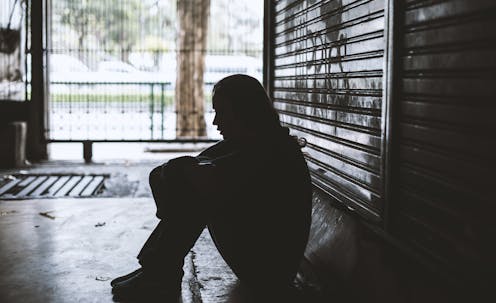
Homelessness remains a huge problem in Australia and an important contributing factor is low literacy levels.
We interviewed 23 people who were homeless or had experienced homelessness to find out how they viewed literacy and participation in literacy classes. We wanted to know what would help or hinder them in attending literacy classes.
Our report found low literacy levels affected homeless people’s lives in many ways. Our interviewees repeatedly emphasised the importance of having a literacy program suited to their needs.
Common factors driving poor literacy
Housing instability or adolescent homelessness was a common factor contributing to poor literacy. Dropping out of school at an early stage was typical.
Holly* said:
I dropped out of school in Year 7 so I haven’t had much schooling […] And then going to being on the streets and going from house to house you don’t learn very much. Just what sort of you learn from other people.
Lisa told us:
I tried to get my Year 10 but I didn’t end up getting it [Year 10 certificate] cos’ I had a baby. And I ended up taking my baby back to school but I’d probably say Year 9.
Sam had a similar history:
I left halfway through Year 10. I didn’t even finish my Year 10 exams. I did the half-yearly but didn’t complete my certificate so I found it really hard to get into work.
Daniel said:
I didn’t really start reading until I was an adult. I read the pictures in MAD magazines and stuff like that.
They also spoke about factors such as learning dis/abilities such as dyslexia, as well as systemic factors such as racism.
Rick, an older Indigenous man, experienced institutional racism throughout his youth:
I didn’t have much schooling because of discrimination back in the 60s, 70s and that, and didn’t get much to school.
A humiliating experience
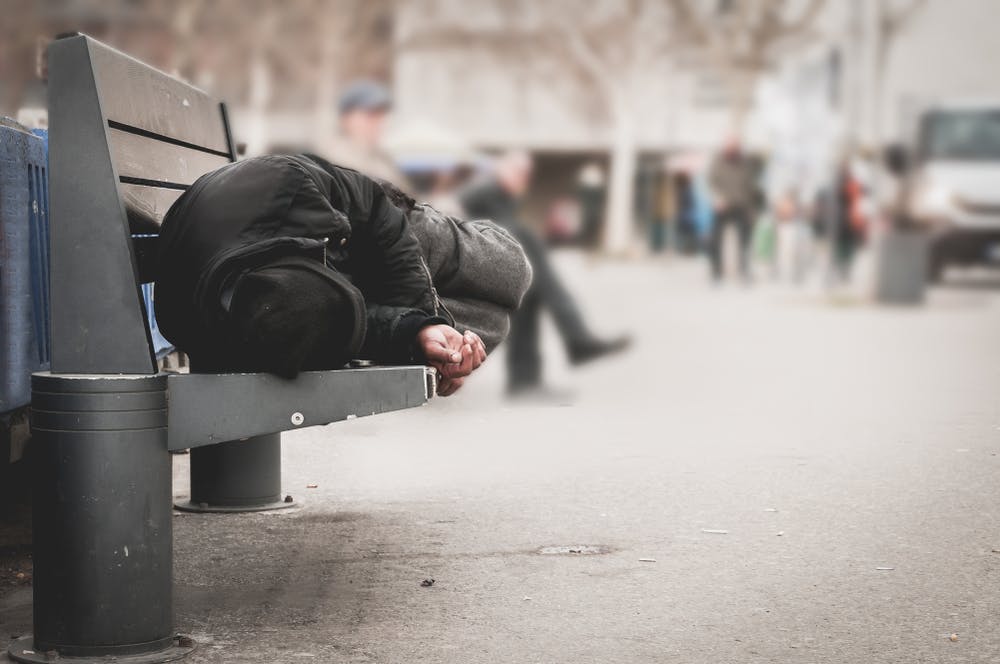
The experience of not being able to read was humiliating for some. Gregory said:
I can’t even read the newspaper. I pretend to people […] I can read […] but I just look at the pictures.
Interviewees said that besides not being able to read the newspaper, they struggled with key activities such as filling in forms, shopping, reading and sending emails or text messages, and writing letters.
Luke told us he wanted:
[…] help with reading newspapers, stuff like that […] Filling out forms would probably come in handy ‘cos I always have trouble with forms […] You name it. Everything you’ve got to do nowadays is filling out forms.
Andrew said:
Just dealing with the paperwork and that with all the different agencies you have to go through, while you’re homeless is just absolutely insane.
Aaron told us:
I’ve got pretty basic literacy. Like, since you left school, you forget a lot of words which you don’t use most of them. And then you get on the phone and you’re trying to send a message and […] you go, “How do you spell that bloody word?” You can’t put the […] letters to the word.
 Respondents noted that their literacy levels meant filling out forms and paperwork was a difficult task.
Shutterstock
Respondents noted that their literacy levels meant filling out forms and paperwork was a difficult task.
Shutterstock
A stepping stone
All interviewees felt a literacy program for homeless people would improve the quality of their lives. As Daniel said,
Literacy obviously is a key factor for a successful life, isn’t it?
They recognised the strong link between finding employment and improved literacy. They felt classes were a good idea if they would, as Drew suggested, “better my job prospects”.
Leanne saw value in having some formalised recognition, saying:
If it puts me back into the workforce, that’d be great – even if it was just, like, a certificate of attainment or whatever. That’d be even better.
Some interviewees saw literacy classes as a stepping stone to engage with educational institutions, and finish high school certificates.
Holly said a literacy program would help her do “year 10 and my HSC, no matter how much it takes”.
Some also wanted to enhance their skills to read and write for pleasure. Daniel commented,
I’d expect a tutor to say, ‘Pick up a book. I’ve got one here that I suggest if you’re struggling’.
The benefits of books were also noted for well-being. As Sandra said:
Books have helped me through my mental health issues […] books are very useful in times of need.
What would help create a successful literacy program?
Interviewees told us a successful literacy program for homeless people would need to provide refreshments, have empathetic tutors, be comfortable, be accessible and be in familiar territory.
Anna said a literacy class would be best at
a community centre or like a town hall something like that. Something relaxing […] 'cos you don’t want people coming in and just being, you know, [in] unknown territory.
Andrew said:
People would probably be more comfortable coming to a place like this [a community centre] as opposed to a university 'cos you’ve got some pretty funky young people nowadays.
Chloe told us:
A venue that would be central but also not so public as well [so] that they could easily get to [it] and not feel judged when they’re walking through.
Interviewees told us an effective tutor would be respectful and understanding. Andrea said:
Just be really open and understanding […] Obviously not judgemental or that sort of stuff. I guess just to maybe try and understand that people are at different levels as well and people want different things out of the course.
What happens next
A growing body of research has drawn a link between poor literacy and social outcomes.
Our study, funded by The Footpath Library, highlighted how structural issues in a person’s formative years affect their literacy and life outcomes.
A parliamentary inquiry into adult literacy recently identified the need for local community-based “literacy mediators”. These are professional educators or peers who have the literacy competency and necessary skills to enhance the literacy of people experiencing homelessness. Literacy mediators would support them with their literacy needs in a safe and inclusive way.
Read more: 95% of homeless in Sydney and Melbourne own a mobile phone
* All names have been changed to protect identities.
Authors: Benjamin Hanckel, Senior research fellow, Western Sydney University


 Daily Bulletin


