Read The Times Australia

Daily Bulletin

5 must-read books about Russia and Ukraine: our expert picks

  • Written by: Mark Edele, Hansen Chair in History, The University of Melbourne
5 must-read books about Russia and Ukraine: our expert picks

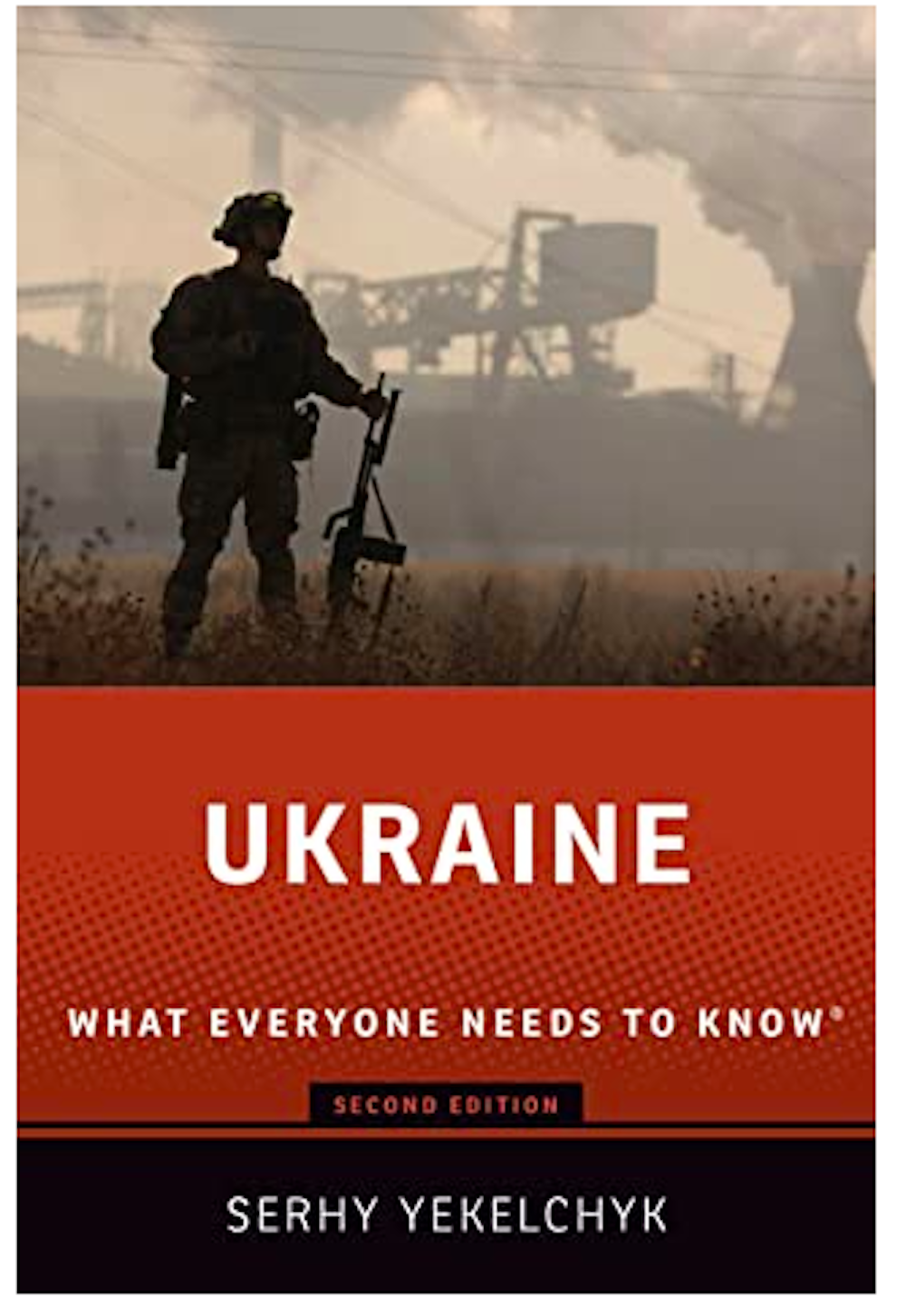
1. Ukraine: What Everyone Needs to Know (second edition) by Serhy Yekelchyk

This slim volume of just over 200 pages is something of a marvel. Written by a world-leading historian of Ukraine, it introduces readers to the history, geography, economy, politics, and contemporary life of the country now suffering from Russia’s invasion. Serhy Yekelchyk precisely defines both the commonalities and differences in the histories of Ukraine and Russia, and he also delves into the entanglements between Ukrainian and United States politics. Yekelchyk asks all the right questions and answers them succinctly and precisely. There is no better book to start reading on the background of the current war. If you have time to read only one book on this topic, this is it. – Mark Edele Read more: Ukraine as a 'borderland': a brief history of Ukraine's place between Europe and Russia 2. The Red Mirror: Putin’s Leadership and Russia’s Insecure Identity by Gulnaz Sharafutdinova Gulnaz Sharafutdinova’s The Red Mirror offers important insight into the nature of the Putin regime and how it has prepared the ground for this war domestically. The book is a rare attempt to take account of the emotional dimensions to Putinism, and how Putin has successfully crafted an image as the country’s defender against humiliation. Sharafutdinova documents the evolution of the Russian state media machine over the past decade, showing how it has systematically promoted a vision of Russian identity grounded in Russian victimhood. State propagandists have cultivated and amplified emotions connected to Russia’s recent history, updating old Soviet tropes and enemy images to foster the notion that Russia is a nation under siege. In much of the recent commentary on Putin’s Russia, we find Russian society reduced to a caricature. By contrast, this is a book that takes account of the diversity of Russian society and avoids resorting to stereotypes about the “Russian soul” or the supposed eternal Russian desire for an “iron hand”. Instead, Sharafutdinova shows how the current state of Russia is a result of political choices made by Vladimir Putin and his government. – Julie Fedor Read more: As the Ukraine war drags on, how secure will Putin's hold on power remain? 3. The Gates of Europe: A History of Ukraine by Serhii Plokhy Serhii Plokhy’s Gates of Europe was first published in 2015, after Russia’s 2014 annexation of Crimea and the beginning of its war on Ukraine, of which the current invasion is a dismaying escalation. Beginning with Herodotus’s account of the lands north of the Black Sea, the Harvard historian’s book acquaints the reader with the historical legacies that have helped shape Ukrainian identity: the large medieval state of Kyivan Rus, the autonomist aspirations of the Ukrainian Cossacks, the 19th-century Ukrainian national movement in the Habsburg and Russian empires, the short period of Ukrainian independence after the first world war, and Ukraine’s eight decades as a republic within the Union of Soviet Socialist Republics (USSR). Plokhy’s narrative enables readers to place Vladimir Putin’s denial of Ukraine’s existence as a nation into the tradition of Russian imperial and Soviet endeavours to erase or, at best, marginalise Ukrainian identity. It also shows the sources of the ideas of Ukraine’s democratic sovereignty and transcultural solidarity that energise the unified, determined and remarkably successful resistance with which the Ukrainian political leadership, the Ukrainian armed forces and the Ukrainian people have confronted Russia’s invasion. – Marko Pavlyshyn Read more: Speaking with: journalist Masha Gessen on Putin's Russia 4. Dr Zhivago by Boris Pasternak A novel written by a poet, it’s famously a love story, set in Russia’s endlessly turbulent history from 1905 to the Great Patriotic War. A book banned for many years in its own country, its author forced to refuse the Nobel Prize, people close to him imprisoned. It’s not a primer for understanding what’s happening in Ukraine today, how decisions with such devastating consequences are made in Moscow. But it tells you about Russia and Russians. Russia’s climate and landscape; Russians’ capacity for the tenderest love and abysmal cruelty. The story is told in prose written by a poet, so you feel these Russian things, in your soul. We feel them, partly because of the talent of the author but mainly because in the end they’re not uniquely Russian, they’re universal. The Russians – and those of us non-Russians who fall for it – are good at thinking that they are exceptional, in their soulfulness, their ability to love and hate, the endless horizons of their landscape. It’s a dangerous thing, to think you’re uniquely special – and if as you read it, you’re swamped by the novel’s overwhelming Russianness, you should keep that in mind. – Stephen Fortescue Read more: Friday essay: Svetlana Alexeviech didn't make it to the Royal Commission 5. The Icon and the Axe: an Interpretative History of Russian Culture by James H. Billington From about the 8th century to the 15th century, Kyivan Rus (Ukraine) occupied the great plain in the south of today’s Russia. Moscow was not historically documented until 1147. The “Rus”, basically Slavs, were invaded by the Varengians (Vikings) who stayed and intermarried; the country consisted of powerful city states united by allegiance to a prince. As James Billington relates in the first chapter of his comprehensive cultural history of Russia, The Icon and The Axe, Prince Vladimir, searching for a religion in 988 AD, converted to Greek Orthodoxy after his emissaries recorded the beauty of Constantinople’s Santa Sophia, whose blue dome and golden frescoes suggested Ukraine’s national colours. Rus/Ukraine subsequently became one of the strongest states in Europe, famous for its fertile black earth and rich folk culture. Billington then describes the decline of Kyivan Rus, when the principalities started fighting each other, and the country was invaded by Mongol hordes under Genghis Kahn. The “Mongol Yoke” lasted until 1480, when it was ousted by an emergent, super-powerful Moscow. – Judith Armstrong Authors: Mark Edele, Hansen Chair in History, The University of Melbourne

Read more https://theconversation.com/5-must-read-books-about-russia-and-ukraine-our-expert-picks-179832

Business News

The Rise of Digital Marketplaces in the Australian Trade Sector

For decades, the Australian trade and construction sector operated almost entirely on word-of-mouth recommendations and local community networks. Small business owners typically relied on local newspa...

Daily Bulletin - avatar Daily Bulletin

How Immigration Lawyers Can Help

Introduction Visa decisions can shape employment, family life, study plans, travel, and future residence. A small omission can lead to delay, added expense, or refusal. Immigration lawyers assess l...

Daily Bulletin - avatar Daily Bulletin

How Industrial Drying Equipment Supports Efficient Processing

Many industrial processes require moisture to be removed from compressed air, products or process materials before they move to the next stage. Excess moisture can affect equipment performance, produc...

Daily Bulletin - avatar Daily Bulletin

Practical Ways a Whiteboard Can Improve Workplace Communication

Effective communication helps teams stay organised, share ideas and keep track of important information. While digital tools are now common in many workplaces, a whiteboard continues to provide a simp...

Daily Bulletin - avatar Daily Bulletin

Designing Eco-Friendly Custom Water Bottles for Your Next Event

The Evolution of Sustainable Event Merchandise Event planning has undergone a massive transformation over the last decade. Gone are the days when organizers could hand out cheap, single use plastic...

Daily Bulletin - avatar Daily Bulletin

Why Choosing a Professional Florist Melbourne Makes Flower Delivery Impactful

Flowers have a great power to speak when humans cannot express their feelings with right words. Flowers are the best gifts when you are celebrating a birthday or welcoming a newborn child into your fa...

Daily Bulletin - avatar Daily Bulletin

The Business Case for Choosing Australian Fabricators Over Imported Alternatives

For a long time, you might have defaulted to overseas suppliers when sourcing fabricated metal components for a project. The unit price was lower on paper, and the maths seemed straightforward. That...

Daily Bulletin - avatar Daily Bulletin

Australian organisations are relying on business continuity plans built for a far more predictable world

Tariff escalations, supply chain fragility, geopolitical events, and the ongoing threat of cyber disruption have reshaped the risk environment facing Australian organisations. The problem is that ma...

Daily Bulletin - avatar Daily Bulletin

How to Rent a Car for Uber in Melbourne: What Every New Driver Needs to Know

Starting out as an Uber driver in Melbourne is not as complicated as it sounds but getting the vehicle right is where most new drivers get stuck. Uber has strict requirements around vehicle age, condi...

Daily Bulletin - avatar Daily Bulletin

The Daily Magazine

What Businesses Can Do to Make Sustainability More Practical Day to Day

Sustainability can sound like a huge corporate project, something tied to annual reports, long-term ...

The Hidden Logistics Behind a Smooth-Running Construction Site

A construction site can look chaotic from the outside. There are machines moving in different direct...

When a Temporary Work Arrangement Starts Looking More Permanent

A lot can change once someone has spent a few years working in the same place. What began as a fixed...

The Real Cost of Launching a Food, Beverage or Supplement Brand in Australia

"How much will it cost to manufacture my product?" is usually the first question a founder asks, a...

Why Aussie Car Owners Are Switching to Paint Protection Film Over Traditional Waxing

For decades, a tin of carnauba wax and a Sunday afternoon were the standard formula for keeping a ...

How Wide Should Running Shoes Be? Signs Your Shoes Are Too Narrow

Running shoes should be wide enough for the forefoot and toes to sit naturally under load, but not...

Trail Running Shoes vs Hiking Shoes: Which Is Better for Australian Trails?

Australia does not offer one neat definition of a “trail.” A weekend walk might mean a hard-packed...

Architectural Window Shading: Solutions for Triangle Blinds, Raked Glazing, and High Ceilings

Mastering Light and Privacy with Specialized Window Coverings Modern architectural de...

From Suburban Streets to Modern Events: Why Australians Still Love the Ice Cream Truck

Did you know Australia consistently ranks among the world's highest ice cream-consuming countries? ...