

A krill aquarium, climate research, and geopolitics: how Australia's $800 million Antarctic funding will be spent
- Written by: Alessandro Antonello, Senior Research Fellow in History, Flinders University
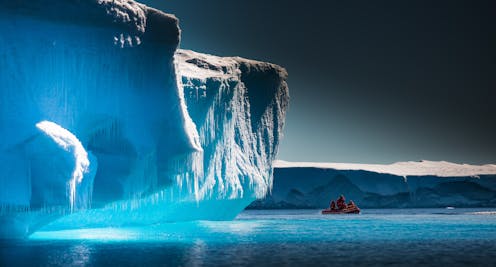
The federal government’s major package of new funding for Australia’s Antarctic program, announced on Tuesday, promises an additional A$804.4 million over the next decade.
The government has also released an update to its 2016 Australian Antarctic Strategy and 20-Year Action Plan, which effectively confirmed the existing strategy and outlined specific activities for the next five years.
The funds will allow Australia’s Antarctic scientists to continue undertaking significant, world-class research. They also promise to bring new streams of environmental data into the management of the fragile Antarctic environment.
But the announcement has also immediately been framed as a robust response to supposed Chinese and Russian expansion in Antarctica.
Read more: Exploring Antarctica's hidden under-ice rivers and their role in future sea-level rise
How the new funds will be spent
Australia has a long connection with Antarctica.
It has continuously operated a scientific program on the continent since 1954, when the Australian Antarctic Division established Mawson Station, which is now the oldest continuously operating station south of the Antarctic Circle.
Australia was also an original signatory of the Antarctic Treaty in 1959, an international agreement which continues to govern Antarctica.
The Antarctic Treaty System promotes scientific research and cooperation, prevents military and nuclear activities, manages environmental impacts and human activities, governs resources such as fisheries, bans mining, and in general aims to maintain regional peace.
Today, Australia operates three year-round scientific stations on the continent and one on sub-Antarctic Macquarie Island.
The new icebreaker Nuyina is crucial to the Antarctic program. It both supplies the stations and conducts essential marine scientific work in the Southern Ocean.
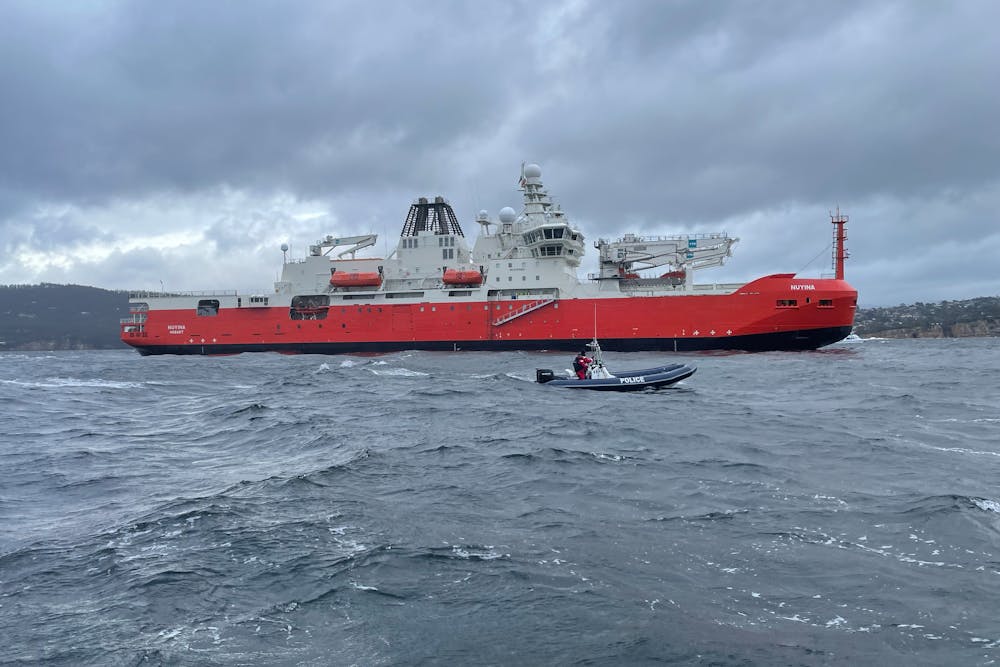
Scientists also conduct their research at the Antarctic Division’s Hobart headquarters. The krill biologists are being promised a new $17.4 million krill aquarium.
Although the government’s announcement is light on specifics, the $804.4 million is divided into diverse areas.
The biggest ticket items are concerned with transport and observational capacity across East Antarctica. These include:
$136.6 million for inland traverse capability, charting and mapping, and “mobile stations”
$60.6 million for “drone fleets and other autonomous vehicles” and a sensor and camera network called the “Antarctic eye”
$35 million for longer-range helicopters; and
$14.6 million for air transport within Antarctica.
Other funds will go to the icebreaker Nuyina, removal of old waste from Australia’s stations and more funding for glaciology and ice sheet research.
The funds will therefore continue well-established scientific activities, as well increase the use of newer technologies to advance the Antarctic program.
Antarctic science isn’t cheap
Most of the new funds will support science. Australia is a scientific leader in Antarctica. But science down south costs big money.
Antarctica is enormous and the conditions are harsh.
The inland traverse capability will support the million-year ice core project, crucial for reconstructing Earth’s climate history.
Modern studies of the ice sheet are predominantly done through remote sensing, and the drones and autonomous vehicles might be useful for that.
Massive inland traverses of the ice sheet – which Australia conducted from the 1960s to 1980s — have been less necessary since the advent of sophisticated satellites in the 1990s. But traverses are still necessary for logistics.
Remote monitoring of bird and animal populations might also increase.
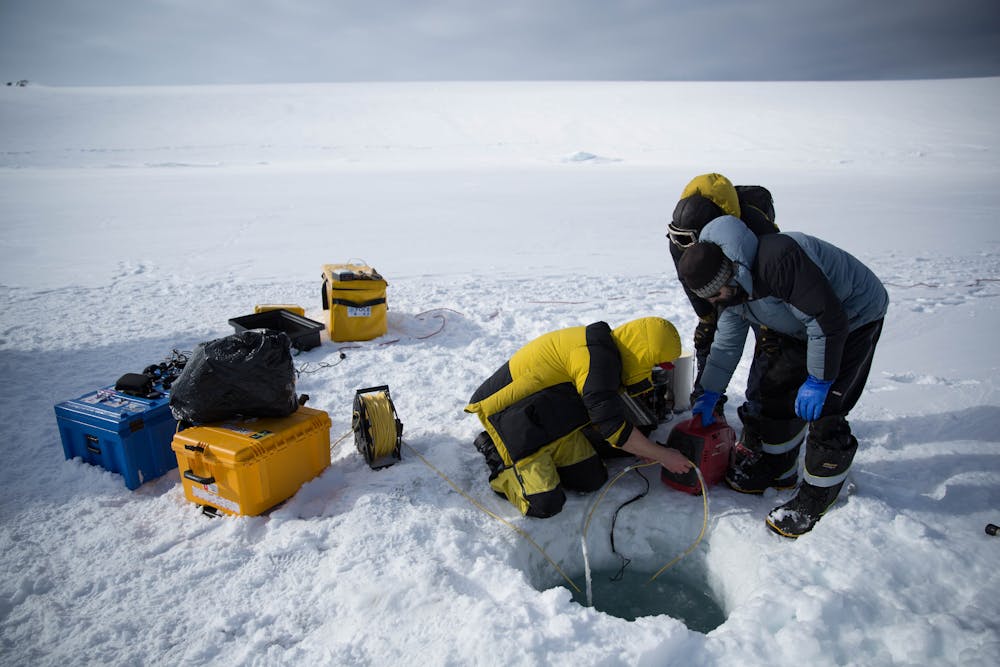 The funds will help continue well-established scientific activities and increase the use of newer technologies.
AAP Image/Australian Antarctic Division
The funds will help continue well-established scientific activities and increase the use of newer technologies.
AAP Image/Australian Antarctic Division
Geopolitics and Antarctica
The Antarctic Treaty System allows for any signatory to inspect, unannounced, the Antarctic bases and installations of other signatories.
Until now, this has seen teams of people visit bases, but the innovative use of drones could perhaps make inspections more frequent.
In the context of rising tensions between the West, China and Russia, geopolitics is hard to avoid. But such tensions aren’t new, and the Antarctic Treaty System has operated amid such tensions since its enactment.
Australia has claimed much of East Antarctica as the Australian Antarctic Territory since 1933. Almost no other country ever recognised that claim. And the Antarctic Treaty put all territorial claims in Antarctica into legal limbo.
At the height of the Cold War, Australia was worried about the Soviet Union’s bases. Today, Russia, China, India, Romania, France and Italy all have bases in Australia’s area of interest.
Read more: The Antarctic Treaty is turning 60 years old. In a changed world, is it still fit for purpose?
Prime Minister Scott Morrison implicitly called out China as not being as committed to protecting the Antarctic environment as Australia and its allies.
Treasurer Josh Frydenburg has said some countries (meaning China and Russia) are “increasingly active” in Antarctica.
Are their capacities dramatically increasing? Russia appears to be renewing several of its bases, including Vostok, but there’s no clear evidence they’re dramatically expanding their presence.
China has four operational bases (only two are year-round), and a fifth one in the final stages of commissioning. They now have two icebreakers which they deploy at both poles.
But China’s Antarctic capacities are not currently greater than Australia’s or the US. It’s also unclear how much larger the Chinese effort and footprint will get. We need quality, up-to-date information to supplement older analyses.
More concerning than any apparent military buildup in Antarctica is the increase in potential exploitation of fish, including krill. China and Russia appear to be investing heavily to exploit krill stocks.
Another frustration is because the Antarctic Treaty System uses consensus decision-making, China and Russia have successfully prevented major environmental protection decisions over the past decade.
Both continue to prevent the creation of large marine protected areas around Antarctica. And recently they’ve been thwarting new fishing regulations and restrictions.
Domestic politics also plays a role
There’s also basic domestic politics at play. Federal Antarctic funds are important to Tasmania and the prime minister has stressed job creation.
Ever since the Australian Antarctic division moved from Melbourne to Hobart in 1981, the Hobart community and economy has benefited from Antarctic research.
The multi-government Hobart City Deal, which began in 2019, had already committed at least $450 million to the creating an Antarctic and science precinct at the city’s waterfront.
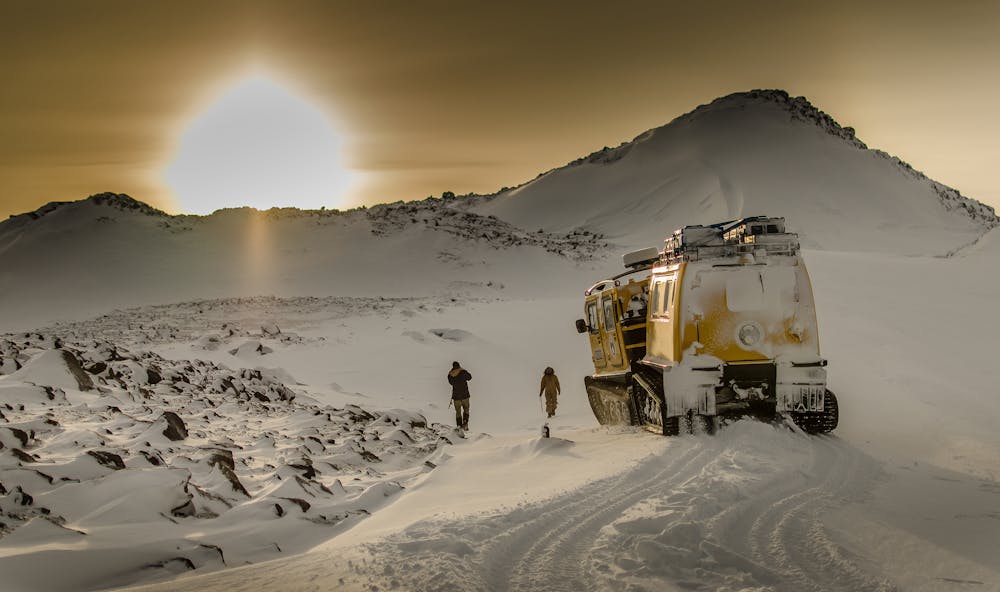 Will Antarctica be a central arena of competition, or can it remain peripheral, as it has during previous moments of geopolitical heat?
Shutterstock
Will Antarctica be a central arena of competition, or can it remain peripheral, as it has during previous moments of geopolitical heat?
Shutterstock
We will have to wait to see what parts of this announcement really turn into. Will surveillance drones be regularly moving through Antarctic skies and seas? What exactly are “mobile stations” and what they will do? Much is unclear.
The funding also continues a go-it-alone approach, without mention of science diplomacy or major international research projects. Recent government documents suggest Australia’s international Antarctic collaborations and scientific publications are trending downwards.
Sadly, Australian-Chinese scientific cooperation, including in the Southern Ocean, is being axed because of “national security concerns”.
Strategic tensions with Russia and China are obviously hardening globally and Antarctica won’t be immune from them.
The question is: will Antarctica be a central arena of competition, or can it remain peripheral, as it has during previous moments of geopolitical heat?
Authors: Alessandro Antonello, Senior Research Fellow in History, Flinders University


 Daily Bulletin


