

Read The Times Australia

Daily Bulletin

The $1 billion Great Barrier Reef funding is nonsensical. Australians, and their natural wonder, deserve so much better

  • Written by: Jon C. Day, PSM, Adjunct Senior Research Fellow, ARC Centre of Excellence for Coral Reef Studies, James Cook University
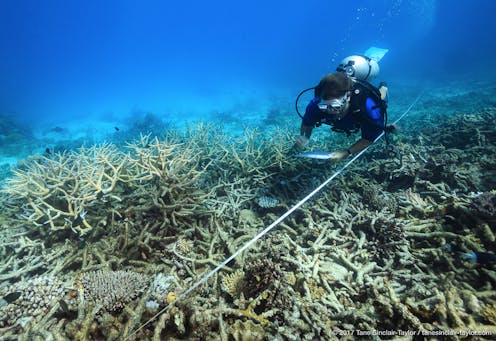
The $1 billion Great Barrier Reef funding is nonsensical. Australians, and their natural wonder, deserve so much better

Today, the federal government is due to report back to UNESCO on its efforts to protect the Great Barrier Reef. The government’s announcement last week of A$1 billion of additional funding is welcome, but it will do little to allay UNESCO’s concerns.

Climate change is the number one threat to the Great Barrier Reef. While the new funding is meant to address other threats to the natural wonder and may improve its resilience, failing to address the climate threat is both disappointing and nonsensical.

As the below graph shows, ocean temperatures on the reef in December last year were the warmest on record. With this comes the risk of a fourth mass bleaching event this decade.

The Great Barrier Reef came close last year to being put on a list of World Heritage “in danger” sites. The funding announcement seems primarily about appeasing UNESCO, with one eye also on the upcoming federal election. But saving the Great Barrier Reef is not about throwing money at it – what matters is how the dollars are spent.

Graph showing ocean temperatures on the reef since 1900
By the numbers The $1 billion package proposed by the government comprises: 58% to address the land-based causes of water quality issues impacting the World Heritage Area 26% to reduce crown-of-thorns starfish and prevent illegal fishing 9% for new scientific technologies 7% allocated to local communities – including Traditional Owners – for habitat restoration, citizen science and reducing marine debris. The measures to be funded are all important. But they’re nowhere near as important as addressing the root cause of climate change: greenhouse gas emissions. Most of the $1 billion should have been used to help Australia phase out fossil fuels. What’s more, the federal and Queensland governments continue to approve new coal and gas projects. Doing all this, while knowing the grave threat climate change poses to the Great Barrier Reef, demonstrates the incoherence of government policies. steam billows from coal stacks
The best way for the federal government to help the Great Barrier Reef is to phase out fossil fuels. Shutterstock

Devil in the detail

When we drill further into the detail, it becomes even more clear the funding package is not as impressive as it may first appear.

The $1 billion funding has been allocated over nine years. This is far beyond the time frame to which any government can sensibly commit, given four-year election cycles. A major funding increase is needed urgently, and certainly within a single term of government.

Also, federal Labor’s funding proposal for the Great Barrier Reef must be increased.

Another concern is the funding allocation for new scientific technologies such as coral seeding, developing heat-resistant corals and cloud brightening. Some of these technologies may have produced positive results at a small scale. But none has yet proved feasible at the wide scale necessary to make a real difference for the Great Barrier Reef.

Efforts to address water quality are important. After climate change, poor water quality is the most pressing problem facing the reef. It’s largely caused by nutrients, pesticides and sediment runoff from agriculture and coastal development.

Read more: Not declaring the Great Barrier Reef as 'in danger' only postpones the inevitable

But governments have already spent hundreds of millions trying to improve water quality, with only limited success. Reducing water pollution requires more effective spending, not just more funds.

This is just one example of how money alone cannot fix all the Great Barrier Reef’s problems. Improving water quality requires the right balance between voluntary industry-led approaches and enforcing the rules.

The Queensland government must greatly increase its compliance and enforcement on matters such as fertiliser runoff entering creeks that flow to the reef. While many farmers are doing the right thing, others clearly are not.

And to improve water quality, governments must be prepared to limit clearing and agriculture expansion in reef catchment areas.

brown plume of pollution in blue waters
Flood plume extending into the Great Barrier Reef. Improving water quality requires better enforcement of the rules. Matt Curnock

Learning from our mistakes

For years, the federal government has known the pressures facing the Great Barrier Reef. But it continues to maintain a “business as usual” attitude in the face of the worsening climate crisis. Governments worldwide must dramatically increase their climate ambitions – and for the Great Barrier Reef, this action should start at home.

As the Murray-Darling Basin experience shows, throwing funding at an environmental catastrophe does not fix the problem, especially if the core issue remains unaddressed.

The government must also better allocate funds to achieve effective and timely “adaptive management”. This involves decision-making that can be adjusted as outcomes become better understood.

Such management should include considering both the good and bad outcomes of reef interventions to date – both those controlled by government agencies and those managed by external groups such as the Great Barrier Reef Foundation.

Read more: Is Australia really doing enough for the Great Barrier Reef? Why criticisms of UNESCO’s 'in danger' recommendation don’t stack up

bleached coral
Preventing further damage to the Great Barrier Reef means learning lessons from the past. AP

This latest government funding boost is welcome, but suspiciously timed. Environmental policy and budget allocations should not be about a government’s reputation and firming up its electoral prospects – especially when so much is at stake.

UNESCO is likely to welcome the additional efforts to address water quality. But it has specifically urged Australia to take “accelerated action at all possible levels” to address the climate threat. It remains to be seen whether UNESCO will continue to pressure the federal government on that front.

Amid all this, a key question remains. As the the Great Barrier Reef continues to decline, will Australians re-elect a federal government that supports industries harming the environment?

One thing is certain: Australians, and their Great Barrier Reef, deserve so much more.

Read more: 5 major heatwaves in 30 years have turned the Great Barrier Reef into a bleached checkerboard

Authors: Jon C. Day, PSM, Adjunct Senior Research Fellow, ARC Centre of Excellence for Coral Reef Studies, James Cook University

Read more https://theconversation.com/the-1-billion-great-barrier-reef-funding-is-nonsensical-australians-and-their-natural-wonder-deserve-so-much-better-175924

Business News

How Telematics Helps Australian Companies Improve Productivity

Operating a commercial fleet in Australia is a uniquely demanding endeavour. Between the sprawling urban sprawl of cities like Sydney and Melbourne and the immense, unforgiving stretches of the Outb...

Daily Bulletin - avatar Daily Bulletin

Inside the Icon: The BridgeMuseum Officially Opens at the Sydney Harbour Bridge

A bold new way to experience one of Australia’s most recognisable landmarks has arrived, with BridgeClimb Sydney officially opening the all-new BridgeMuseum.  Located inside the Sydney Harbour Brid...

Daily Bulletin - avatar Daily Bulletin

Is Your Brand Showing Up in AI Search? Most Melbourne Brands Aren't.

The New Front Door Nobody Told You About Something changed. Quietly. Without a press release. The way buyers find businesses in Australia has been rewired. Not replaced, rewired. Google isn't dead...

Daily Bulletin - avatar Daily Bulletin

How Australian Businesses Can Measure SEO ROI

SEO can feel vague when you are staring at a dashboard full of numbers that do not clearly connect to revenue. The key is to measure the right signals in the right order, then tie them back to outcome...

Daily Bulletin - avatar Daily Bulletin

How Commercial Roller Shutters Improve Site Security Without Slowing Operations

Security upgrades can be frustrating when they make everyday work harder. A door that takes too long to open, creates bottlenecks at shift change, or fails at the worst time can turn “better protectio...

Daily Bulletin - avatar Daily Bulletin

Why a Document Destruction Service Still Matters for Modern Businesses

Businesses generate large volumes of information every day, from staff records and contracts to invoices, reports and customer files. While attention often focuses on how documents are stored, the way...

Daily Bulletin - avatar Daily Bulletin

Bicycle Rack Safety and Space-Smart Storage

Bike storage problems usually show up as small annoyances first: tangled handlebars, scratched frames, and bikes that topple when you pull one out. Over time, those issues become safety risks, especia...

Daily Bulletin - avatar Daily Bulletin

How to Tell if a Childcare Centre Is a Good Fit for Your Child

Choosing childcare can feel like you’re making a huge decision with limited information. Tours are short, centres are often on their best behaviour, and your child might act differently in a new space...

Daily Bulletin - avatar Daily Bulletin

Car Import Timeline: What Usually Happens at Each Stage

Importing a car into Australia can feel confusing because multiple agencies and checkpoints are involved, and the timeline is shaped as much by paperwork quality as it is by shipping speed. The most u...

Daily Bulletin - avatar Daily Bulletin

The Daily Magazine

Gold Migration Lawyers in Liquidation: How the Closure Affects Your ART Appeal

If your appeal was with Gold Migration Lawyers, a recent change to how the Tribunal decides cases ...

The pressure cooker: life in urban Australia in 2026

Australian cities have always been demanding. Long commutes, rising housing costs, busy schedules a...

What Actually Makes a Good Criminal Lawyer in Melbourne

Most people only think about this question once. That is usually too late. Most people charged wi...

Why Working With A Chatswood Tutor Can Improve Academic Performance

Academic expectations continue increasing for students across primary school, high school, and senio...

Is It Worth Getting Solar Panels in Melbourne?

The real question is not whether solar works in Melbourne. It works. The question is what it is co...

How A Diploma Of Project Management Builds Practical Skills For Modern Work Environments

Developing the ability to plan, execute, and deliver outcomes efficiently is a key requirement in to...

How to Choose the Right Football for Every Level

Choosing a football may seem straightforward, but the right option depends on who will be using it a...

What to Ask a Wedding Photographer Before You Book

Booking a wedding photographer can feel deceptively simple: you like the photos, you like the vibe...

Why Stress Relief For Dogs Is Essential For Emotional Balance And Long-Term Wellbeing

Managing emotional health is just as important as physical care when it comes to pets, which is why ...