

Want to act on climate change but not sure how? Tweaking these 3 parts of your life will make the biggest difference
- Written by: Andreas Chai, Associate Professor, Griffith University
Last month’s dire report by the Intergovernmental Panel on Climate Change may have left you feeling overwhelmed, or unsure what to do next. We often hear about ways everyday people can tackle climate change, but which acts will make the biggest difference?
The academic literature tells us three spheres of our lives contribute most to climate change: home energy use, transport, and food consumption. Together, these activities comprise about 85% of a household’s carbon footprint.
As one study showed, by adopting readily available practices, households in developed countries can cut their carbon footprint by 25% with little or no reduction in well-being.
Clearly, national governments must set, and meet, ambitious emissions-reduction targets. But 72% of global greenhouse gas emissions are related to household consumption. So small changes at the household level really can make a world of difference. Here’s a guide to get you on the right path.
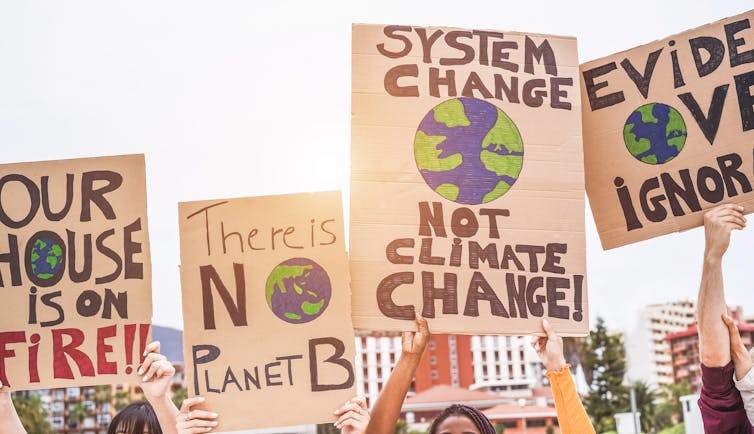 Many people want to act on climate change at a household level, but where’s the best place to start?
Shutterstock
Many people want to act on climate change at a household level, but where’s the best place to start?
Shutterstock
1. Home
Using energy in the home more efficiently is a good way to reduce your impact on the climate. Signing up to so-called “demand response” programs is a relatively new way to do this.
Demand response involves making changes to energy use to reduce stress on the electricity grid during times of high demand. In Australia, this often entails electricity companies offering financial incentives to households so they use less energy at peak times.
For example in Queensland, the state-owned company Energex offers up to A$400 to those who install a “PeakSmart” air conditioner. When the electricity system is under stress, the electricity network will remotely switch the air-conditioner into a lower performance mode.
Energy retailers have also been trialling demand response programs in other states. For example under AGL’s Peak Energy Rewards program, customers can choose to receive an SMS message prompting them to reduce their energy use at peak times. By turning up the temperature on the air conditioning or waiting to do the laundry, people can earn discounts on their energy bills.
Demand response leads to less electricity use and reduces the need for fossil-fuel electricity generation at times of high demand – and so, can cut greenhouse gas emissions in the electricity sector.
 Demand response programs encourage people to reduce energy use during peak times.
Shutterstock
Demand response programs encourage people to reduce energy use during peak times.
Shutterstock
2. Transport
If you drive a traditional petrol or diesel vehicle, try to reduce the amount of time your engine idles. Research last year found Australian motorists are likely to idle more than 20% of the time they’re driving. If idling was eliminated from all journeys, the emissions saved would equal that of removing up to 1.6 million cars from the road.
While some idling is unavoidable such as when stopped at traffic lights, drivers can turn their engines off while parked and waiting in their vehicle.
And drive smoothly, not aggressively. Driving with limited acceleration and braking has been found to significantly reduce emissions.
You might be thinking of making your next car an electric vehicle. While the cost of electric vehicles has traditionally been prohibitive for many people, the technology is expected to reach price parity with conventional cars in Australia in the next few years. And these days, you can even get a good second-hand deal.
There’s a lot of misinformation out there about whether electric cars are a good choice for the planet. So where does the truth lie?
It’s true that electricity used to charge an electric vehicle’s battery is often sourced from fossil fuels. And energy is still required to make an electric vehicle - in particular, the battery.
Read more: Want an electric car? Here's how to buy second-hand
However, last year, research found in 95% of the world, electric vehicles were less emissions-intensive than traditional cars over their full life cycle – even accounting for the current emissions intensity of electricity generation.
If you buy an electric vehicle, it’s important to ensure potential emissions savings are realised. One way of doing this is by recharging during the middle of the day when renewable electricty is most abundant. And don’t forget, as renewable energy forms an ever-increasing share of the electricity mix, the climate benefits of electric vehicles become even greater.
And of course, don’t forget about the obvious low- or zero-emission ways to get around: walking, cycling, catching public transport and car pooling.
 Second-hand electric cars are a lower-cost option.
Good Car Co
Second-hand electric cars are a lower-cost option.
Good Car Co
3. Food
Research earlier this year showed food systems are responsible for a third of human-caused greenhouse gas emissions. And recent studies show even if the world stopped burning fossil fuels immediately, emissions from the global food system could still push global temperatures over the 1.5℃ warming threshold.
Reducing meat consumption is a well-known way to cut your carbon footprint. In fact, recent research from Sweden showed just how high emissions from meat and dairy products are, compared with substitute products. It found:
- lamb is 25 times more polluting than tofu
- milk is five times as polluting as oat drink
- dairy-based cheese is four times as polluting as vegan cheese.
Read more: Ordinary people, extraordinary change: addressing the climate emergency through 'quiet activism'
In Australia, the range of meat alternatives is growing quickly. In just one example, Sydney-based All G Foods is developing plant-based mince, sausages, chicken and bacon, as well as “cow-free” dairy products. Helped along by $5 million in federal government funding, the company’s first product launches this month.
Another food that promises to help cut your carbon footprint is seaweed. Australia is only just catching on to the benefits of commercial seaweed production, which can be grown with few environmental costs.
Australia’s first factory manufacturing food-grade seaweed products opened in New South Wales last year. It has the capacity to put seaweed into pastas, and even muesli!
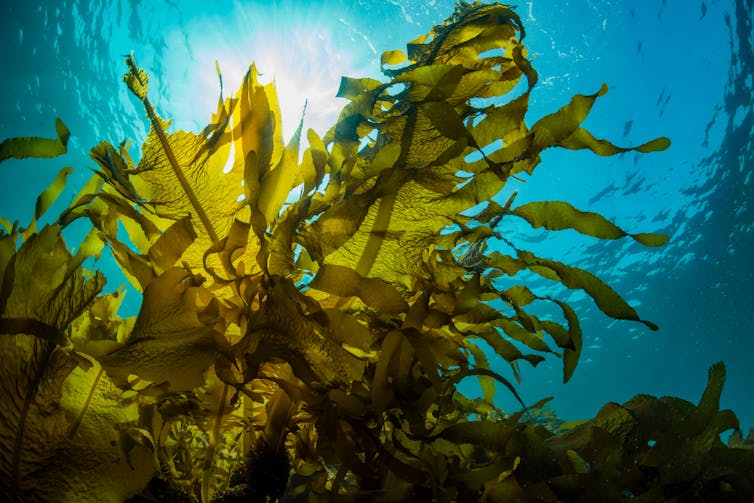 Commercial production of seaweed, a sustainable food source, is ramping up.
Shutterstock
Commercial production of seaweed, a sustainable food source, is ramping up.
Shutterstock
Reduce, reuse, inspire
Reducing your climate footprint is not just about buying “green” stuff: it’s also about avoiding consumption in the first place. So try to buy less – and if you can’t avoid it, try and buy second-hand.
You never know, you might start a revolution. Evidence suggests people who observe their peers undertaking environmentally friendly behaviour often adopt similar actions.
Authors: Andreas Chai, Associate Professor, Griffith University


 Daily Bulletin


