

It's OK if you have a little cry in lockdown. You're grieving
- Written by: Neeraja Sanmuhanathan, Lecturer in Counselling, University of Notre Dame Australia
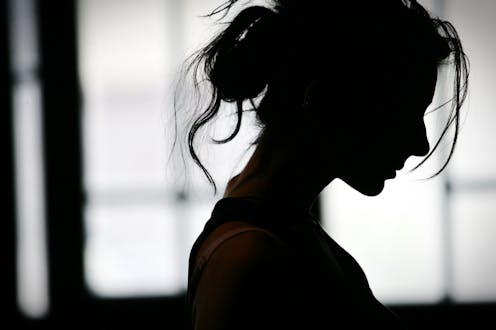
If you are one of the millions of Australians in lockdown, you are not alone in feeling a range of emotions difficult to put into words.
Lockdown days are blurry, with time lost within our own four walls. These walls are far more visible than we’ve noticed before. Our obsession with the never-ending news cycle leaves us both informed and overwhelmed.
Whether it’s a day filled with anger and sadness or oscillating between feeling grateful and feeling lost, this lockdown feels harder than ever before.
And the sadness you may be feeling, but can’t quite put your finger on, could be something called “disenfranchised grief”.
Let’s admit how tough it’s been
The COVID-19 pandemic has brought changes to our lives we never imagined. It has transformed the world we live in, our sense of safety, our behaviours and how connected we feel to our loved ones.
It’s highlighted the importance of human connection. We’ve learned a lack of connection with others can bring social pain, just as real as physical pain.
We’ve heard it’s OK to not be OK. Just last week, Lifeline recorded its busiest ever day, receiving 3,345 calls for help.
Read more: Lockdowns don't get easier the more we have them. Melbourne, here are 6 tips to help you cope
What is disenfranchised grief?
The sadness you may be feeling can be down to a number of reasons. And feeling sad is not necessarily a sign of a mental health disorder. In fact feeling sad is one of the range of emotions that make us human, and has benefits.
But this doesn’t really explain the sadness many of us are feeling in lockdown right now — disenfranchised grief.
US researcher and professor Kenneth Doka introduced this notion about 30 years ago. He described disenfranchised grief as a loss not “openly acknowledged, socially validated, or publicly mourned”.
This fits with what we know about COVID-19, with stories of intangible losses including loss of safety, control, community, dignity and independence. Feelings of loss seem to envelope us wherever we turn.
Grandparents lost time with their grandkids; children have lost parts of their childhood, the milestones, the sleepovers, the ability to play with other children outside the home. Parents lost their village of support and parents-to-be lost their birthing plans.
Refugees and temporary migrants lost the safety of new-found homes, with the loss of jobs, accommodation and support services; citizens lost the predictability of being able to come home.
Students were robbed of in-person learning and parents were robbed of celebrating their children’s transition to the next phase in life. As well as birthdays and graduations, we lost funerals and weddings.
And when it came to grieving and loss, we lost access to the places and people that allow us to grieve collectively — our wider family and community, as well as places of worship.
Is it OK to grieve about this?
Societal and cultural norms, including gender norms, dictate how we grieve. These norms allow us to mourn the death of a loved one. Yet it feels more challenging to mourn the loss of our way of life.
Grieving can feel complicated in a pandemic when others may have it worse. People may question whether it’s legitimate for them to grieve the loss of their way of life. Researchers also talk about a hierarchy of loss, a sliding scale of who has a socially acceptable right to grieve, rather than a simple “yes” or “no”.
Disenfranchised grief may also cloud our ability to identify and validate our difficult emotions, such as feelings of shame. This may be especially so when others don’t see these losses.
This impacts our capacity to express emotions as well as seek appropriate support when needed.
Read more: Lockdowns make people lonely. Here are 3 steps we can take now to help each other
What can I do?
Grief is real even when it feels impossible to explain what you’re feeling. So it’s important to acknowledge the loss.
Grieving is allowing yourself permission to say out aloud what you have lost. It can be validating to also label the emotions you’re feeling, even if they sound contradictory, such as feelings of both anger and guilt.
Although the risk of depression and anxiety symptoms for people with vulnerabilities has increased during the pandemic, it is not helpful to always pathologise valid human emotions that tell us we are not doing so well. These emotions act as a compass for us to slow down, reset expectations, and seek support when necessary.
Read more: The five stages of grief don't come in fixed steps – everyone feels differently
Setting practical and achievable short-term goals can help direct our behaviour to be more purposeful. Sticking to a routine (as closely as possible to what you did before lockdown) can also support our sense of control.
Check in with yourself and each other. Use social media for support, which many young people in the LGBTQIA+ community have found beneficial during the pandemic. It’s vital for us to hear others’ experiences that can normalise our own.
Finally, nothing is more important than reminding ourselves we are living through a one-in-one hundred year event. We are all doing the best we can. And that’s not only OK, it’s enough.
If this article has raised issues for you, or if you’re concerned about someone you know, please call Lifeline on 13 11 14 or GriefLine on 1300 845 745.
Authors: Neeraja Sanmuhanathan, Lecturer in Counselling, University of Notre Dame Australia
Read more https://theconversation.com/its-ok-if-you-have-a-little-cry-in-lockdown-youre-grieving-165329


 Daily Bulletin


