

Incentives could boost vaccine uptake in Australia. But we need different approaches for different groups
- Written by: Sameer Deshpande, Associate Professor, Social Marketing, Griffith University
As Australia deals with growing levels of vaccine hesitancy, Chief Medical Officer Paul Kelly has called for incentives to ensure as many people as possible get vaccinated against COVID-19.
Many countries around the world are offering benefits to encourage people to get vaccinated.
These incentives are built on the likelihood people who are hesitant, unmotivated or face barriers to getting vaccinated will embrace vaccination if they receive personal benefits which outweigh any perceived downsides to getting the vaccine, or upsides to not getting it.
Australia would do well to consider introducing some incentives. But they shouldn’t be blanket incentives — they should be part of a larger set of strategies and need to be tailored and targeted to particular groups.
From cash to cows and everything in between
Employers, service providers, and governments in the United States have offered a range of incentives.
Some are centred around entertainment. For example, New York is set to offer free tickets and cheap deals to city attractions, while Alabama residents could take two laps around the Talladega Superspeedway racetrack in their car. Meanwhile, Chicago’s Protect Chicago Music Series is open exclusively to vaccinated residents.
Some incentives have a raised a few eyebrows, like New Jersey’s “shot and a beer” campaign, which offers people a free beer if they’ve had the vaccine.
Some organisations are offering monetary incentives — supermarket chain Publix gives employees a US$125 Publix gift card (approximately A$160) after they receive both doses.
Some incentives deliver smaller benefits with certainty, such as free Uber and Lyft rides to and from vaccination sites around the US.
Others offer a small chance at a big prize, like entry into a weekly US$1 million lottery (roughly A$1.29 million) in Ohio.
We also find incentives aligned with local culture, such as 100 free targets for trap, skeet or sporting clay shooting in Randolph County, Illinois.
And it’s not just the US offering incentives. For example, in India, vaccinated residents can enter a competition to win 5,000 rupees (A$89), while those in a district of northern Thailand could win a live cow.
Do incentives work?
Although it is too early to tell us how well these incentives are working, research on other vaccines has shown financial incentives increase adherence seven-fold.
The Thai region running the cow lottery reportedly saw vaccine registration numbers jump from hundreds to thousands after they announced the incentive.
Importantly, incentives work in tandem with other strategies such as good, clear communication about vaccine efficacy and safety.
Read more: Here are 9 ways we can make it easier for Australians to get the COVID-19 vaccine
Incentives shouldn’t be ‘one size fits all’
Our research shows understanding what motivates people to participate in health-promoting activities and then tailoring measures to encourage them accordingly improves the effectiveness of the interventions.
This means it’s vital to listen to the public. Australians love fun, sport, spending time with family and friends, and travelling. Any incentive or strategy should consider these values.
Here are five broad groups based on individuals’ willingness and ability to get vaccinated, and strategies which might appeal to each one.
1. The highly motivated
Those who are highly motivated and have good access to vaccination tend to be first to front up when they’re eligible. This group trusts science and the system and seeks information on where and when to get the vaccine.
These people don’t necessarily need additional incentives as they’re motivated by the desire to protect their family and get back to doing the things they enjoy.
That said, the government should specify a threshold of the population that needs to be vaccinated in order to open international borders.
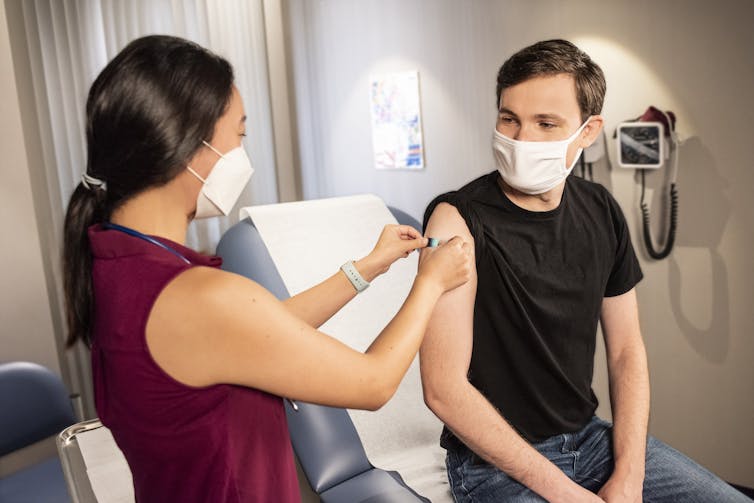 Not everyone will need an incentive to get vaccinated.
CDC/Unsplash
Not everyone will need an incentive to get vaccinated.
CDC/Unsplash
2. A little hesitant
This group may be somewhat hesitant about vaccine efficacy, and want to take a wait-and-see approach. But they also want to be seen as looking after themselves and others in their community, including the vulnerable. They seek statistics on numbers vaccinated and social approval.
In Singapore, people receive a free #igotmyshot mask to show they’ve been vaccinated. As more people don these masks, people in this group would likely feel encouraged to get a vaccine.
In time, creating barriers to attending public events for those who haven’t been vaccinated, such as a cricket or football match, could also nudge this group.
3. The young and healthy
Young people and those without pre-existing conditions are often less concerned about the health benefits of vaccinations. So while they may not be hesitant, they might be less motivated.
Creative incentives that portray vaccination as fun, easy, and popular within their peer groups are likely to be beneficial. Offerings of free food and drinks, as we’ve seen overseas, could be a good example.
This group is also increasingly socially aware, as we see on the issue of climate change. Tapping into what’s important to them, such as being socially responsible, would be a key way to appeal to this demographic.
While people in this group are broadly not yet eligible to be vaccinated in Australia, the government should think ahead about appropriate initiatives. High vaccination levels in this group will be essential to reaching herd immunity.
4. Where access is challenging
A range of barriers can prevent certain people from being vaccinated. While we’re lucky in Australia the vaccine is free, some people may live in areas with fewer vaccination facilities or where they need to travel greater distances.
Setting up on-site vaccination clinics in workplaces or mobile vans at public transport hubs can assist this group. Offering money to compensate for travel time, fuel and childcare needs would make vaccination more attractive too.
5. Vaccine resisters
Some people resist vaccination due to questions on efficacy and distrust of the system. Incentives may not work for this group — they may even strengthen the determination not to vaccinate.
Communicating data on the effectiveness and safety of vaccines (as compared to the risks) and endorsement from trustworthy ambassadors could be helpful for this group.
Read more: I'm over 50 and hesitant about the AstraZeneca COVID vaccine. Should I wait for Pfizer?
There’s no “one size fits all” solution to motivate the entire population to get vaccinated. Instead, governments, non-profits and corporations need to consult with communities and create and target incentives accordingly, alongside other public health activities.
Authors: Sameer Deshpande, Associate Professor, Social Marketing, Griffith University


 Daily Bulletin


