

Friday essay: what do the 5 great religions say about the existence of the soul?
- Written by: Philip C. Almond, Emeritus Professor in the History of Religious Thought, The University of Queensland
A recent survey found almost 70% of Australians believed in or were open to the existence of the soul — meaning they believe we are more than the stuff out of which our bodies are made.
The soul can be defined as the spiritual or non-material part of us that survives death.
Western pop culture is currently bewitched by what happens to us after death with TV shows such as The Good Place and Miracle Workers set largely in the afterlife. And the Disney film Soul depicts the soul of a jazz pianist separating from his earthly body to journey into the afterlife.
Read more: Disney Pixar's Soul: how the moviemakers took Plato's view of existence and added a modern twist
The five great world religions — Judaism, Christianity, Islam, Buddhism, and Hinduism — all believe in some version of a “self”, variously named, which mostly survives death. But they imagine its origin, journey, and destination in some quite different and distinctive ways.
The origin of the soul – Judaism, Christianity, and Islam
These three religions all believe there was a time when souls were not. That is to say, before God created the world, there was nothing at all.
Within Christianity, how the soul was united with its body was a matter of uncertainty. But all were agreed that the soul was present within the foetus, if not at the moment of conception, then within the first 90 days. When it comes to contemporary Christian debate about abortion, this moment is a crucial one. Most Christians today believe the soul enters the body at the time of conception.
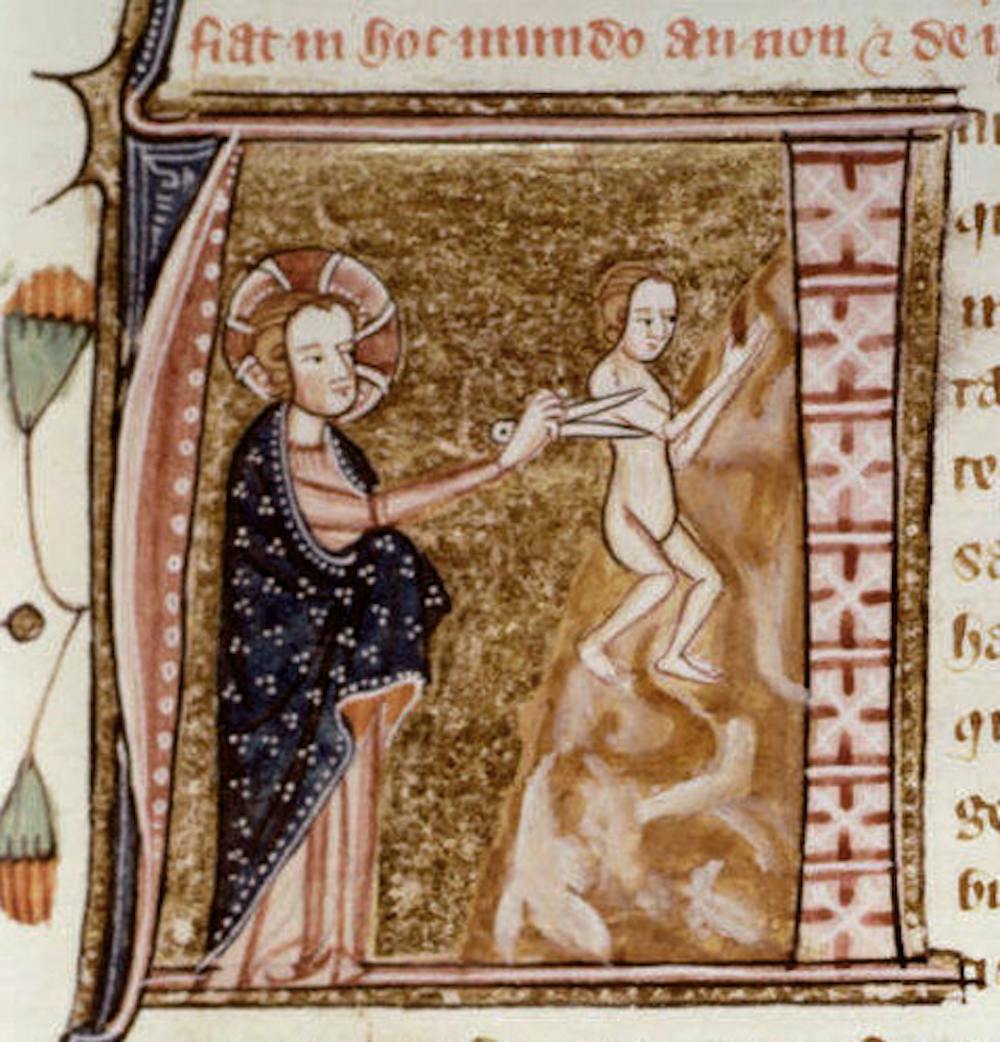 Illustration of God measuring a soul, represented as a naked man, 14th century.
British Library
Illustration of God measuring a soul, represented as a naked man, 14th century.
British Library
Christianity adopted the Greek philosopher Plato’s view that we consist of a mortal body and an immortal soul. Death is thus the separation of the soul from the body.
According to Judaism, the soul was created by God and joined to an earthly body. But it did not develop a definitive theory on the timing or nature of this event (not least because the separation between body and soul was not an absolutely clear one). Modern Judaism remains uncertain on when, between birth and conception, a human being is fully present.
Similarly, in Islam, the soul was breathed into the foetus by God. As in Christianity, opinions vary on when this occurred, but the mainstream opinion has it that the soul enters the foetus around 120 days after conception.
For all three religions, souls will live forever.
The origin of the soul – Hinduism and Buddhism
Within Hinduism, there has been never been a time when souls did not exist. All of us have existed into the infinite past. Thus, we are all bound to Samsara – the infinite cycle of birth, death, and rebirth.
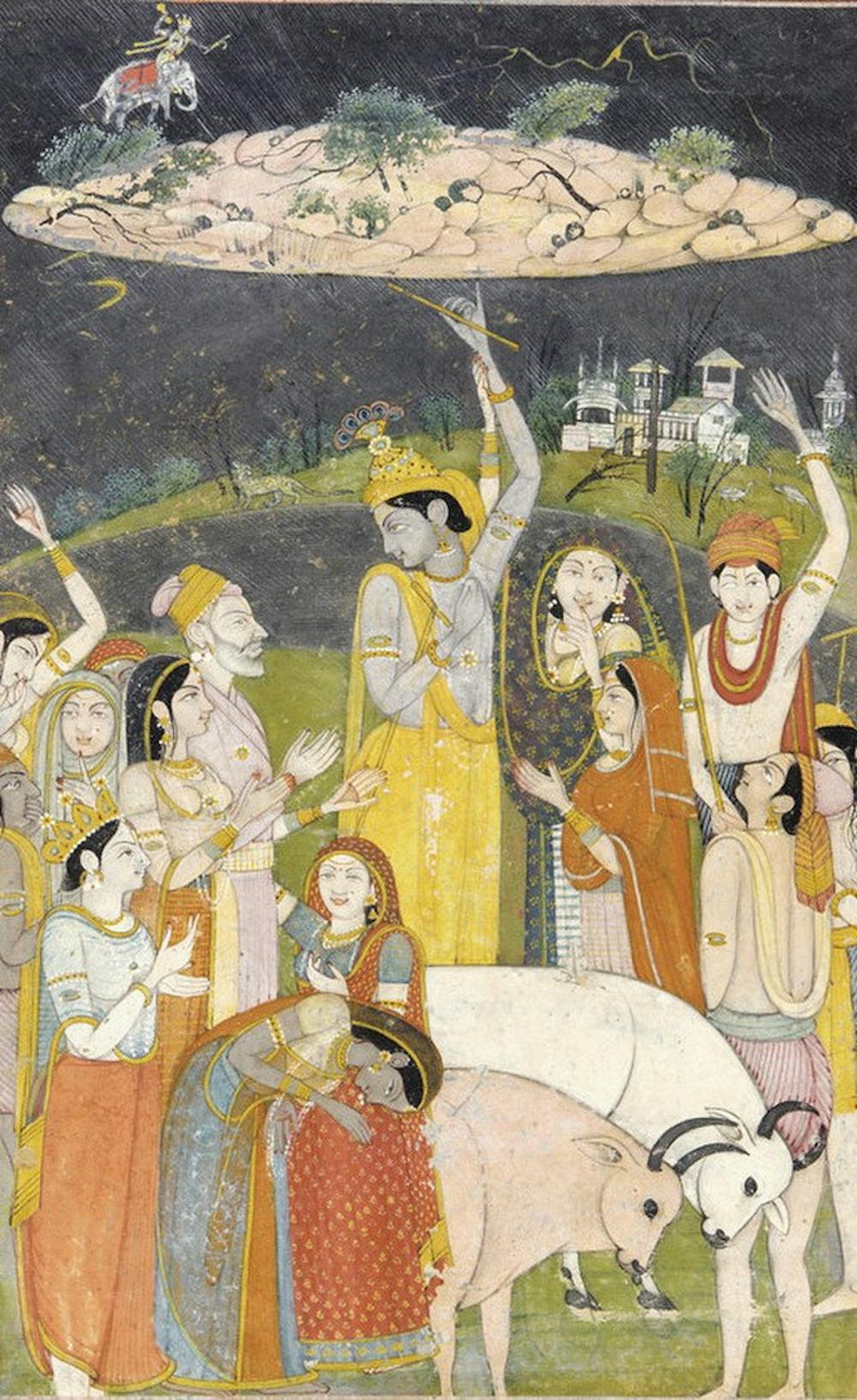 Krishna Holding Mount Govardhan.
Wikimedia Commons
Krishna Holding Mount Govardhan.
Wikimedia Commons
Our souls are continually reincarnated in different physical forms according to the law of karma — a cosmic law of moral debit and credit. Each moral deed, virtuous or otherwise, leaves its mark on the individual. At the time of death, the sum total of karma determines our status in the next life.
Like Hinduism, Buddhism accepts there was no time when we were not bound to the cycle of birth and rebirth. But unlike Hinduism, it does not believe there is an eternal, unchanging “soul” that transmigrates from one life to the next. There is nothing permanent in us, any more than there is any permanence in the world generally.
Nevertheless, Buddhists believe our consciousness is like a flame on the candle of our body. At the moment of death, we leave the body but this flame, particularly our flame of moral credit or debit, goes into a new body. In Buddhism, this “karmic flame of consciousness” plays the same role as the “soul” in other religions.
 Buddhists believe our consciousness is like a flame on the candle of our body.
shutterstock
Buddhists believe our consciousness is like a flame on the candle of our body.
shutterstock
The destiny of the soul – Judaism, Christianity, and Islam
Within Christianity, it is believed the soul continues its existence immediately after death. Most believe it will do so consciously (rather than in a sleep-like state). At the point of death, God will determine the soul’s ultimate fate — eternal punishment or eternal happiness.
Still, by the end of the first millennium, there was a recognition that most of us had not been sufficiently good to merit immediate happiness, nor sufficiently evil to merit eternal misery. Catholicism thus developed an intermediate state — purgatory — offering the slightly or moderately wicked a chance to be purified of their sins. All souls will be reunited with their resurrected bodies on Judgement Day when Christ returns and God finally confirms their destiny.
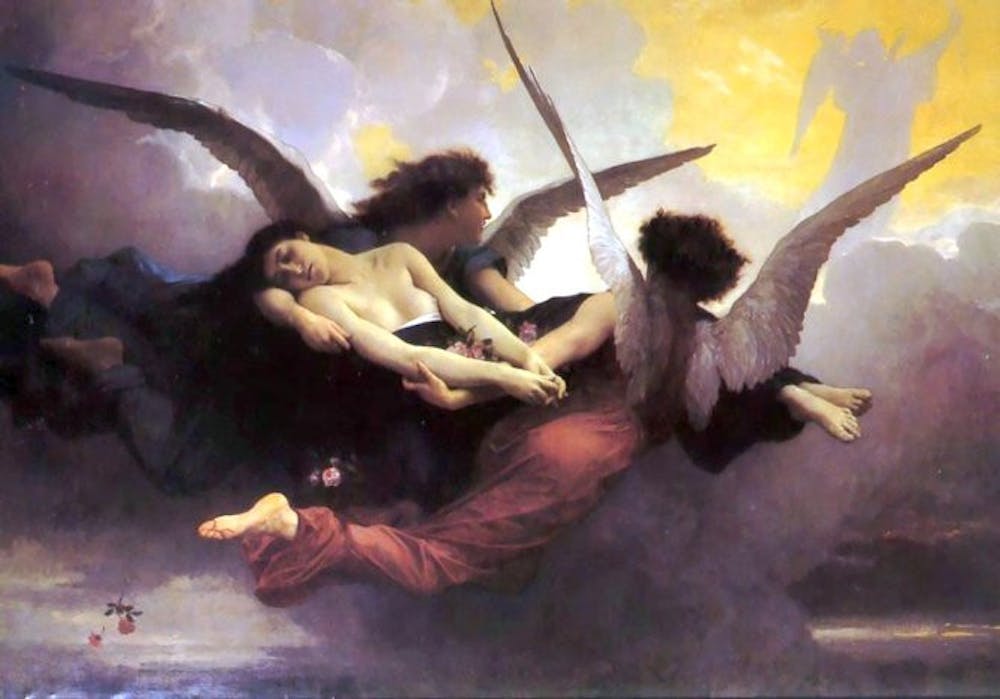 William Adolphe Bouguereau, Soul Carried to Heaven (1878).
Wikimedia Commons
William Adolphe Bouguereau, Soul Carried to Heaven (1878).
Wikimedia Commons
Judaism remains uncertain about the consciousness of the dead in the afterlife, although the dominant view holds that, after death, the soul will be in a conscious state.
Orthodox Judaism is committed to the idea of the resurrection of the body on Judgement Day and its reunion with the soul, together with heavenly bliss for the saved. Liberal forms of modern Judaism, like modern liberal Christianity, sit lightly on the idea of the resurrection of the body and emphasise spiritual life immediately after death.
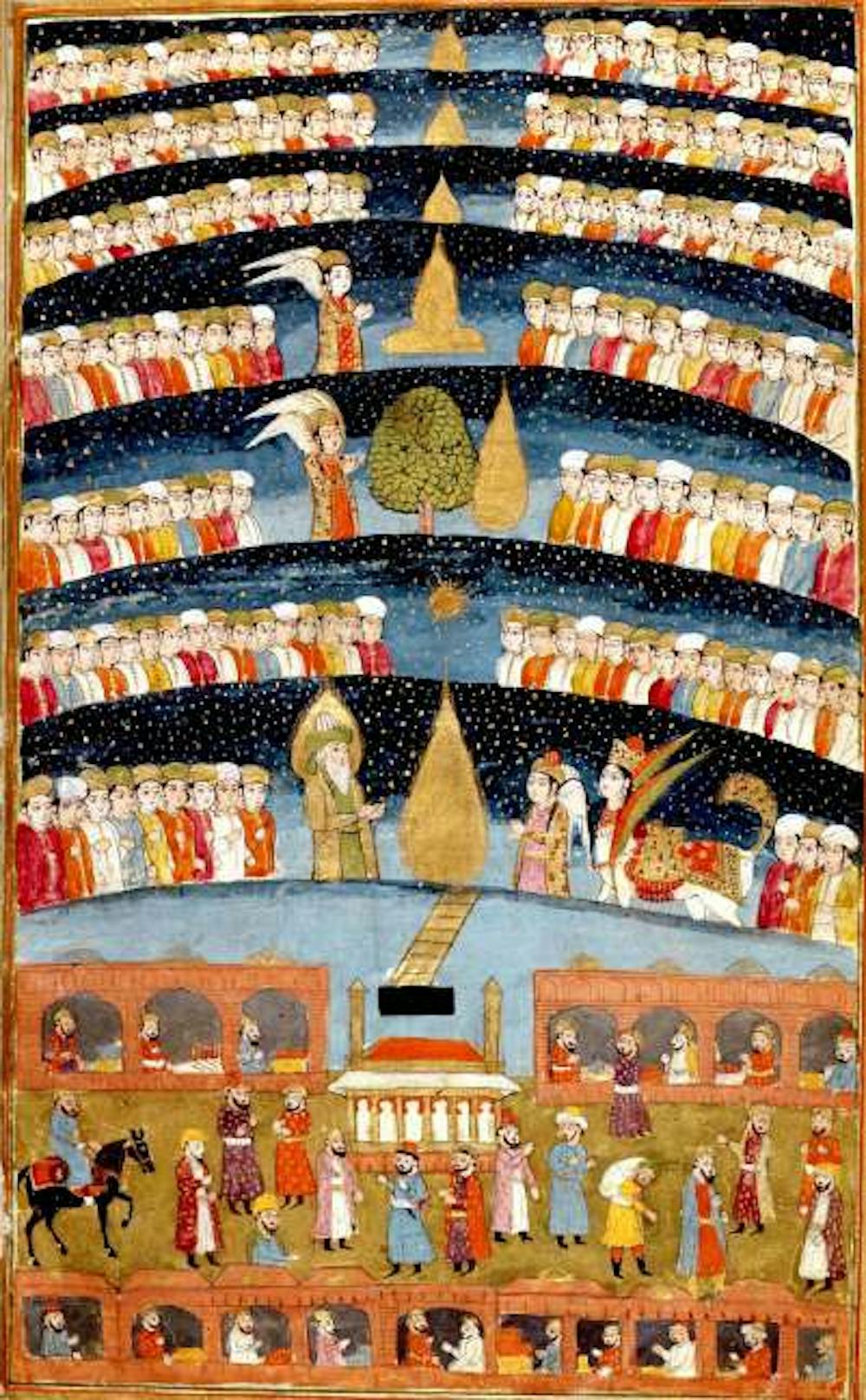 A Persian miniature depicting paradise from The History of Muhammad, Bibliothèque Nationale de France, Paris.
Wikimedia Commons
A Persian miniature depicting paradise from The History of Muhammad, Bibliothèque Nationale de France, Paris.
Wikimedia Commons
Within Islam, souls await the day of resurrection in their graves. It is a limbo-like state: those destined for hell will suffer in their graves; those destined for heaven will wait peacefully.
There are two exceptions to this: those who die fighting in the cause of Islam go immediately into God’s presence; those who die as enemies of Islam go straight to hell.
On the final Day of Judgement, Muslims believe the wicked will suffer torments in hell. The righteous will enjoy the pleasures of Paradise.
The destiny of the soul – Hinduism
In the modern West, reincarnation has a positive flavour as a desirable alternative to the traditional Western afterlife. But the Indian traditions all agree it is the ultimate horror — their aim is to escape from it.
They do, however, differ radically in their views of the destiny of the soul beyond the eternal cycle of birth, death, and rebirth. Within Hinduism, we can distinguish four different schools of thought on this.
In the first of these, known as Samkhya-Yoga, the aim is to realise the essential separateness of the soul from its material body, thus enabling us to live in the here and now without attachment to the things of the world. At death, the liberated soul will exist eternally beyond any further entanglements with the world. Modern Western postural yoga derives from this, although it is intended, not so much to remove us from the world, as to enable us the better to function within it.
The second view, known as the Dvaita Vedanta school, is completely focused on the soul’s loving devotion to God, which will help liberate souls beyond death. As George Harrison sang, by chanting the names of the Lord (Krishna and Rama) “you’ll be free”. This is the dominant philosophy underlying the Hare Krishna movement and of all the Indian traditions, most closely resembles Christianity.
Awaiting on You All by George Harrison.The third view is that of the Vishishtadvaita Vedanta school. Here, liberation occurs when the soul enters into the oneness of God, rather as a drop of water merges into the ocean, while paradoxically maintaining its individual identity.
The final view of the destiny of the soul within Hinduism is that of the Advaita Vedanta school. Liberation is attained when the soul realises its essential identity with Brahman — the impersonal Godhead beyond the gods.
The destiny of the karmic flame – Buddhism
Although there are divinities galore in Buddhism, the gods are not essential for liberation. So, it is possible to be a Buddhist atheist. Liberation from endless rebirth comes from our realisation that all is suffering and nothing is permanent, including the self.
In Theravada Buddhism (present in Sri Lanka, Thailand, Cambodia, Myanmar, and Laos), the realised person enters Pari-Nirvana at death. The flame of consciousness is “extinguished”. The “soul” is no more.
In Mahayana Buddhism (in Japan, Vietnam and China, including Tibet)), liberation is attained when the world is seen as it really is, with the veil of ignorance removed — as having no ultimate reality. This means that, although at one level the many gods, goddesses, Buddhas, and Bodhisattvas can assist us on the path to liberation, they too, like us, have never really existed.
At the everyday level, we can distinguish between truth and falsity. But from the perspective of what is ultimately real, there is only Emptiness or Pure Consciousness. Liberation consists of coming to know that the idea of the individual soul was always an illusory one. In short, the individual soul never really was. It was part of the grand illusion that is the realm of Samsara.
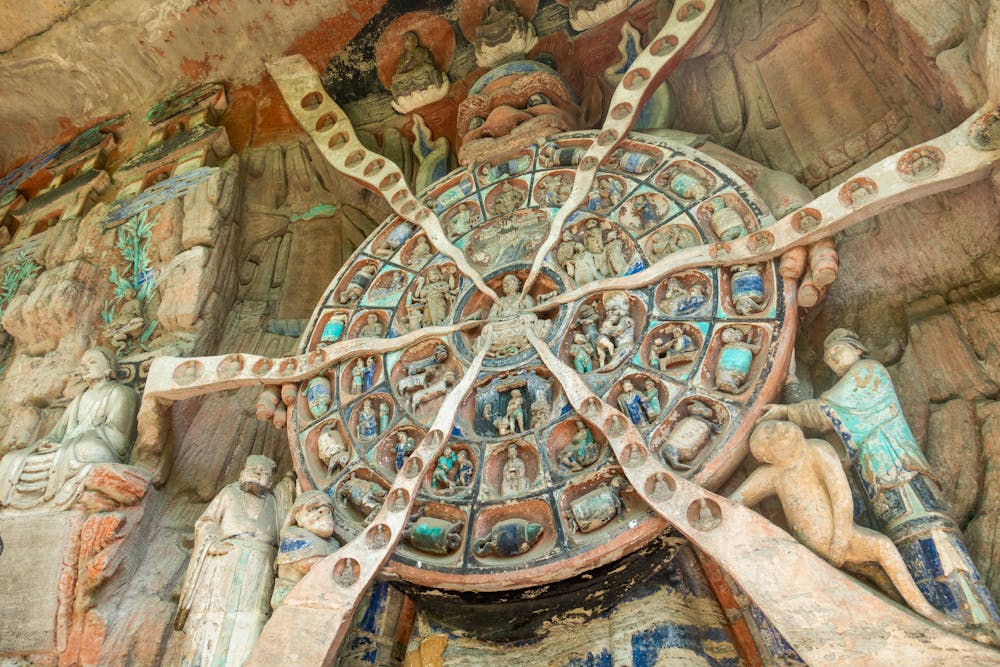 Buddha statue, carved in six samsara styles, in Chongqing, China.
shutterstock
Buddha statue, carved in six samsara styles, in Chongqing, China.
shutterstock
The practice of Buddhist “mindfulness”, now becoming popular in the West in a secular form, is the continual attentiveness to the impermanence or unreality of the self and the world, and the suffering caused by thinking and acting otherwise.
The meaning of the soul
Within the Christian tradition, the idea that each individual was both mortal body and immortal soul distinguished humans from other creatures.
It made humanity qualitatively unique; ensuring the life of each individual soul had an ultimate meaning within the grand, divine scheme. However, even without a belief in the transcendent, atheistic humanists and existentialists still affirm the distinct value of each human person.
The question of souls is still one that matters. It is, in effect, wrestling with the meaning of human life — and whether each of us has more ultimate significance than a rock or an earthworm.
This is why the belief in souls persists, even in this apparently secular age.
Authors: Philip C. Almond, Emeritus Professor in the History of Religious Thought, The University of Queensland


 Daily Bulletin


