

New Zealand businesses must adapt to a fragmented post-COVID global economy
- Written by: Peter Enderwick, Professor of International Business, Auckland University of Technology
As recovery from the COVID-19 pandemic continues, there are strong grounds for believing the rejuvenated global economy will be completely unlike what went before.
The liberal economic order that enabled rapid growth of trade, investment, technologies and incomes until the Global Financial Crisis (GFC) of 2008 shows signs of breakdown.
Many developed economies are now experiencing the rise of populist political movements. There is a growing disregard for the rule of law and an undermining of key global institutions, including the World Trade Organisation.
The level playing field of a rules-based system is being challenged by the rule of rulers. The challenge for businesses in New Zealand is how best to adapt to cope with this new global economy.
The changing face of globalisation
Emerging economies are reshaping globalisation. For example, China and Russia are pursuing forms of state capitalism characterised by close government-business relations. By providing subsidised finance or a dominant domestic market share they distort competitive advantage in world markets.
Read more: A year on from New Zealand's big lockdown the 'team of 5 million' needs a new story
The broader context for these developments is China’s challenge to the long-held global economic leadership of the United States. That growing tension is manifested in a number of ways:
The result is widening global chasms between liberalism and statism, democracy and authoritarianism, and rules-based versus unregulated governance.
A challenge for business
For business, these developments mean a more challenging operating environment, one that is more complex, uncertain and ambiguous. Growing fragmentation will certainly add to the costs of cross-border business, with arbitrary costs, regulations and distortions affecting resource movements.
More specifically, businesses will need to rethink some fundamental tenets.
Greater geopolitical awareness will be needed. Trade, investment and technology management decisions will have to give greater weight to political and regulatory considerations.
Commitment to one side of a technological, ideological or regulatory division might mean exclusion or marginalisation from the other.
The strategic focus of a business will evolve from simply cost or profit to evolutionary fitness. Businesses will need to adapt to differing constraints on the movement and protection of personnel, technology and knowledge.
Governments will need to rethink the scale and forms of support they offer their local businesses. Subsidies, protection, competition policy and industrial policy will all require review in the face of state capitalism.
The risk of trade wars
There are early signs close to home of what this new environment might look like.
When Australia called for an inquiry into China’s handling of the pandemic it faced tariffs on wine and barley. It has also faced restrictions on the export of coal, lobsters, timber, red meat and cotton to China.
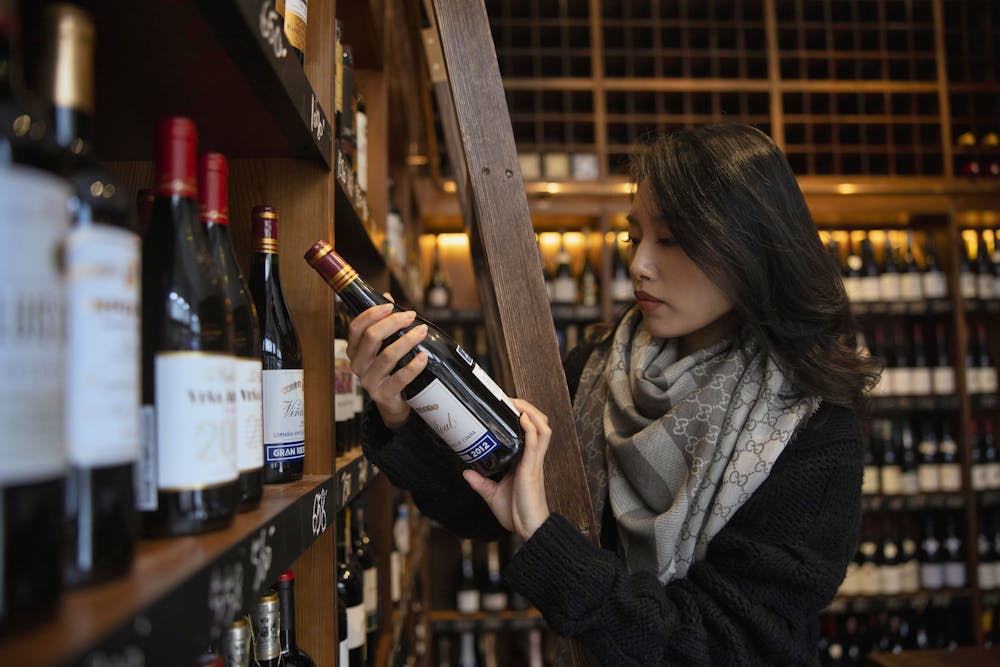 China raised tariffs on Australian wine amid a diplomatic spat between the two countries.
Alex Plavevsji/EPA
China raised tariffs on Australian wine amid a diplomatic spat between the two countries.
Alex Plavevsji/EPA
Australia criticised China’s emerging “wolf warrior” diplomacy and surprised Chinese authorities by rejecting a proposed takeover of Australia’s Lion Dairy by China’s Mengniu Dairy.
In the same way, New Zealand was rebuked by China for supporting Taiwan’s re-admission to the World Health Organisation’s annual global health assembly.
These experiences highlight the growing interdependency of economic and political goals and the increased uncertainty businesses will face.
The future plan for business
These challenges will be particularly vexatious for New Zealand’s economy. It is heavily dependent on trade and tourism and has increasingly embraced the Asian regional economy since the 1970s.
New Zealand has globally diverse commitments and historical obligations. These include defence with the United States, intelligence with the Five Eyes alliance, migration with the Pacific and Europe (and more recently Asia), and economic prosperity, increasingly with Asia.
Read more: Latest NZ unemployment figure may not give a true picture of the number of people out of work
Our largest businesses pride themselves on their global reach but this may become more of a hindrance than an advantage.
Our leading corporates — such as Fonterra, Zespri and Lion Nathan — have all faced difficulties in China in the recent past. The future challenges appear even more complex.
New Zealand businesses need to plan for a post-COVID recovery characterised not just by more home workers, but by new strategic questions that are just emerging. Here are just a few:
do you understand the growing politicisation of economic activity?
do you have a government that supports you, or is the potential for collateral damage high?
what sorts of networks and partnerships do you need to develop for success in this new environment?
in what ways can legitimacy be gained and preserved in a fractured world?
There are no doubt other questions that need asking (and answering), but now is the time for businesses to start planning for the future or risk being left behind.
Authors: Peter Enderwick, Professor of International Business, Auckland University of Technology


 Daily Bulletin


