

COVID is forcing millions of girls out of school in South-east Asia and the Pacific
- Written by: Katrina Lee-Koo, Associate professor of International Relations, Monash University
In response to reports of surging COVID cases in Papua New Guinea, the Australian government will provide greater emergency support to deliver vaccines, increased testing capacity and clinical advice to our near neighbours.
This is part of a broader program to deliver vaccines and medical support to Australia’s partners throughout Asia and the Pacific with Fiji, Cambodia, Indonesia and the Philippines so far receiving doses.
While these are welcome efforts, more needs to be done to understand and respond to the long-term implications of this pandemic on countries in our region — particularly for girls, who have often been overlooked in crisis recovery planning.
At the heart of understanding this are the barriers and opportunities to girls’ access to education.
Prior to the pandemic, there had been significant improvements in girls’ enrolments in school in South-east Asia and the Pacific. But the pandemic threatens those gains, with more girls leaving the classroom due to caring responsibilities, financial constraints, family violence and child marriage.
A new report by Plan International shows between January and June 2020, 24,000 applications for underage marriage had been lodged with Indonesia’s district and regional courts. According to the report, this is more than two and a half times the total number for the whole of 2012.
Like rates of education, this represents a reversal in a previously positive trend, in this case of decreasing cases of child marriages.
Read more: Why raising the minimum age for marriage is not enough for Indonesia to put an end to child brides
Girls dropping out of school
UNICEF reported the last two decades saw a halving of the number of girls out of school from 30 million to 15 million. But UNESCO now estimates 1.2 million additional girls in the region could drop out of school due to the effects of COVID-19.
While the data varies from country to country, the overall picture suggests the pandemic will exacerbate existing gender inequalities and have long-term implications for girls and their communities.
Across the region girls drop out of school because their care responsibilities at home have dramatically increased as family members fall victim to the virus or return home because the pandemic has stalled migratory work.
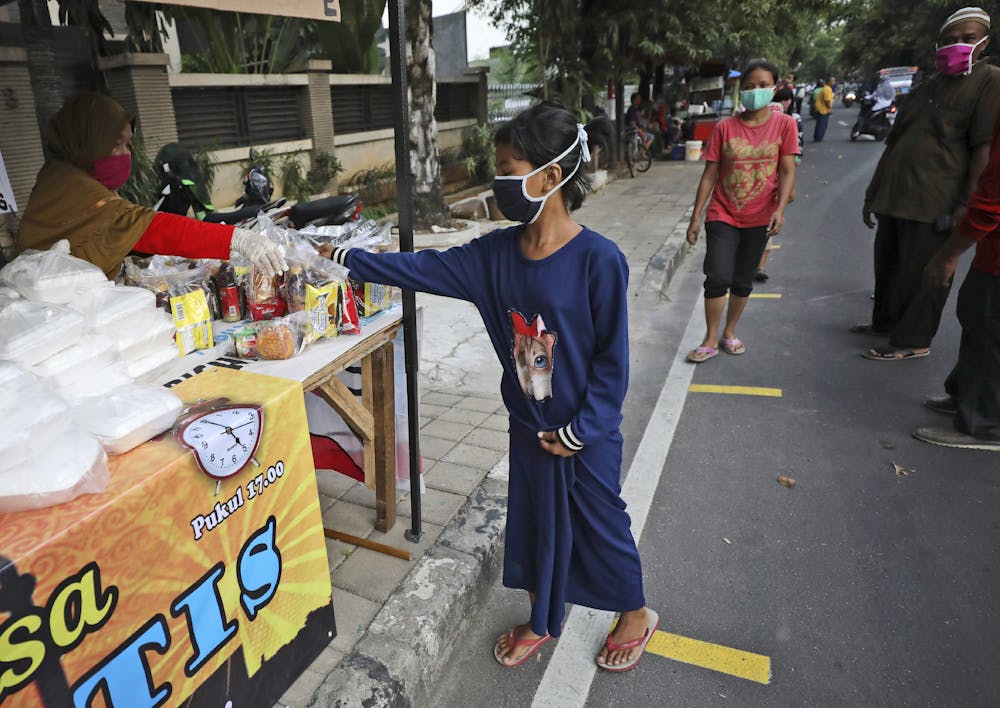 Women and girls are unfairly impacted by the coronavirus.
Dita Alangkara/AAP
Before the pandemic, women and girls in the Pacific in particular faced some of the highest rates of gender-based violence in the world. This has dramatically increased in 2020.
For example, in Fiji calls to the national domestic violence helpline during the lockdown period — between February and April 2020 — increased by over seven times.
UNESCAP similarly documented heightened calls to helplines in Singapore, Malaysia, India and Samoa, and increased pressures on violence shelters and women’s organisations in Indonesia, Myanmar, Sri Lanka, Bangladesh, Australia, Tonga and China. Violence at home is a major barrier to girls’ participation in education.
Prior to the pandemic, the cost of school fees was also identified as a barrier to girls’ education in the region. The economic hardship brought on by the pandemic — combined with pre-existing attitudes that devalue girls’ education — will likely see girls taken out of school permanently.
Crisis also brings about increases in child, early and forced marriage. Save the Children has estimated the pandemic will cause an additional 2.5 million child marriages worldwide, with an estimated 200,000 more girls experiencing child marriage in South Asia in 2020.
Read more: In parts of the world, bride price encourages parents to educate daughters
This increase is in response to poverty and economic hardship, crowding in homes, and as a result of sexual violence. Girls who are married and experience early pregnancy almost never return to school.
Why does this matter for pandemic recovery?
The benefits of ensuring girls’ access to education is not just for women and girls’ rights; it will be seen throughout the community.
Where girls have access to education, they are more likely to earn more, marry and have children later, make better informed decisions about their health and well-being, and are more able to exercise independent decision making.
Across the region it has been demonstrated that where there is greater gender equality and women and girls are able to access their rights, societies are stronger, more peaceful and prosperous.
Read more: Why schools become battlegrounds during conflict
Building resilient communities is essential, as COVID sits among climate change, political instability, regional forced migration and other crises that will continue to challenge the region. Women and girls will be at the forefront of addressing all of these crises.
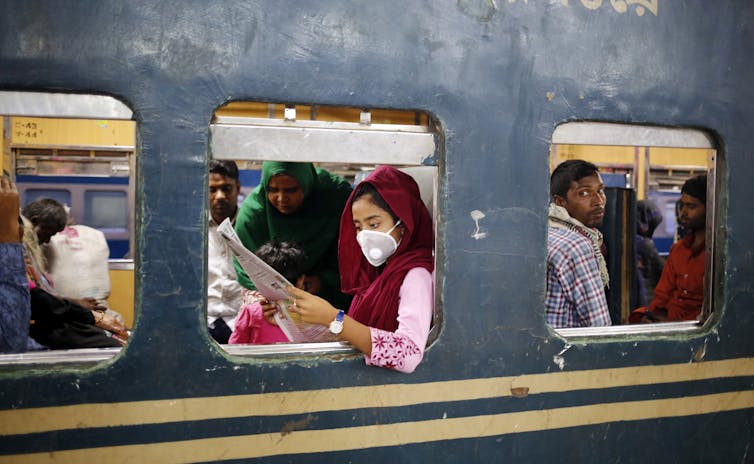 Increasing access to education for girls should be part of the recovery effort.
MONIRUL ALAM/AAP
Australia’s long-term strategy for supporting COVID recovery in the region focuses on the three pillars of health security, stability and economic recovery. While there is a commitment to “protecting the most vulnerable, especially women and girls”, this pledge has been made against the backdrop of nearly a decade of decreasing aid.
Australia’s contributions to the Global Partnership for Education — an effort to strengthen education systems in developing countries — has fallen dramatically since 2014 when it pledged US$151 million. In 2020 Australia pledged close to US$35 million, while Canada, France, Germany and the United States pledged between US$88-90 million each.
This needs to be reversed if we are to address the complex insecurities facing girls and their communities in the aftermath of COVID. Access to education for all children needs to be prioritised, with particular recognition of the unique barriers for girls.
Authors: Katrina Lee-Koo, Associate professor of International Relations, Monash University


 Daily Bulletin


