

From veggie gardening to op-shopping, migrants are the quiet environmentalists
- Written by: Sukhmani Khorana, Senior Research Fellow, Western Sydney University
The organised environmental movement is largely a white, middle-class space. But our research shows migrants care for nature in other ways – including living sustainably in their everyday lives.
This is most obvious on the domestic front. From repurposing goods to keeping vegetable gardens and being careful with electricity use, migrants are highly likely to practise sustainable living – sometimes without even realising it.
In the debate about environmental issues, migrants are often blamed for making the problem worse, such as by adding to congestion. It’s important to break this circuit and recognise migrants’ positive contribution to environmental protection.
Migrants can successfully be harnessed to help with environmental causes. Doing this will require both learning from migrants, and helping them feel welcome in the green movement.
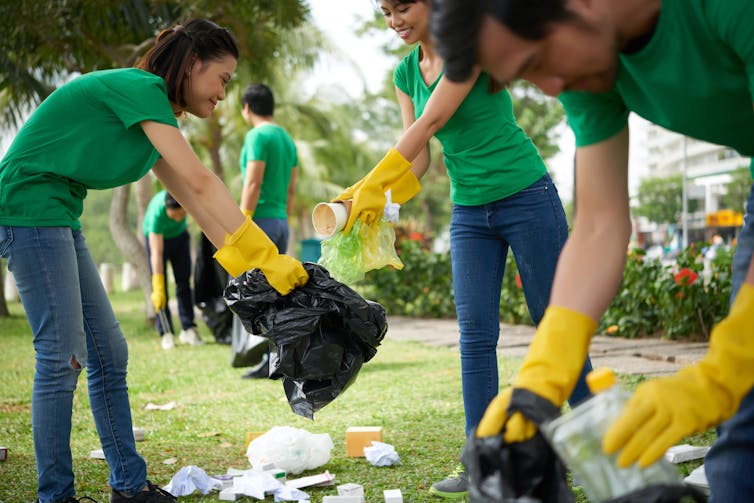 Migrants are keen to help with environmental initiatives, if given the chance.
Shutterstock
Migrants are keen to help with environmental initiatives, if given the chance.
Shutterstock
Busting migrant myths
Our qualitative pilot study sought to provide an in-depth picture of young first- and second-generation Australian migrants who care about the environment.
Research shows ethnic minorities are often under-represented in the urban environmental movement.
This can lead to suggestions migrants do not actively care for the environment – either due to apathy, or because they are preoccupied with climbing social and economic ladders in their new country.
But my research found first- and second-generation migrants in Australia care for the environment in particular ways, largely focused on the domestic front.
Read more: 4 assumptions about gender that distort how we think about climate change (and 3 ways to do better)
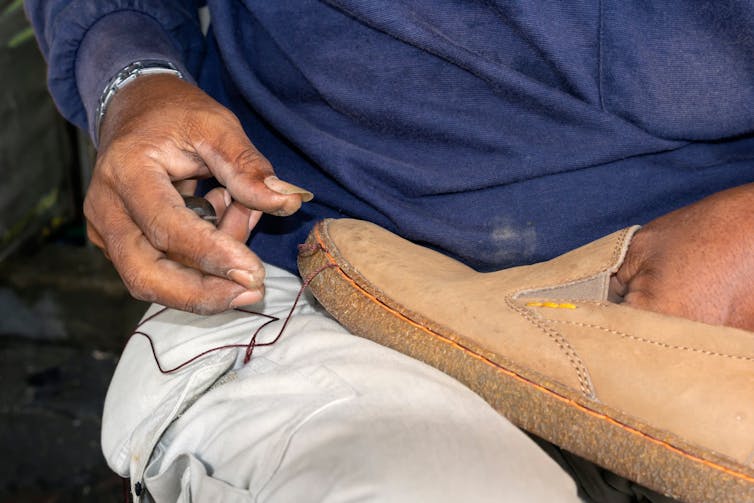 Migrants, especially those from poor backgrounds, will often fix or repurpose an item rather than dispose of it.
Shutterstock
Migrants, especially those from poor backgrounds, will often fix or repurpose an item rather than dispose of it.
Shutterstock
What we found
My research team interviewed eight first-generation migrants and nine second- generation migrants in Sydney, aged between 18 and 40 years. The group comprised seven women and ten men, roughly half of whom were parents.
We found the participants actively and consciously carried out environmental care practices, mostly in the domestic sphere. From a young age, first- and second-generation participants continued austerity and waste-consciousness inherited from their parents. These included:
- recycling and repurposing consumable items
- careful water and electricity use
- home vegetable gardens and composting
- ethical purchase and consumption.
Some second-generation migrants said their parents were “accidentally” environmentally friendly. For example, some parents who had experienced financial hardship were frugal with money and goods. Others from an agricultural background remained connected to the land through gardening.
As one second-generation participant from Vietnam observed:
Migrants are often the most environmentally conscious people I know. They’re not purposefully being conscious, but they know about the scarcity of resources and its ingrained into them so it’s part of their lifestyle.
The participant learned sustainable practices from her mother who didn’t have a lot of money. The family’s clothes and homewares came from second-hand stores. Car travel was kept to a minimum and her mother planted many vegetables in her backyard.
Read more: 'Biodegradable' plastic will soon be banned in Australia. That's a big win for the environment
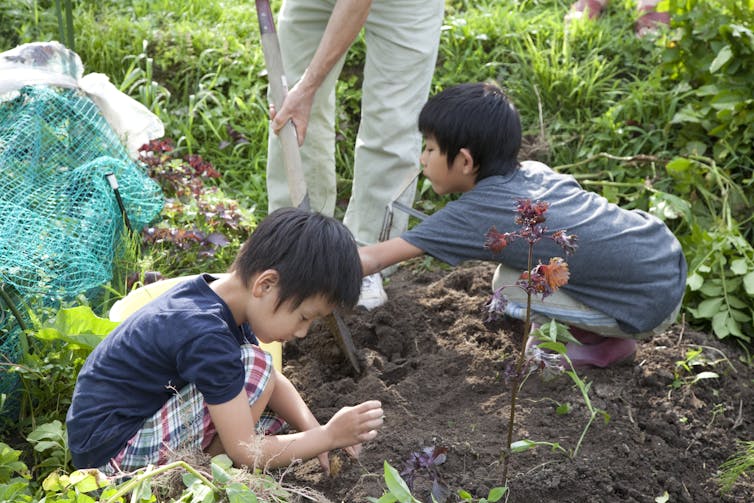 Migrants often pass sustainable practices to their children.
Shutterstock
Migrants often pass sustainable practices to their children.
Shutterstock
Outside the home
Second-generation migrants were much more likely to make the environmentally-motivated choice to become vegan and/or vegetarian. Of the 17 interview participants, five were vegan or vegetarian; all but one were second-generation migrants.
The second-generation migrants were slightly, but not significantly, more engaged with outward forms of environmental activism such as attending protests and marches.
Second-generation migrants said the first generation often eschewed public activism. Reasons for this included language barriers, alternative priorities that come with navigating a foreign country and fears of racism.
Second-generation migrants born in Australia were better equipped to overcome these barriers and felt more comfortable participating in the political sphere. However this group was still ambivalent about, or didn’t prioritise, organised environmental protection.
Read more: 'Everyone else does it, so I can too': how the false consensus effect drives environmental damage
Participants – particularly parents – cited the recent Black Summer bushfires as a traumatic reminder of climate change. The tragedy motivated them to practice environmental care such as water conservation.
Just two interviewees, both women, were involved in environmental groups. The others preferred to donate money to environmental causes or sign petitions, usually due to a lack of time.
Other participants sought to influence their family and peers through conversation, work initiatives or buying “green” products. Only three reported being engaged with environmental initiatives of their local councils.
As one first-generation migrant said:
In my council meetings, I’m one of the few migrants … They’re not confident yet about how much information they know and how much they’re missing out on. Even if they want to raise their voice they’re hesitant and worried that they’re saying something wrong.
 Migrants should be supported to understand council initiatives.
Shutterstock
Migrants should be supported to understand council initiatives.
Shutterstock
Next steps
Migrants are already highly engaged with environmentally friendly behaviour at home. The next step is to help them engage with environmental issues more broadly. We suggest the following measures:
train first-generation migrants to confidently get involved with local council sustainability measures. Councils should also raise awareness of environmental care programs and provide migrants with volunteering opportunities
raise awareness in the broader community about how migrants can be part of the solution to environmental problems through their daily domestic practices
use interactive digital tools to engage time-poor migrants
leverage second-generation migrants to both pass on, and change, their parents’ environmental practices
identify “community champions” to act as agents of change in migrant communities.
Our findings suggest migrants are interested in finding new ways to protect the environment. The green movement must help migrants achieve this, by making environmental initiatives safe, welcoming and accessible to them.
The author would like to acknowledge Claudia Sirdah and Nukte Ogun, who helped compile the research upon which this article is based.
Authors: Sukhmani Khorana, Senior Research Fellow, Western Sydney University


 Daily Bulletin


