

The queen's gambit — new evidence shows how Her Majesty wields influence on legislation
- Written by: Anne Twomey, Professor of Constitutional Law, University of Sydney
We all know the queen can’t refuse assent to a bill just because she doesn’t like it. But can she secretly get a law changed, in her personal interest, before it is even introduced into parliament?
The answer is yes, and we finally have documentary evidence to prove it.
The queen, politics and secrecy
There is a myth the queen never involves herself in political matters. In public view, all she does is act on ministerial advice, signing her name or initials where required.
But she has always done more than this. She exercises extensive soft power by influencing government policy and bills before they are introduced to parliament. Her power is exercised behind closed doors, and is more potent because of it.
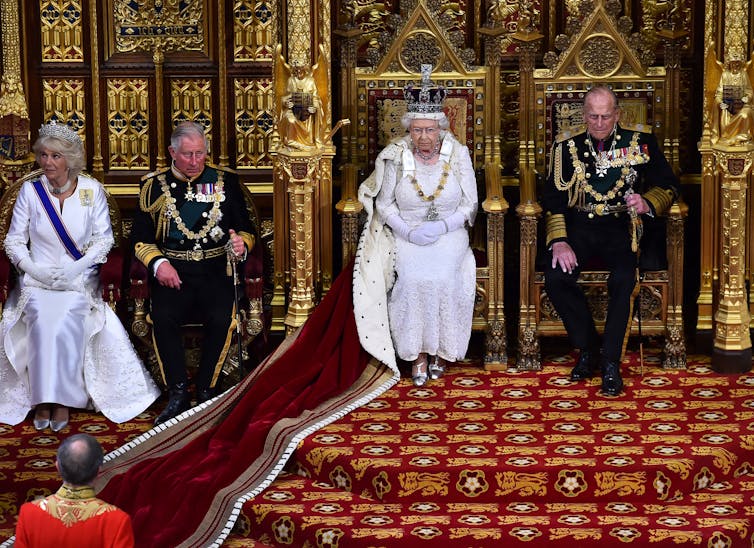 There is a myth the queen does not get involved in politics.
Ben Stansall/AP/AAP
There is a myth the queen does not get involved in politics.
Ben Stansall/AP/AAP
Due to secrecy laws, it is extremely hard to find documentary evidence of the queen’s exercise of influence. In the United Kingdom, government documents that “relate to” communications with the sovereign or the next two persons in line to the throne, as well as palace officials acting on their behalf, are subject to an absolute exemption from release under freedom of information or by government archives.
This exemption lasts until at least five years after the death of the relevant member of the royal family – meaning we cannot access British government documents about the queen’s political role, including in relation to Australia.
New documents discovered
But The Guardian has managed to expose a chink in this armour of secrecy.
In the UK’s National Archives, it discovered documents from 1973 showing the queen’s personal solicitor lobbied public servants to change a proposed law so that it would not allow companies, or the public, to learn of the queen’s shareholdings in Britain.
The gambit succeeded, and the draft bill was changed to suit the queen’s wishes.
Perhaps these documents escaped the secrecy embargo because they involved communications with a private solicitor, rather than palace officials. Or perhaps the eyes of the person vetting the file glazed over due to the boring nature of the bill and missed the reference to the queen.
Either way, it is a rare insight into what goes on behind the scenes.
Queen’s consent
The procedure involved is known as “queen’s consent”. This is different from “royal assent,” which occurs after a bill has been passed by both houses of parliament. “Queen’s consent” happens at a much earlier stage, usually well before a bill is introduced to parliament.
Queen’s consent is required where a bill would affect the governmental powers formally vested in the queen (such as powers to enter into treaties, declare war, dissolve parliament or grant mercy), matters directly affecting the monarchy (such as succession to the Crown, royal marriages and royal titles), and the property and revenue interests of the queen and her heir held by the Duchy of Lancaster and the Duchy of Cornwall.
Read more: Jenny Hocking: why my battle for access to the 'Palace letters' should matter to all Australians
Curiously, it also seems to extend to bills affecting the privately held property and financial interests of the queen, although there does not appear to be a clear rationale for this.
Any proposed bill that would affect these royal interests must be sent to the queen and her private solicitors at least two weeks before its parliamentary introduction. The solicitors then advise on the potential impact of the bill before the queen grants her consent.
A bill cannot proceed through parliament without such consent. This became an issue during the battle over Brexit.
Acting on ministerial advice … and influencing that advice
The palace has consistently stated the queen acts on ministerial advice in granting or refusing queen’s consent. While this may be so, there would be no point in her paying for advice from her personal solicitors, unless she intended to exercise her soft power to persuade the government to make changes to a bill when it suited her to do so.
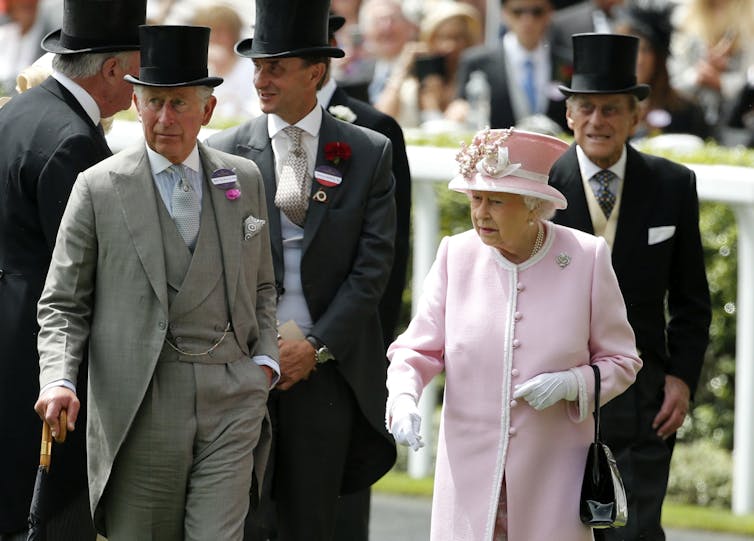 ‘Queen’s consent’ is a process that occurs before a bill is introduced to parliament.
Alastair Grant/AP/AAP
‘Queen’s consent’ is a process that occurs before a bill is introduced to parliament.
Alastair Grant/AP/AAP
One would imagine this would ordinarily happen through a quiet word during the queen’s weekly audience with the prime minister. No records are kept of such meetings, which remain strictly confidential. Any instructions to make changes to a proposed bill would come from the prime minister before it was introduced to parliament and could not be traced back to the queen.
The documents uncovered by The Guardian, however, show an alternative, more direct exercise of power. In 1973, the queen’s personal solicitor met with public servants to ask them to change a proposed companies bill to ensure the queen’s shareholdings were not exposed.
What is interesting is that public servants agreed to the meeting and tried to work out ways to accommodate the queen’s wishes before even seeking ministerial approval. There seemed to be an expectation that public servants should meet her wishes. Moreover, there seemed to be no shock or surprise her solicitors should intervene in this way.
Differing understandings of the queen’s role
In 2014, a British parliamentary committee concluded it had
no evidence to suggest that legislation is ever altered as part of the consent process.
This goes to show how effective the secrecy provisions have been in keeping the public and backbench politicians in the dark about how the constitutional system actually works. Yet ministers seem to know better.
Read more: Coronavirus: how Europe's monarchs stepped up as their nations faced the crisis
In 2012, then British Attorney-General, Dominic Grieve, issued a certificate denying access to letters by Prince Charles that lobbied ministers. Grieve asserted lobbying ministers and “urging views upon them” formed part of Prince Charles’s preparation for kingship as he “would have a right (and indeed arguably a duty) to make [such representations] as Monarch”.
If this is so, the queen plays a far more politically active role than is publicly known in the UK or Australia.
Relevance to Australia and New Zealand
While the queen has little involvement anymore in Australian affairs, occasionally legislation is passed that will affect her. In such cases, the palace insists consent must first be granted, even though there is no formal parliamentary procedure, as in the UK.
One example was the 1986 passage of the Australia Acts, which were identical British and Australian Acts that cut off residual constitutional links between the UK and Australia.
Read more: 'Palace letters' show the queen did not advise, or encourage, Kerr to sack Whitlam government
One of the sections provided for the queen to be advised directly by state premiers in relation to state matters. The queen objected. Her private secretary expressed the concern that she might be subject to “outlandish advice”.
In order to secure the queen’s consent to the introduction of the bill, extensive negotiations were undertaken. Amendments were made to the form of the section, and a convention on how it would operate was agreed. Even then, the queen only gave consent after all Australian governments insisted upon it.
A New Zealand example concerned a proposed change in 1973 to the queen’s royal style and titles with respect to New Zealand. The government wanted the queen to assent in person to the legislation when she visited New Zealand. Her private secretary replied by telex:
As far as I can discover The Queen has not yet been asked to give her approval to New Zealand Style and Titles Bill. It is … something that she would welcome in principle but her approval must be sought both to introduction of Bill and exact wording of proposed new Style and Title.
The queen’s magic
In practice, the queen’s role in relation to her realms, such as Australia and New Zealand, largely now involves the appointment and removal of the governor-general and other ceremonial or symbolic acts. In performing these, she acts on ministerial advice.
But she maintains a degree of control through a system that requires “informal” advice be given first, with formal advice only being given once the informal advice is approved.
 The queen’s influence is exercised subtly and out of public view.
Andy Rain/EPA/AAP
The queen’s influence is exercised subtly and out of public view.
Andy Rain/EPA/AAP
This means the queen can always say she has not rejected the formal advice of her ministers in the realms, even though she may have rejected informal advice or at least negotiated changes to it before it is formally given.
As with queen’s consent, the power of influence is exercised at an early stage, in confidence, so that no formal or public act of refusal is ever seen.
Like the best of magicians, the queen’s magic is keeping the real action out of public view, while maintaining the appearance of doing nothing. These latest documents, like the recently released Kerr-palace letters, indicate there is much behind the scenes that has not yet been revealed.
Authors: Anne Twomey, Professor of Constitutional Law, University of Sydney


 Daily Bulletin


