

Worried about Earth's future? Well, the outlook is worse than even scientists can grasp
- Written by: Corey J. A. Bradshaw, Matthew Flinders Professor of Global Ecology and Models Theme Leader for the ARC Centre of Excellence for Australian Biodiversity and Heritage, Flinders University
Anyone with even a passing interest in the global environment knows all is not well. But just how bad is the situation? Our new paper shows the outlook for life on Earth is more dire than is generally understood.
The research published today reviews more than 150 studies to produce a stark summary of the state of the natural world. We outline the likely future trends in biodiversity decline, mass extinction, climate disruption and planetary toxification. We clarify the gravity of the human predicament and provide a timely snapshot of the crises that must be addressed now.
The problems, all tied to human consumption and population growth, will almost certainly worsen over coming decades. The damage will be felt for centuries and threatens the survival of all species, including our own.
Our paper was authored by 17 leading scientists, including those from Flinders University, Stanford University and the University of California, Los Angeles. Our message might not be popular, and indeed is frightening. But scientists must be candid and accurate if humanity is to understand the enormity of the challenges we face.
 Humanity must come to terms with the future we and future generations face.
Shutterstock
Humanity must come to terms with the future we and future generations face.
Shutterstock
Getting to grips with the problem
First, we reviewed the extent to which experts grasp the scale of the threats to the biosphere and its lifeforms, including humanity. Alarmingly, the research shows future environmental conditions will be far more dangerous than experts currently believe.
This is largely because academics tend to specialise in one discipline, which means they’re in many cases unfamiliar with the complex system in which planetary-scale problems — and their potential solutions — exist.
What’s more, positive change can be impeded by governments rejecting or ignoring scientific advice, and ignorance of human behaviour by both technical experts and policymakers.
More broadly, the human optimism bias – thinking bad things are more likely to befall others than yourself – means many people underestimate the environmental crisis.
Numbers don’t lie
Our research also reviewed the current state of the global environment. While the problems are too numerous to cover in full here, they include:
a halving of vegetation biomass since the agricultural revolution around 11,000 years ago. Overall, humans have altered almost two-thirds of Earth’s land surface
About 1,300 documented species extinctions over the past 500 years, with many more unrecorded. More broadly, population sizes of animal species have declined by more than two-thirds over the last 50 years, suggesting more extinctions are imminent
Read more: What is a 'mass extinction' and are we in one now?
about one million plant and animal species globally threatened with extinction. The combined mass of wild mammals today is less than one-quarter the mass before humans started colonising the planet. Insects are also disappearing rapidly in many regions
85% of the global wetland area lost in 300 years, and more than 65% of the oceans compromised to some extent by humans
a halving of live coral cover on reefs in less than 200 years and a decrease in seagrass extent by 10% per decade over the last century. About 40% of kelp forests have declined in abundance, and the number of large predatory fishes is fewer than 30% of that a century ago.
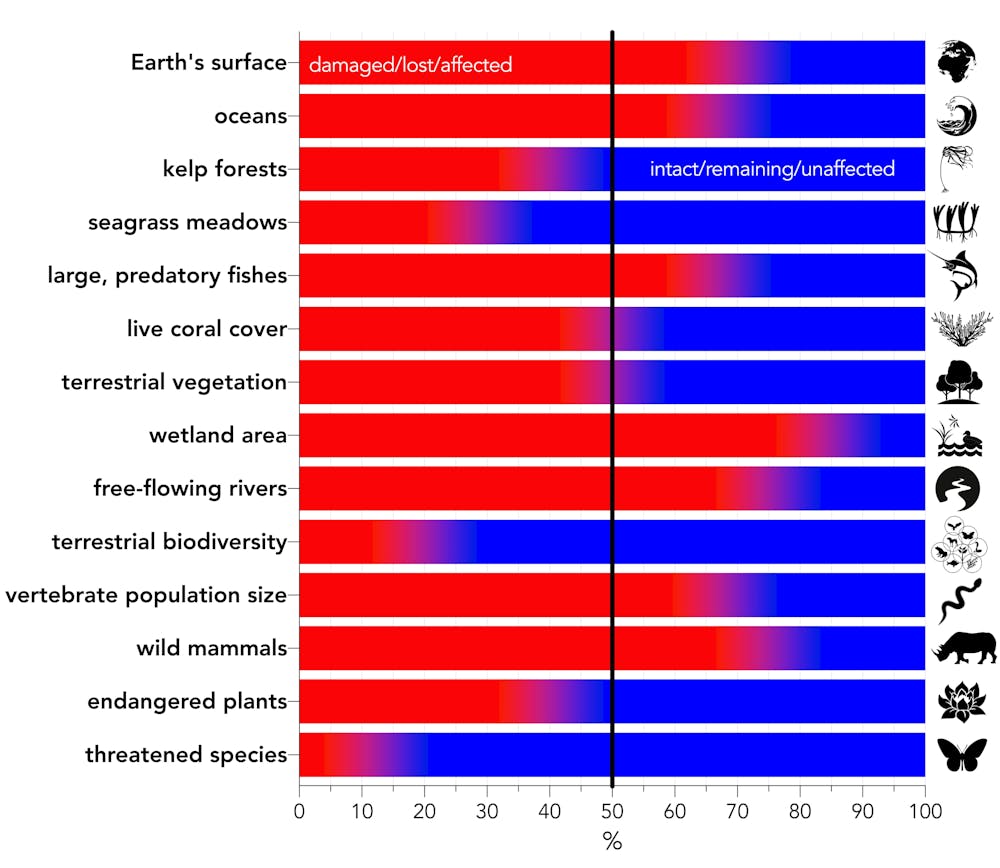 Major environmental-change categories expressed as a percentage relative to intact baseline. Red indicates percentage of category damaged, lost or otherwise affected; blue indicates percentage intact, remaining or unaffected.
Frontiers in Conservation Science
Major environmental-change categories expressed as a percentage relative to intact baseline. Red indicates percentage of category damaged, lost or otherwise affected; blue indicates percentage intact, remaining or unaffected.
Frontiers in Conservation Science
A bad situation only getting worse
The human population has reached 7.8 billion – double what it was in 1970 – and is set to reach about 10 billion by 2050. More people equals more food insecurity, soil degradation, plastic pollution and biodiversity loss.
High population densities make pandemics more likely. They also drive overcrowding, unemployment, housing shortages and deteriorating infrastructure, and can spark conflicts leading to insurrections, terrorism, and war.
Read more: Climate explained: why we need to focus on increased consumption as much as population growth
Essentially, humans have created an ecological Ponzi scheme. Consumption, as a percentage of Earth’s capacity to regenerate itself, has grown from 73% in 1960 to more than 170% today.
High-consuming countries like Australia, Canada and the US use multiple units of fossil-fuel energy to produce one energy unit of food. Energy consumption will therefore increase in the near future, especially as the global middle class grows.
Then there’s climate change. Humanity has already exceeded global warming of 1°C this century, and will almost assuredly exceed 1.5 °C between 2030 and 2052. Even if all nations party to the Paris Agreement ratify their commitments, warming would still reach between 2.6°C and 3.1°C by 2100.
 The human population is set to reach 10 billion by 2050.
Shutterstock
The human population is set to reach 10 billion by 2050.
Shutterstock
The danger of political impotence
Our paper found global policymaking falls far short of addressing these existential threats. Securing Earth’s future requires prudent, long-term decisions. However this is impeded by short-term interests, and an economic system that concentrates wealth among a few individuals.
Right-wing populist leaders with anti-environment agendas are on the rise, and in many countries, environmental protest groups have been labelled “terrorists”. Environmentalism has become weaponised as a political ideology, rather than properly viewed as a universal mode of self-preservation.
Financed disinformation campaigns against climate action and forest protection, for example, protect short-term profits and claim meaningful environmental action is too costly – while ignoring the broader cost of not acting. By and large, it appears unlikely business investments will shift at sufficient scale to avoid environmental catastrophe.
Changing course
Fundamental change is required to avoid this ghastly future. Specifically, we and many others suggest:
abolishing the goal of perpetual economic growth
revealing the true cost of products and activities by forcing those who damage the environment to pay for its restoration, such as through carbon pricing
rapidly eliminating fossil fuels
regulating markets by curtailing monopolisation and limiting undue corporate influence on policy
reigning in corporate lobbying of political representatives
educating and empowering women across the globe, including giving them control over family planning.
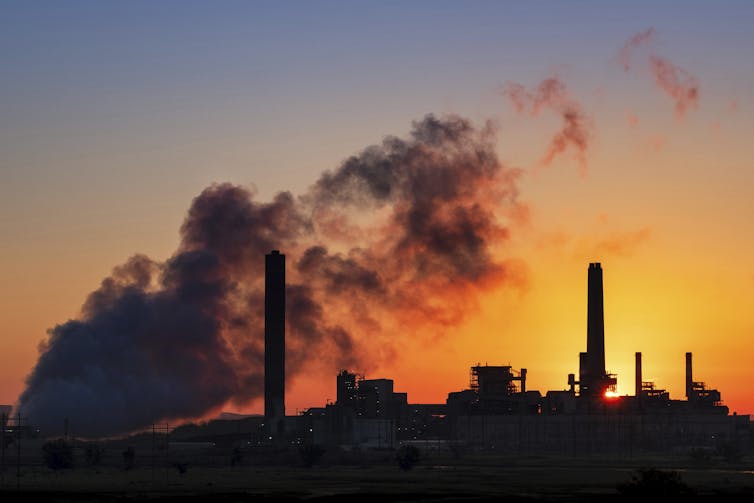 The true cost of environmental damage should be borne by those responsible.
Shutterstock
The true cost of environmental damage should be borne by those responsible.
Shutterstock
Don’t look away
Many organisations and individuals are devoted to achieving these aims. However their messages have not sufficiently penetrated the policy, economic, political and academic realms to make much difference.
Failing to acknowledge the magnitude and gravity of problems facing humanity is not just naïve, it’s dangerous. And science has a big role to play here.
Scientists must not sugarcoat the overwhelming challenges ahead. Instead, they should tell it like it is. Anything else is at best misleading, and at worst potentially lethal for the human enterprise.
Read more: Mass extinctions and climate change: why the speed of rising greenhouse gases matters
Authors: Corey J. A. Bradshaw, Matthew Flinders Professor of Global Ecology and Models Theme Leader for the ARC Centre of Excellence for Australian Biodiversity and Heritage, Flinders University


 Daily Bulletin


