

30% of New Zealanders are 'vaccine sceptics', so trust is key to COVID-19 vaccine roll-out
- Written by: Claire Breen, Professor of Law, University of Waikato
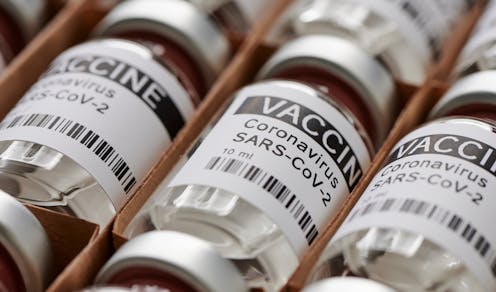
The emergency approval of the Pfizer/BioNTech COVID-19 vaccine in the UK and the imminent roll-out of several other vaccines in 2021 raises serious questions about New Zealand’s likely uptake of this vital public health response.
Recent research into New Zealanders’ attitudes to vaccination suggest positions have become more polarised over the last decade, with 60% identifying as “vaccine believers” and 30% as “vaccine sceptics”.
This follows a global trend. In 2019, the World Health Organization (WHO) identified “vaccine hesitancy” as one of the top ten threats to global health, along with non-communicable diseases (such as diabetes, cancer and heart disease), resistance to antibiotics and HIV.
The trend also raises legal issues in relation to the right to health. Aotearoa New Zealand recognised this right in 1978. It includes the right to information and the state’s obligation to educate the public about community health issues.
The origins of vaccination hesitancy can be traced back to the first vaccines that emerged in the early 19th century in Britain, and later laws on compulsory (but free) immunisation.
There were two key features to the public’s resistance. One, the liberal values of the time worked against any form of state intervention that might limit individual freedoms and personal choice. The second was more specific — a mistrust of, and lack of confidence in, the science.
Read more: Vaccine hesitancy is not new – history tells us we should listen, not condemn
Vaccinations: victims of their own success
Those factors continue to be felt in the current debate, but vaccine hesitancy today has a third feature: the shrinking number of people, in the developed world at least, who remember and can share their experiences of the terrible consequences of diseases such as smallpox and polio.
And here lies the paradox. Many New Zealanders no longer see and fear such wide-scale death and suffering — because vaccinations work. But it is hard to “see” the lives of those who have been saved by vaccination. For example, between 2000 and 2018, an estimated 23.3 million people did not die from measles.
And yet the measles-mumps-rubella (MMR) vaccine is still linked to fears it causes autism, despite there being no scientific proof of it. The original paper making the claim more than 20 years ago was later withdrawn and the researcher shown to have manipulated the data.
How can we inspire confidence in vaccines?
Overcoming hesitancy and winning public trust will be about ensuring scientifically accurate information is promoted that explains what the vaccines are, what they contain and how they work.
Anecdotes and unsubstantiated claims about the dangers of vaccination fuel vaccine hesitancy.
Read more: Misinformation on social media fuels vaccine hesitancy: a global study shows the link
Public information campaigns should perhaps counter this with scientifically substantiated statistics and real-life stories that build confidence in vaccination. False side effects may be an issue that will need to be managed in messaging.
Similarly, public education campaigns could draw on our understanding of how people respond to messaging — including that we tend to trust the version of information we hear or read first.
Vaccine education should therefore be spread repeatedly using trusted, diverse sources the population relates to.
This is also key to the messaging about safety, which needs to be evidence-based to avoid confirming any reasons people might have for not trusting a vaccine. This aspect is especially important for members of vulnerable and diverse communities.
Where severe side effects do arise, clear messaging about the steps taken to deal with those effects will also have to be communicated, immediately and with the utmost transparency.
That transparency should extend to the motivations behind the message, where a major challenge is overcoming distrust of large pharmaceutical companies and their own perceived financial motives.
Keep calm and carry on talking
With the Pfizer/BioNTech vaccine (for which NZ has a pre-purchase order) now approved in the UK, the speed with which vaccines are being developed, tested and approved must be addressed in New Zealand’s information campaign.
Fear that corners might have been cut and safety compromised will need to be confronted openly. It needs to be communicated clearly that scientists have been working on the technologies behind COVID-19 vaccines for a number of years. Unprecedented focus and funding explain their rapid development.
Related to this is the fact that more than one vaccine will be available, each made using a different technology. The two vaccines expected to be available in New Zealand next year include one based on viral messenger RNA (mRNA) and another using a modified cold virus (which no longer causes disease) to express the surface spike protein of the COVID-19 virus.
Read more: Should a COVID-19 vaccine be compulsory — and what would this mean for anti-vaxxers?
The different methods used to make the vaccines and how they work will require explanation, too, and may raise new questions. A failure to address these questions adequately risks some New Zealanders choosing to refuse vaccination altogether (the vexed question of compulsion aside).
COVID-19 has highlighted the destructive force of a new disease on populations that had perhaps become complacent with vaccines. But we can be prepared for the next phase of our response. A wide-ranging and calm national conversation about vaccination is required.
Authors: Claire Breen, Professor of Law, University of Waikato


 Daily Bulletin


