

A birth certificate is a human right. Why aren't they free and easier to get?
- Written by: Liz Allen, Demographer, ANU Centre for Social Research and Methods, Australian National University
This week marks the 31st anniversary of the Convention of the Rights of the Child.
As we reflect on the value and place of children, this gives us a chance to look at how birth registration and birth certificates operate in Australia today.
As the UN notes, “a name and nationality is every child’s right”. Australian academics have previously argued, the convention “implicitly includes the right to a birth certificate”.
Yet not every Australian child is registered or has a birth certificate.
When we think of children’s development and care, we don’t tend to think of the barriers to gaining such an important document. Or the appropriateness of an administrative process of birth notification and registration that hasn’t changed much in more than 160 years.
To reduce burdens on families and increase social engagement among the marginalised, we need seriously to consider alternatives to the traditional birth certificate.
With growing digital connectivity, are paper-based birth certificates still relevant?
Why do we need birth certificates?
All births in Australia are required to be registered by a parent or carer with the relevant state or territory registry office for births, deaths and marriages. This service is free.
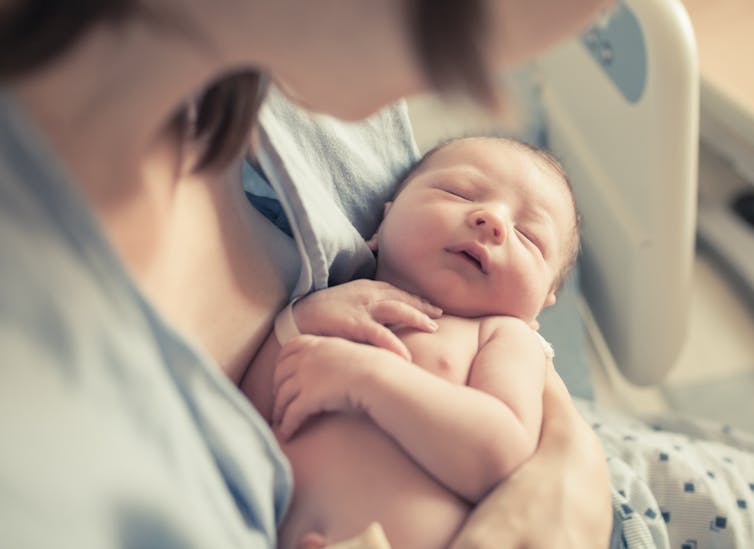 All Australian babies need to be registered after they are born.
www.shutterstock.com
All Australian babies need to be registered after they are born.
www.shutterstock.com
Birth registration is also a fundamental human right — it provides a record of the name, birth details, and very existence of someone. It also provides a government administrative function, helping to determine population estimates.
Birth certificates, on the other hand, aren’t automatically issued in Australia – there’s a fee involved with gaining this crucial piece of identification, potentially violating human rights.
These paper-based certificates are vital documents, needed for a huge range of crucial life events, from enrolling in school to opening a bank account, getting a passport, applying for government benefits, learning to drive, holding a tax file number to work in paid employment — even getting into a sporting team.
There’s a cost
The cost of a birth certificate varies across states and territories, but they are not insignificant. The Australian Capital Territory has the highest fee at $65.00, Victoria has the lowest at $33.80 (plus an additional $10 for postage).
All registry offices in Australia with the exception of Queensland can waive the fee. But information about fee exemptions is near impossible to find. Birth, Deaths and Marriages in Victoria is the only jurisdiction to make such information available on its website, but the process appears complicated and eligibility very narrow.
Not everyone has a birth certificate — and this is a problem
Despite the importance of birth certificates, not everyone has one.
Experiencing financial difficulties, moving house, being wary of government, and having lower English proficiency are among the reasons people may not have a birth certificate.
Read more: Invisible children: research shows up to one in five Aboriginal newborns aren't registered
Births still go unregistered in Australia, mostly among people from disadvantaged and minority groups, including First Nations Australians and children of parents born overseas and from non-English speaking backgrounds.
Estimates suggest about 3% of births are not registered by a child’s fifth birthday, but this declines as young people approach the age of 15. Milestone events, like starting school and applying for a tax file number or driver’s licence, are triggers for either the realisation a birth isn’t registered or a prompt for registration.
There are no data on how many people in Australia do not hold birth certificates. The Victorian registry office reports the “majority” of people apply for a birth certificate when a baby is registered, but even they don’t know the actual numbers.
 Milestones, like starting school, can prompt a realisation a child does not have a birth certificate.
www.shutterstock.com
Milestones, like starting school, can prompt a realisation a child does not have a birth certificate.
www.shutterstock.com
Investments have been made to increase the completeness of birth registration, particularly among First Nations Australians and in Victoria, but this has not extended to increasing the accessibility of birth certificates.
If births are registered for free, it follows that birth certificates should (and could be easily) be part of the free registration process.
Not having a birth certificate can render people invisible, particularly for the already vulnerable. Without a birth certificate, full recognition and participation in society including through education and employment is hindered.
There are other ways
The birth registration and certification process has not kept up with contemporary expectations.
Australian birth certificates themselves, for example, have altered very little since the 1930s — they remain paper-based and include similar information.
There are other systems available to make identification processes easier, but these also rely on individuals having paper copies of their birth certificates. The Australian government’s documentation verification service (DVS) is a central database enabling interrogation and confirmation of identity documentation.
Banks can use the DVS system, for example, to confirm the identity of an individual without seeing a birth certificate, relying on the birth certificate number.
There are, of course, safety issues when it comes to maintaining the security of identity data. But with so much other sensitive information now digitised, these risks can be managed. It’s also doubtful they outweigh the practical and equity concerns about continuing to rely on paper-based birth certificates.
What about Sweden?
Other countries are doing this better. Babies born in Sweden are immediately registered and added to a population address register by the hospital or midwife responsible for delivering the child. The child’s name is then updated by their parents or carers, and important information relating to each Swede is maintained throughout their life.
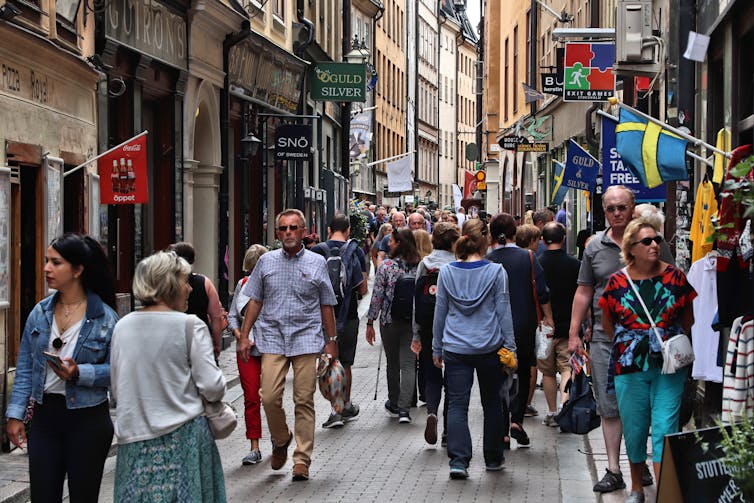 All Swedes are immediately registered by the hospital or midwife when they are born.
www.shutterstock.com
All Swedes are immediately registered by the hospital or midwife when they are born.
www.shutterstock.com
Australia has a similar hospital and midwife notification system in the National Perinatal Data Collection(NPDC). The NPDC isn’t used to help register births – it’s health-focussed — but it (or a registry-based) notification system has the potential to assist in redressing the invisibility too many Australians experience.
A better process for babies
The costs associated with buying a birth certificate for a baby appear more of a revenue raising endeavour than a public good.
Australia holds a number of different data system capabilities that could replace the outdated paper-based scheme of birth registration and certification.
Yes, there are security and logistical concerns, but we can manage them. It is most important to create a system where every baby is granted their fundamental human rights of recognition.
From a demographic perspective, we will have a more accurate and timely picture of all Australians — no matter the socioeconomic circumstances they might be born into.
Authors: Liz Allen, Demographer, ANU Centre for Social Research and Methods, Australian National University


 Daily Bulletin


