

Read The Times Australia

Daily Bulletin

The numbers suggest the campaign for cannabis reform in NZ will outlive the generations that voted against it

  • Written by: Jack Vowles, Professor of Political Science, Te Herenga Waka — Victoria University of Wellington
The numbers suggest the campaign for cannabis reform in NZ will outlive the generations that voted against it

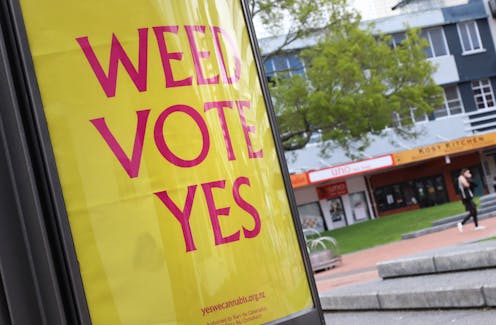
Reactions to the result of the cannabis referendum were highly polarised. Some argued the majority verdict must be accepted. Others pointed to the narrow margin — 50.7% to 48.4% — as evidence that the issue is still alive politically.

The government, however, has seemingly signalled a desire to move on. Before the announcement of the special vote count that narrowed the election night margin considerably, the then justice minister, Andrew Little, said:

The electorate has spoken, they are uncomfortable with greater legalisation and […] decriminalisation of recreational cannabis. The New Zealand electorate is not ready for that, and I think we have to respect that.

Prime Minister Jacinda Ardern echoed those sentiments:

When it comes to a referendum, a majority is a majority and so it hasn’t tipped the balance in terms of what we as a government will do. We gave our commitment to New Zealanders if it won the majority, we would progress legislation. If it didn’t, we wouldn’t.

In the short term, such judgments are understandable. Legalising recreational cannabis use is not an issue a government might need on its policy agenda right now. But in the medium to long term, the wisdom of pushing the matter aside is questionable.

The age factor

Referendums are crude devices and the idea of a “New Zealand electorate” that has collectively spoken is simplistic.

In reality, the electorate is made up of individuals with opinions on cannabis that are far more complex than voting yes or no could adequately express. In particular, the referendum question did not allow a decriminalisation option. There is no basis for interpreting the result as ruling that out.

Read more: If reducing harm to society is the goal, a cost-benefit analysis shows cannabis prohibition has failed

As with the vote on Brexit in Britain, which the old strongly supported and the young strongly opposed, New Zealand’s cannabis referendum results were defined by age.

Post-election survey data provided by Vox Pop Labs for Vote Compass suggest a majority of those over 50 voted against legalisation. A majority of those under 50 voted for it.

Given the narrowness of the margin, assuming preferences remain roughly the same by age and these data are reasonably accurate, it will not be long before generational replacement within the electorate produces a majority for legalisation and control.

Calls for a second vote

Nor do referendums necessarily produce outcomes that are permanently binding. In 1993, New Zealanders voted for MMP, but there was a second (also successful) MMP referendum in 2011 — to “kick the tyres”, as the then prime minister, John Key, put it.

The Brexit vote was also close, and there was a strong campaign for a second referendum once the full implications of Britain withdrawing from the European Union became more apparent than they had been at the time of voting.

Read more: New Zealand's new parliament turns red: final 2020 election results at a glance

A second referendum would likely have reversed the outcome, as more young people would have entered the electorate while many older people would have died in the interim.

The poor quality of debate and widely publicised lies leading up to the decisive vote also fuelled demands for a second Brexit referendum.

The cannabis debate never descended to Brexit levels, although there were accusations the anti-legalisation camp used misinformation to support its cause. But there was also another contentious referendum topic (assisted dying), not to mention a general election, consuming media attention and crowding out informed debate.

Another chance for change

As well, the campaign in favour of change was ill-organised and ineffective, if not naive. The proposed legislation involved two concepts: legalisation and control. The most important of these was control, but the issue in many people’s minds came down to legalisation of what they believed to be a harmful and dangerous drug.

Read more: New law gives NZ police discretion not to prosecute drug users, but to offer addiction support instead

Such a belief can only have been based on two implicit assumptions: that the existing law is effective in reducing harm and damage, and legalisation would increase the odds of harm and damage.

Neither of those assumptions has any basis in evidence. The real debate should have been about controlling various aspects of existing use: criminality, strength of product, age thresholds, taxation and health education.

Given that another referendum in the not-too-distant future could well have a different outcome, there are good reasons to continue the campaign for change.

Authors: Jack Vowles, Professor of Political Science, Te Herenga Waka — Victoria University of Wellington

Read more https://theconversation.com/the-numbers-suggest-the-campaign-for-cannabis-reform-in-nz-will-outlive-the-generations-that-voted-against-it-150073

Business News

Designing Eco-Friendly Custom Water Bottles for Your Next Event

The Evolution of Sustainable Event Merchandise Event planning has undergone a massive transformation over the last decade. Gone are the days when organizers could hand out cheap, single use plastic...

Daily Bulletin - avatar Daily Bulletin

Why Choosing a Professional Florist Melbourne Makes Flower Delivery Impactful

Flowers have a great power to speak when humans cannot express their feelings with right words. Flowers are the best gifts when you are celebrating a birthday or welcoming a newborn child into your fa...

Daily Bulletin - avatar Daily Bulletin

The Business Case for Choosing Australian Fabricators Over Imported Alternatives

For a long time, you might have defaulted to overseas suppliers when sourcing fabricated metal components for a project. The unit price was lower on paper, and the maths seemed straightforward. That...

Daily Bulletin - avatar Daily Bulletin

Australian organisations are relying on business continuity plans built for a far more predictable world

Tariff escalations, supply chain fragility, geopolitical events, and the ongoing threat of cyber disruption have reshaped the risk environment facing Australian organisations. The problem is that ma...

Daily Bulletin - avatar Daily Bulletin

How to Rent a Car for Uber in Melbourne: What Every New Driver Needs to Know

Starting out as an Uber driver in Melbourne is not as complicated as it sounds but getting the vehicle right is where most new drivers get stuck. Uber has strict requirements around vehicle age, condi...

Daily Bulletin - avatar Daily Bulletin

When Should You Speak to a Lawyer About a Legal Issue?

Legal issues can begin with a simple question, then become harder to manage once formal steps are involved. Many people wait until a matter feels urgent before seeking guidance, even though earlier ...

Daily Bulletin - avatar Daily Bulletin

The strategic rise of Bali as Australia’s next essential healthcare support hub

As Australian healthcare providers grapple with unprecedented operational bottlenecks, a new nearshore model is quietly transforming patient care delivery. Forward-thinking organisations,  including...

Daily Bulletin - avatar Daily Bulletin

Cost Savings and Benefits of Using Used Pallets in Logistics

In today’s competitive logistics and supply chain industry, businesses are constantly looking for ways to reduce operational costs without compromising efficiency and reliability. One of the most prac...

Daily Bulletin - avatar Daily Bulletin

How Fulfilment Services in Australia Help Businesses Scale Efficiently

The growth of e-commerce and modern retail has transformed customer expectations. Consumers now expect fast shipping, accurate order processing, and seamless delivery experiences regardless of where...

Daily Bulletin - avatar Daily Bulletin

The Daily Magazine

Thermoplastic vs. Paint: The True Long-Term Cost Comparison

Line marking looks like a simple line item on a school maintenance budget, until the true cost of ...

Why Vetting Beats Volume: The Real Story Behind Australia's Growing Applicant Pools

On paper, hiring should be getting easier. Job ads across the country are pulling in more applicat...

Moving Out of a Rental in Melbourne? A Practical Moving Checklist

Moving out of a rental in Melbourne is one of those things that always feels further away than it ...

Why a Cordless Rebar Tying Machine Is a Smart Investment for Australian Construction Projects

Tying reinforcing steel by hand means spending hours bent over while making the same twisting moti...

How to Get a Document Notarised in Sydney: What to Bring, What It Costs and How Long It Takes

If an overseas bank, embassy, university, employer or land registry has asked you for a notarised ...

The 2026 Used-Car Market

For a few strange years, the used-car market rewrote its own rules. Supply shortages sent second-h...

Why CCTV Alone Is Not Enough for Modern Business Security

Cameras are usually the initial step that companies take to strengthen their physical security. If...

Top 4 Wheelchair Ramp Providers in the Boulder Area

Finding the right wheelchair ramp in Boulder will feel like a turning point. Whether you are plann...

Why Every Workplace Should Take Emergency Preparedness Seriously

Emergency planning is one of those things many workplaces know they should think about, but it oft...