

Survey shows 1 in 4 New Zealanders remain hesitant about a coronavirus vaccine
- Written by: Jagadish Thaker, Senior Lecturer, School of Communication, Journalism and Marketing, Massey University
Three in four New Zealanders (74%) say they intend to get vaccinated against COVID-19 when a vaccine becomes available, but just over half (56%) would put their names on a list to be vaccinated, according to a new national survey.
Fewer still (52%) would get vaccinated if they had to pay for it themselves. One in ten (13%) say they have no intention to get vaccinated, while 22% remain neutral.
Taken together, the survey findings suggest roughly half of the New Zealand public is strongly motivated to get the COVID-19 vaccine, with about a quarter undecided, and another quarter unwilling.
Building public trust and enthusiasm for vaccination is as important as developing the vaccine itself. Unless enough people get vaccinated, outbreaks and subsequent lockdowns are likely to continue.
Why people want to get vaccinated
Māori (64%) have lower intentions to get vaccinated compared to European New Zealanders (76%) and Asian and other ethnicities (81%).
This finding is similar to attitudes expressed by other minorities, such as African Americans in the US. It likely reflects lower trust in government agencies and scientists to act in the public interest, even as COVID-19 disproportionately affects these communities.
The most frequently cited reasons for people who plan to get vaccinated include protecting family and themselves (62%), community (49%), health concerns (52%), a return to normality (43%) and a doctor’s recommendation (23%).
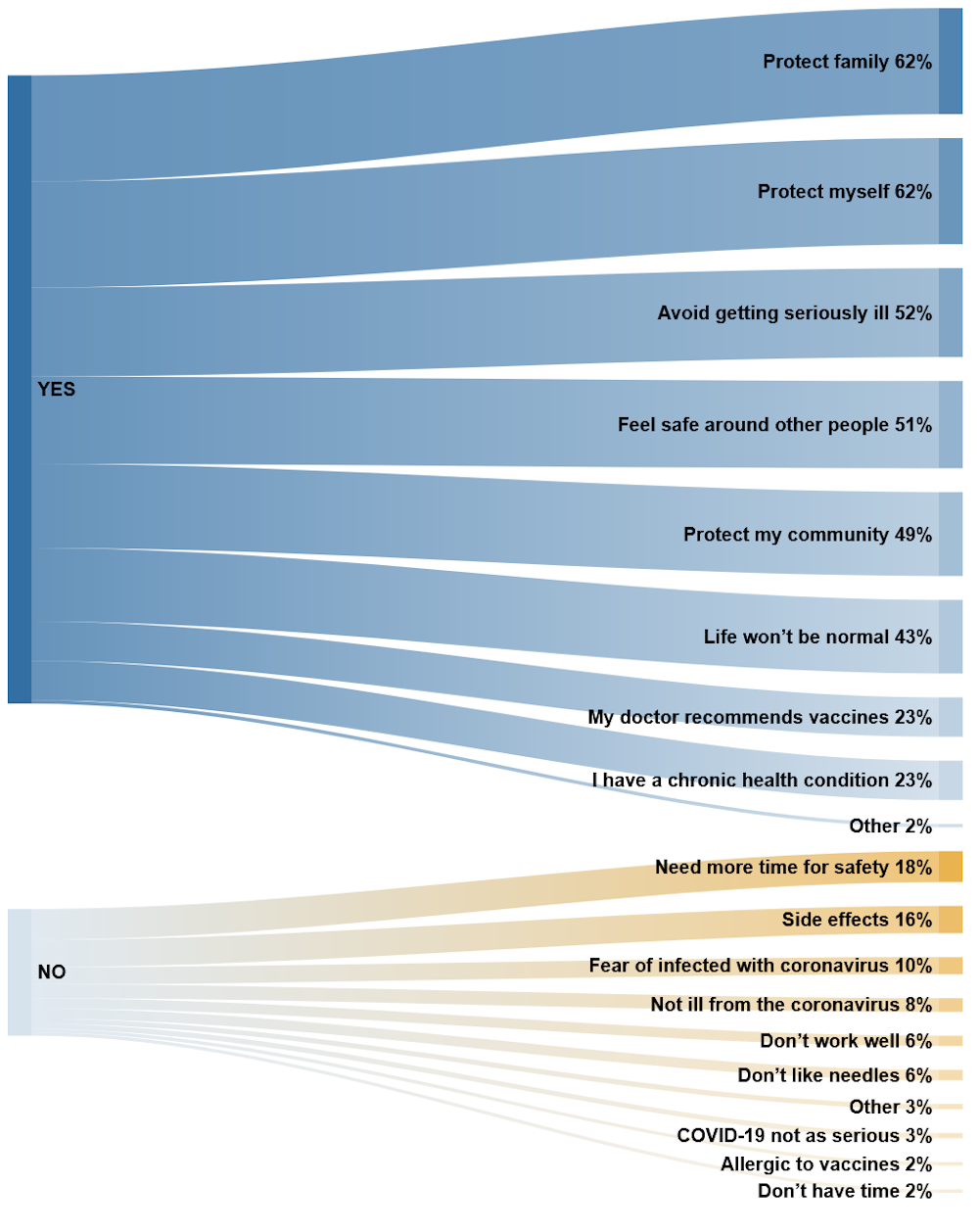 Reasons for and against getting a COVID-19 vaccine.
Safety concerns (18%), side effects of vaccines (16%) and fear of getting infected through a vaccine (10%) are the top reasons given by people who would refuse a COVID-19 vaccine.
Support for restrictions on anti-vaxxers
A majority of New Zealanders support restrictions on people who refuse vaccination. Travel bans (61%), restricted entry to public places (57%) and restrictions on their children attending school (50%) are among the measures that find support. People are less willing to consider a higher tax rate (28%) and reduced pay (30%).
Generally, the majority have a positive attitude towards vaccination, but a significant minority say they have previously refused to get vaccinated (16%) and refused to get their child vaccinated (10%).
More than half of New Zealanders (57%) say they would be uncomfortable getting a vaccine that was rushed into production. Almost a third (29%) think new vaccines carry more risks than older ones.
Understanding these public concerns will help government and public health agencies to prepare, particularly in light of conspiracy theories and general vaccine safety concerns.
About one in ten New Zealanders (11%) expect a vaccine to be available this year. About half believe we will have to wait until sometime in 2021. Setting realistic expectations about the availability of a vaccine will help overcome public anxiety and protect against beliefs that vaccine development is rushed to suit political purposes.
Ensuring public trust in a coronavirus vaccine
The New Zealand government has done well in building public trust in expertise and support for preventive measures. But with the return of lockdowns and recent revelations of a lack of testing of border security staff, it may have lost some support. Pandemic fatigue is also likely setting in.
A recent meta-analysis shows attitudes and norms are the strongest predictors of vaccination intentions.
Individuals are less likely to have either the time or aptitude to verify scientific studies. Their attitudes about vaccine safety and effectiveness will depend on what they hear from trusted sources and what their friends and family are doing.
Mandatory vaccination could ensure universal coverage but would likely alienate those who already distrust government and science. Such measures might also face legal challenges.
Read more: Should a COVID-19 vaccine be compulsory — and what would this mean for anti-vaxxers?
Borders provide some protection against the pandemic but little against the “infodemic”. Uncertainty about clinical rigour in vaccine development abroad, such as in Russia and the US, will influence New Zealand public perceptions of vaccine safety.
We can learn lessons from New Zealand’s 2019 measles outbreak. More than 2,000 confirmed measles cases, the most in two decades, were reported. It was a timely reminder of the need for local vaccine catch-up campaigns.
Historically, New Zealand has never reached the measles vaccination coverage of 95% recommended by the World Health Organization. Other factors that contributed to the outbreak include increasing equity gaps among minority ethnic groups and a small increase in the number of people refusing vaccination generally.
A catch-up campaign could have increased immunisation rates by decreasing fear of vaccines, which social media often amplify.
Simple clear messages from trusted sources, communicated with compassion and kindness, helped New Zealand to contain the coronavirus. We will have to do the same to contain vaccine misinformation and refusal. Vaccines are only as effective as the rate of vaccination.
Authors: Jagadish Thaker, Senior Lecturer, School of Communication, Journalism and Marketing, Massey University


 Daily Bulletin


