

More than 90% of Year 10 teachers don't know the age of criminal responsibility in Australia
- Written by: Marilyn Campbell, Professor Faculty of Education, School of Cultural and Professional Learning, Queensland University of Technology
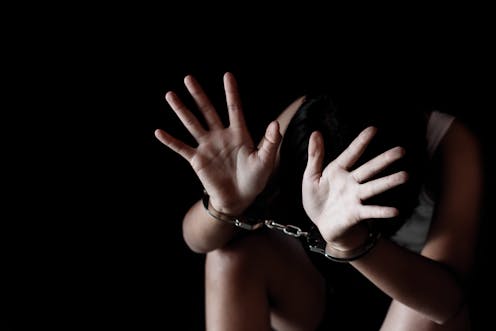
How would you answer the following question?
At what age can a child be fined or imprisoned for their actions in Australia?
Our survey found only 7.2% of teachers and 5.8% of students knew the right answer — that criminal sanctions could be imposed on a ten year old.
Australian state and federal attorney-generals will meet this week to discuss lifting the age of criminal responsibility from 10 years old.
There were reportedly almost 600 children aged 10 to 13 in detention in Australia last financial year. More than 60% were Aboriginal or Torres Strait Islander children.
As part of a larger study, we surveyed 250 Year 10 teachers and 533 Year 10 students (aged 15-16 years) in 2015 from three states in Australia (South Australia, Western Australia and Queensland). The students and teachers were from urban and regional areas in government and independent schools.
One issue we were interested in was student and teacher understanding about the age of criminal responsibility in their state.
Read more: Don Dale royal commission demands sweeping change – is there political will to make it happen?
A significant proportion of teachers (36.8%) believed 16 was the minimum age of criminal responsibility. And 32.8% said they did not know the answer.
Nearly 30% of Year 10 students (29.8%) said criminal responsibility was possible at any age when the child could differentiate right from wrong. And 22.7% answered it was at 16 years old. The survey relevant to this article has not yet been published.
The age of a criminal
Across all Australian states and territories, a child must be at least ten years old age before they can be held criminally responsible for their actions.
It is important to acknowledge that youth justice principles (enshrined in legislation) in different states and territories hold that detention in custody is a sanction of last resort.
If a child is aged between ten and 14, there is a presumption (that can be rebutted) that they will not be criminally responsible, unless the prosecution can prove the child had capacity to know they should not do the act.
The rationale behind a minimum age of criminal responsibility is that children of a certain age have not developed a full appreciation of right and wrong behaviour, and the consequences that flow from it.
Introducing them to the criminal justice system and subjecting them to criminal sanction would be unfair in these circumstances.
Most teachers and students don’t know
Our survey showed both Year 10 teachers and students were largely ignorant about the age of criminal responsibility in their state.
These misunderstandings are happening at a time of strong calls to increase the minimum age of criminal responsibility. The Australian Lawyers Alliance, Law Council of Australia, Australian Medical Association and the Royal Australian College of Physicians have all called for an increase to the minimum age of criminal responsibility in Australia.
Raising the minimum age of responsibility (as an irrebuttable presumption) from ten to 14 would be consistent with recommendations made by the United Nations Committee on the Rights of the Child.
While the United Kingdom also has a minimum age of ten, most European nations have a minimum age of 14 years or higher.
Why does it matter?
Criminal law is designed to educate people about, and deter them from, committing crimes. Ignorance of the law is not a defence to a criminal charge, so school students over the age of ten have a vested interested in understanding how the criminal law (and possible sanctions) might apply to them.
School staff (in their pastoral role) also have a responsibility to teach students about criminal responsibility. The teacher-student relationship in formative years has the capacity to mould behaviour in social ways.
A teacher cannot impart knowledge about the criminal law that they themselves do not have.
Read more: A new bill keeping 10 year olds out of jail is a good start, but it needs to go further
Schools can be a site for criminal behaviour. Section 60e of The Crimes Act 1900 (NSW), for instance, specifically prohibits the assault, stalking, harassment or intimidation of any school staff or student.
Students engaged in cyberbullying could be charged under the Commonwealth Criminal Code Act 1995 with using a telecommunication service to menace, threaten or cause offence.
Staff and students need to be aware of these laws, and their potential criminal liability pursuant to these laws.
While many organisations are calling for a change to the minimum age of criminal responsibility in Australia, the fact there is even a need for change will come as a surprise to many schoolteachers and students.
Pre-service teachers need to learn these basic facts about the legal system as it applies to their students during their university course. And professional development needs to be provided for practising teachers.
Authors: Marilyn Campbell, Professor Faculty of Education, School of Cultural and Professional Learning, Queensland University of Technology


 Daily Bulletin


