

Urban Aboriginal people face unique challenges in the fight against coronavirus
- Written by: Fiona Stanley, Perinatal and pediatric epidemiologist; distinguished professorial fellow, Telethon Kids Institute
There seems to be a myth in Australia that Aboriginal and Torres Strait Islander people mostly live in remote communities. But the vast majority (79%) live in urban areas.
The federal government has rightly decided the best policy to protect Indigenous people from COVID-19 is to socially isolate remote communities.
Now the government needs to turn its attention to the risks Indigenous people face in urban and rural areas.
Read more: Coronavirus will devastate Aboriginal communities if we don't act now
Greater risk of harm
So far SARS-CoV-2, the coronavirus that causes COVID-19, has infected more than 6,600 Australians and killed 75 people. The elderly and those with underlying conditions are most at risk of severe illness and dying from the virus.
Chronic diseases such as respiratory diseases (including asthma), heart and circulatory diseases, high blood pressure, diabetes, kidney diseases and some cancers are more common in Indigenous people, and tend to occur at younger ages, than in non-Indigenous people.
These diseases, and the living conditions that contribute to them (such as poor nutrition, poor hygiene and lifestyle factors such as smoking), dramatically increase Indigenous people’s risk of being infected with coronavirus and for having more severe symptoms.
So Elders and those with chronic disease are vulnerable at any age.
We know from past pandemics, such as swine flu (H1N1), Indigenous Australians are more likely to become infected with respiratory viruses, and have more serious disease when they do.
Read more: Coronavirus: what the 2009 swine flu pandemic can tell us about the weeks to come
So far, there have been 44 cases of coronavirus among Indigenous people, mostly in our major cities. We’re likely to see more in coming months.
This suggests the decision to close remote communities has been successful so far. But we also need to now focus on urban centres to prevent and manage further cases.
Current Australian government advice is for Aboriginal and Torres Strait Islander people 50 years and over with existing health conditions to self-isolate. General government health advice tells all Australians to maintain good hygiene and seek health care when needed.
But this advice is easier said than done for many urban Indigenous people.
So what unique family and cultural needs and circumstances so we need to consider to reduce their risk of coronavirus?
Large households
Many urban Indigenous households have large groups of people living together. So overcrowding and inadequate accommodation poses a risk to their health and well-being.
This is particularly the case when it comes to infectious diseases, which thrive when too many people live together with poor hygiene (when it’s difficult for personal cleanliness, to keep clean spaces, wash clothes and cook healthy meals) and when people sleep in close contact.
Crowded accommodation also means increased exposure to passive smoking and other shared risky lifestyles.
Households are also more likely to be intergenerational, with many children and young people living with older parents and grandparents. This potentially increases the chances of the coronavirus spreading among and between households, infecting vulnerable older members.
Immediate solutions to prevent infection are, with guidance from Aboriginal organisations, to house people in these situations in safe emergency accommodation. But it is also an opportunity to work with Aboriginal organisations in the longer term to improve access to better housing to improve general health and well-being.
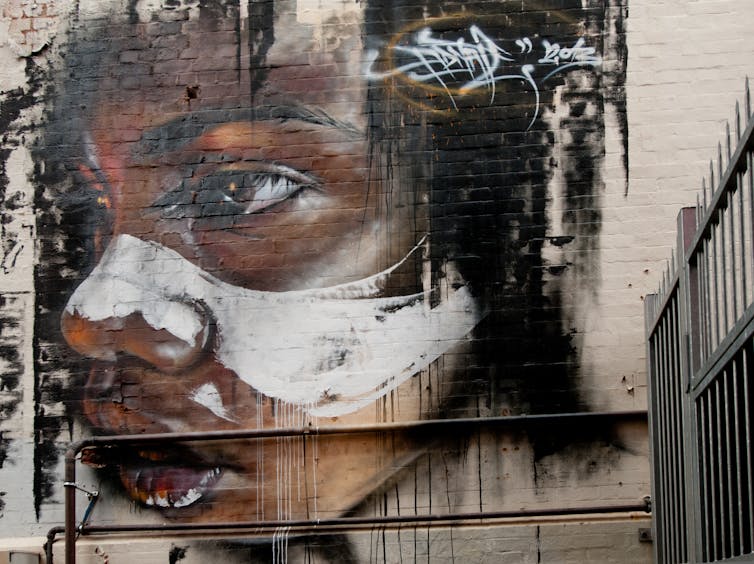 Most Indigenous people live in our cities, not in remote Australia.
Shutterstock
Most Indigenous people live in our cities, not in remote Australia.
Shutterstock
Poor health literacy
Indigenous Australians don’t always have access to good information about the coronavirus in formats that are easily understood and culturally appropriate.
The National Indigenous Australians Agency (a federal government agency) has developed some excellent videos in languages and in Aboriginal English, using respected First Nations leaders, as have others in Western Australia.
The challenge is to get these distributed in urban centres urgently. These health messages should also be distributed in Aboriginal Medical Services waiting rooms and on Indigenous television and radio.
Read more: Coronavirus: as culture moves online, regional organisations need help bridging the digital divide
Inadequate access to soap and vaccines
Poverty will limit some families’ ability to buy hand sanitiser, face masks, disinfectant and soap.
Although there are provisions for Indigenous Australians to receive free vaccines against the flu and pneumococcal disease to protect against lung disease, not all age groups are covered.
Scepticism of mainstream health services
Due to policies and racism that have marginalised Indigenous people, many do not use health and other services.
This is why Aboriginal Controlled Health Services are so important and successful in providing culturally sensitive and appropriate care.
However, there is concern these health services are not adequately funded or prepared to manage a coronavirus pandemic in urban centres.
They need more personal protective equipment (including masks). They also need more Aboriginal health workers, community nurses and others for testing and contact tracing.
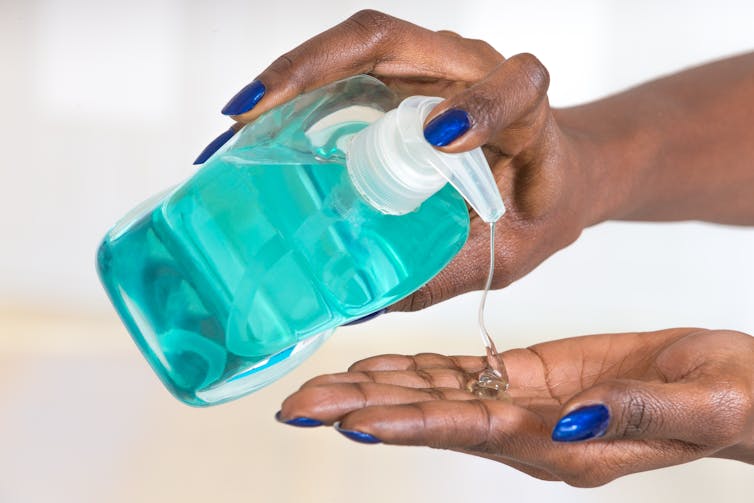 Not everyone can afford to buy soap and hand sanitiser to limit the spread of the virus.
Shutterstock
Not everyone can afford to buy soap and hand sanitiser to limit the spread of the virus.
Shutterstock
What do governments need to do?
Some regions’ responses have been better than others.
In Western Australia, the urban-based Aboriginal Community Controlled Health Services (ACCHS) are working with key state government departments to coordinate the COVID-19 response. This includes guidance about how best to prevent and manage cases.
In Southeast Queensland, the Institute for Urban Indigenous Health, which manages 21 ACCHS, is coordinating health and social government services.
It’s time for other governments to set up collaborative arrangements with ACCHS and other Aboriginal controlled service organisations in urban centres to better manage the COVID-19 pandemic.
This should include more staff to:
- provide care
- help people self-isolate
- explain and embed the digital COVID-19 media messages about hand washing, use of sanitisers and social distancing
- enable accommodation that is acceptable and safe, especially for Elders and homeless people.
These services should also provide free flu and pneumococcal vaccinations.
Getting Indigenous health experts to lead this defence is clearly the way to go. We must listen and respond to these leaders to implement effective strategies immediately. If ever there was an opportunity to demonstrate that giving Indigenous people a voice to manage their own futures is effective, it is this.
Our hope is that, after this pandemic, the value of Aboriginal control will be recognised as the best way to improve Aboriginal health and well-being.
Read more: The answer to Indigenous vulnerability to coronavirus: a more equitable public health agenda
This article was co-authored by Adrian Carson, Institute for Urban Indigenous Health; Donisha Duff, Institute for Urban Indigenous Health; Francine Eades, Derbarl Yerrigan Health Service; and Lesley Nelson, South West Aboriginal Medical Service.
Authors: Fiona Stanley, Perinatal and pediatric epidemiologist; distinguished professorial fellow, Telethon Kids Institute


 Daily Bulletin


