

Running out of things to do in isolation? Get back in the garden with these ideas from 4 experts
- Written by: Anthea Batsakis, Deputy Editor: Environment + Energy, The Conversation
Right now, the best thing we can do to help stop the alarming spread of coronavirus is to stay home. But that doesn’t mean we can’t find pleasure in nature or help the environment.
Here, a behavioural science expert, a botanist, an environment media expert and an entomologist suggest easy ways to connect with nature in your garden (or on your balcony) while staying safe in isolation.
Read more: B&Bs for birds and bees: transform your garden or balcony into a wildlife haven
Many of these activities can be done with materials found at home. If you don’t have any plants, many nurseries and gardening suppliers will home deliver. Or go online to order plants, seeds, potting mix, gloves and tools.
Finally, try swapping cuttings or sharing gardening tools with neighbours – adhering to social distancing and other health guidelines, of course.
Get creative with containers
Melissa Hatty – Behavioural science doctoral researcher, Monash University
Gardening is great for mental and physical health. And it’s possible to do in just about any space, from growing alfalfa sprouts in cotton wool to building an urban permaculture garden, and everything in between. If space is limited, many herbs, vegetables and fruit trees can thrive in containers.
Container gardening is also an opportunity to express yourself. Art is useful for processing thoughts and intense emotions, while creativity has been linked to a more positive mood. And while we’re stuck at home, creativity expressed through containers might also starve off boredom and loneliness associated with prolonged isolation.
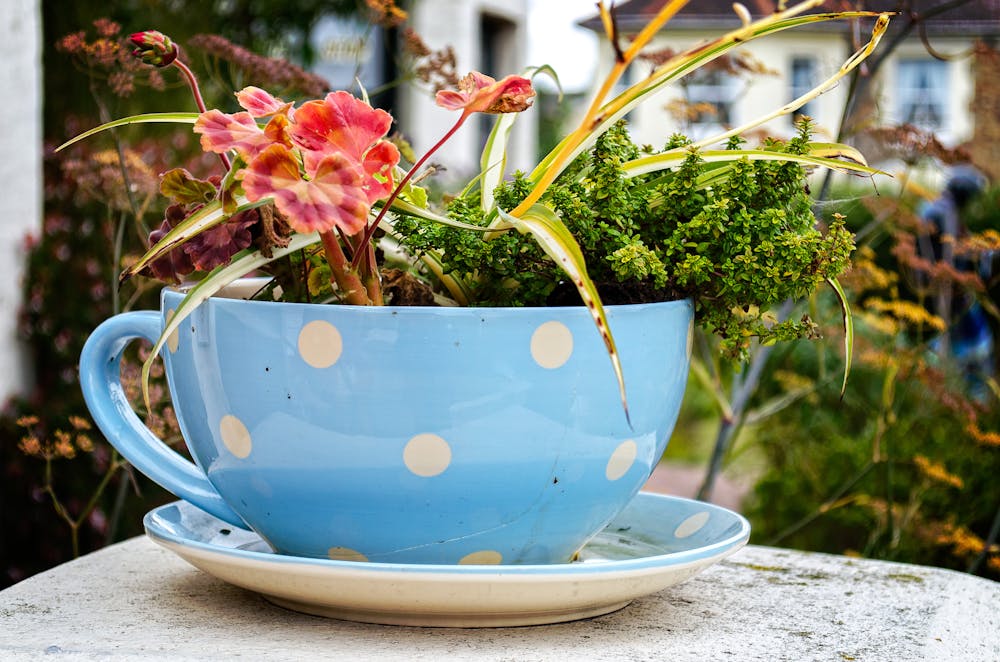 Turn something old into a home for a plant, and get creative.
Garry Knight/Flickr, CC BY
Turn something old into a home for a plant, and get creative.
Garry Knight/Flickr, CC BY
Try planting in an old pair of shoes, jeans, or furniture. Ask friends or neighbours if they have old items you can use to turn into planters. And your upcycling will also be helping the environment, turning trash into something useful.
Backyard science
Judith Friedlander – Environment media researcher, University of Technology Sydney, and PlantingSeeds founder
If ever there was an opportunity to embrace citizen science, it’s now. Everyday people, many with more time on their hands working from home, can still add value to scientific data and repositories, educating themselves all the while and connecting with a like-minded community.
And you can do it from your backyard, or even from gazing out the window, sending data, images, audio files and more to scientists who need it.
Read more: Want to help save wildlife after the fires? You can do it in your own backyard
Try Birddata – BirdLife Australia’s web portal – which works to collaboratively and scientifically collect data from people to protect Australia’s birds. Users engage with an interactive map to identify their area and input information on bird observations and the date observed.
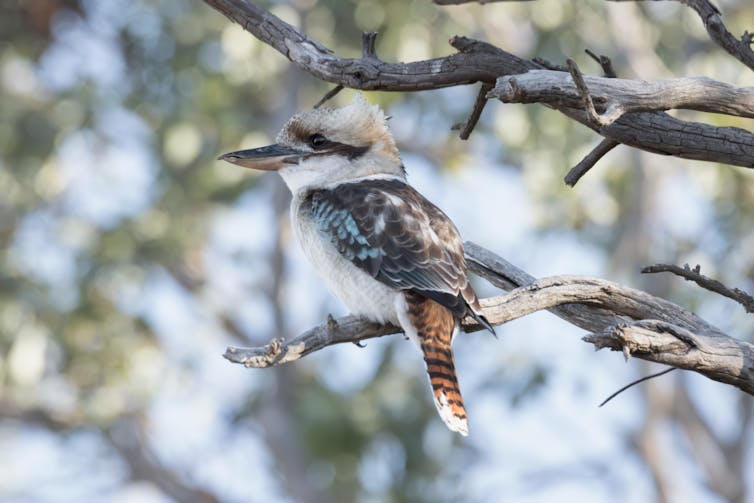 What birds can you spot outside your window?
Matthew Willimott, CC BY
What birds can you spot outside your window?
Matthew Willimott, CC BY
Another is Questagame, a mobile game that gets players outdoors to engage with, learn about and help protect life on earth (while keeping your distance from other people). Users can submit sightings of animals, plants and fungi, or identify the sightings of other players.
You can find other citizen science programs here. Many, like Digivol, can be done from your computer if going outside isn’t an option. Created by the Australian Museum and ALA, Digivol is a crowdsourcing platform where users volunteer to transcribe data from natural history collections.
Make mulch
Greg Moore – Botanist, University of Melbourne
We hardly ever get around to deadwooding the trees and shrubs in our gardens, but with many of us isolating at home, we might have time.
Deadwooding is when you remove all the dead little twigs and branches from your trees and shrubs. Your plants will look better and healthier, and you’ll have removed the risk of this dead material causing damage in the next wind storm.
But the dead material you’ve removed is also great as a part of a good mulch. The best mulch is of mixed particle size – a blend of fine and coarse material and everything in between. That’s where your deadwood plays its role.
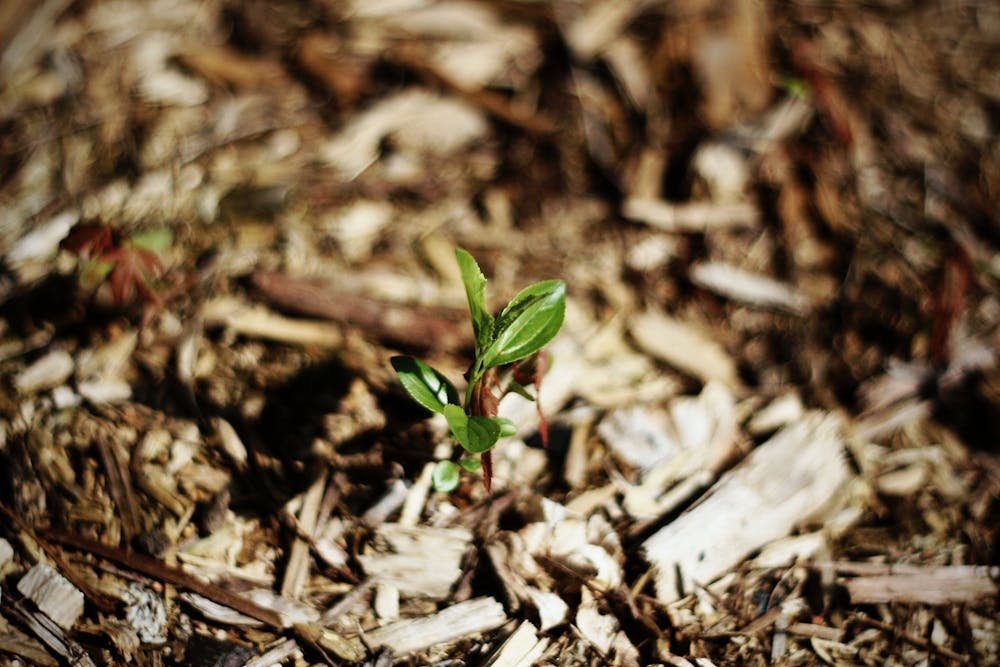 You can use dead plant matter in your backyard to create mulch.
Maddy Baker/Unsplash, CC BY
You can use dead plant matter in your backyard to create mulch.
Maddy Baker/Unsplash, CC BY
Fine twigs break down easily, while the coarse material (up to 50 millimetres in diameter and 30-50 centimetres long) such as larger branches or parts of stems, let in air and water when it rains, and lasts for a few years.
Your mulch should be 75-100mm thick. And if you do it now, when you come to check on your mulch in a year’s time, you will have a healthier garden when, as we hope, the current troubles are all behind us.
Plant for winter pollinators
Tanya Latty – Entomologist, University of Sydney
Although we usually associate bees and other pollinators with summer, in warmer countries like Australia, many types of pollinating insect are active throughout the winter months.
Now, in autumn and while we’ve bunkered down, is the best time to plant a garden for winter-active pollinators like hoverflies, honeybees and (on warmer days) stingless bees.
Read more: A solution to cut extreme heat by up to 6 degrees is in our own backyards
Pollinator-friendly flowers can supercharge natural pest control by attracting beneficial predatory insects. Hoverflies, for example are garden superheroes that pack a double punch; the adults are pollinators, while the larvae are voracious aphid predators.
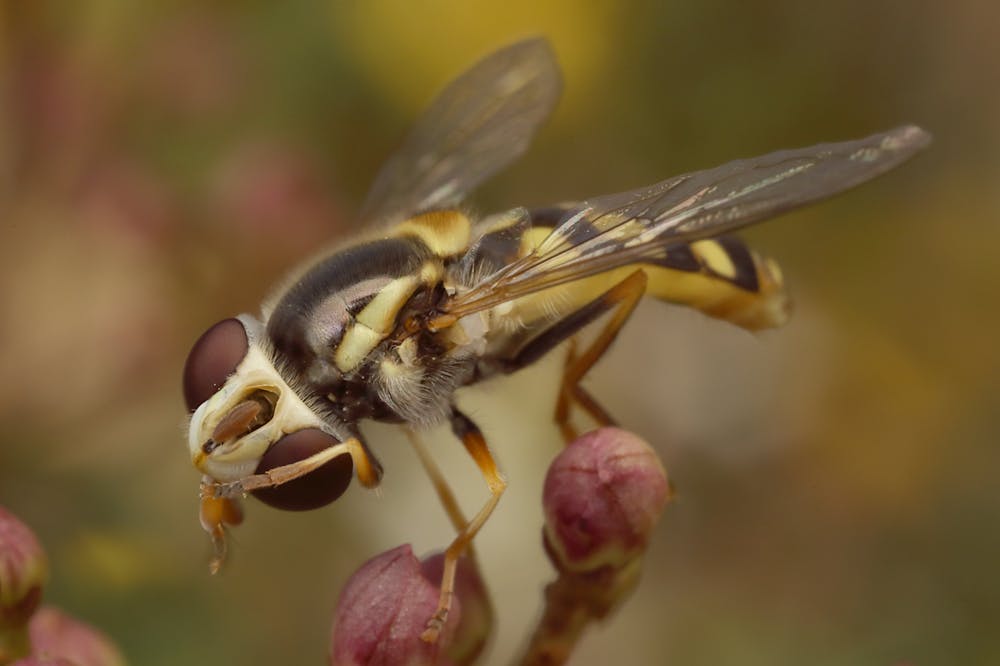 Hoverflies are pollinators, and their larvae eat pesky aphids.
patrickkavanagh/Flickr, CC BY
Hoverflies are pollinators, and their larvae eat pesky aphids.
patrickkavanagh/Flickr, CC BY
Choose pollinator-friendly plants with different flowering times so that there’s something in bloom through the winter months.
Brassicas like broccoli, bok choi and mustard greens produce flowers that are a favourite food of many insect pollinators – simply leave some of your harvest to flower. Salvias and Basils are also good choices that will attract a variety of beneficial insects.
But don’t forget to plant native flowers like coastal rosemary, Hardenbergia violacea (“Happy Wanderer”), Wattles , and Grevilia’s (especially “Honey Gem” and “Flamingo”) to support some of our pickier native insects.
Authors: Anthea Batsakis, Deputy Editor: Environment + Energy, The Conversation


 Daily Bulletin


