

Read The Times Australia

Daily Bulletin

Once the pandemic is over, we will return to a very different airline industry

  • Written by: Volodymyr Bilotkach, Associate Professor, Singapore Institute of Technology

The airline industry will wear the scars of the coronavirus pandemic for a very long time.

On Thursday, Qantas announced it was grounding its entire international fleet. American Airlines suspended three quarters of its long haul international flights on Monday.

Significant demand shocks aren’t new to the airline industry. In this century alone it has weathered the storms caused by the 2001 September 11 attacks and the 2002-04 Severe Acute Respiratory Syndrome pandemic.

But we have never before seen a shock of this magnitude affecting the entire world for what looks as if it will be a very long time.

Read more: Grattan on Friday: We are now a nation in self-isolation

So, will the airline industry be able to handle this predicament? What role will and should the governments play? And, when all this is over, what will have changed for good?

Many airlines can’t survive as they are

Right now the name of the game, not only for the airlines but for most businesses, is liquidity – having money regularly coming in through the door.

An otherwise-solvent enterprise incapable of securing sufficient liquidity to cover its current costs can be forced into bankruptcy, and extreme uncertainty doesn’t help.

Although the airline industry had a good decade overall, finishing each of the last ten years in the black, its profit margins remain low, and profitability differences between regions and carriers are rather high.

Most airlines only have enough cash reserves to cover a few months of their fixed costs (costs that have to be paid regardless of whether their planes are flying).

Three options

The dynamics of the disease spread suggest that the extreme disruption we are seeing will stay with us for many months.

Governments will have to make hard decisions.

Broadly, they’ve three options

  • let the struggling private airlines fall

  • offer them liquidity to help weather the storm

  • nationalise them, as the Italian government already has with Alitalia

I expect governments to use (and misuse) all three, with a significant number of small airlines (and potentially several mid-sized airlines) going out of business in the process.

The main argument that will be used for not allowing airlines to fail will be that connectivity will be an important driver of the post-crisis recovery.

This wider economic benefit will be emphasised by the governments that choose to bail out or nationalise their carriers.

Big airlines might get help, even if they’re weak

I expect larger carriers to receive priority treatment by governments based on the fact that they provide more connectivity, sometimes without regard to their long term viability.

This means that once the pandemic is over, travellers will likely find a more concentrated airline market, with fewer carriers in operation. A greater proportion of them will be government owned.

To start with, flight frequency will be lower and planes might be emptier, depending on the fleet mix the surviving airlines will use.

Read more: Is cruising still safe? Will I be insured? What you need to know about travelling during the coronavirus crisis

Whether prices will be higher or lower will depend on the interplay of demand and supply.

Fewer airlines and fewer flights would tend to drive airfares up, while lower demand and lower fuel prices after what is shaping up to be a global recession would drive airfares down.
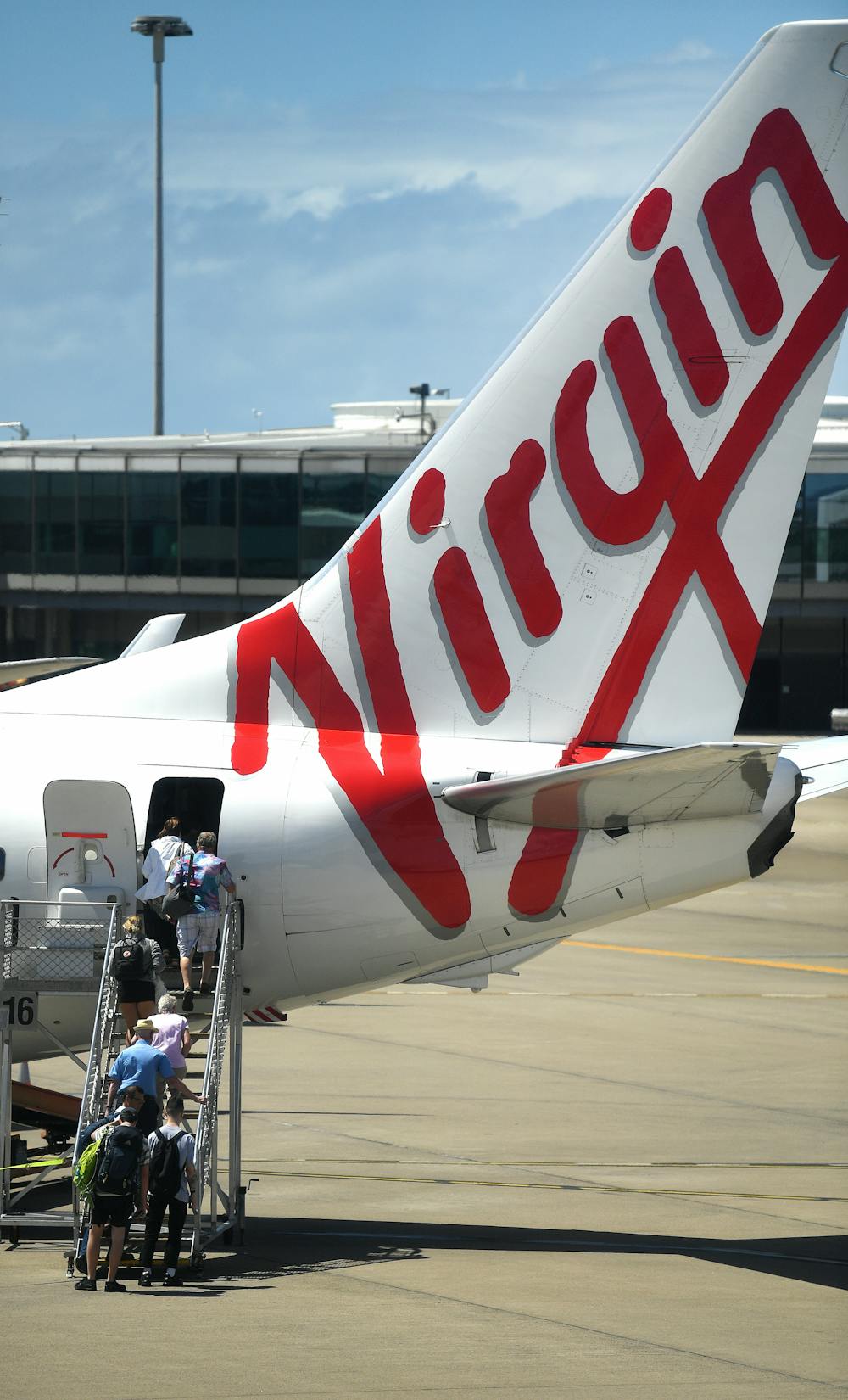
Once the pandemic is over, we will return to a very different airline industry Smaller airlines might miss out on government support. DAN PELED/AAP

The net outcome is anyone’s guess. I also expect an acceleration of product unbundling (food, drinks, baggage allowances and so on being sold separately), especially if recovery is slow and surviving airlines will be under pressure to cut costs.

Last but not least, I should mention that it’s not only the airlines. Airports, aircraft manufacturers, and air navigation service providers will also find themselves under financial stress as demand evaporates.

The COVID-19 pandemic will stress-test the entire civil aviation industry, and when it is over – at least in the first months and maybe for years, the travelling public will return to an industry that has changed.

Authors: Volodymyr Bilotkach, Associate Professor, Singapore Institute of Technology

Read more https://theconversation.com/once-the-pandemic-is-over-we-will-return-to-a-very-different-airline-industry-134124

Business News

Australian organisations are relying on business continuity plans built for a far more predictable world

Tariff escalations, supply chain fragility, geopolitical events, and the ongoing threat of cyber disruption have reshaped the risk environment facing Australian organisations. The problem is that ma...

Daily Bulletin - avatar Daily Bulletin

How to Rent a Car for Uber in Melbourne: What Every New Driver Needs to Know

Starting out as an Uber driver in Melbourne is not as complicated as it sounds but getting the vehicle right is where most new drivers get stuck. Uber has strict requirements around vehicle age, condi...

Daily Bulletin - avatar Daily Bulletin

When Should You Speak to a Lawyer About a Legal Issue?

Legal issues can begin with a simple question, then become harder to manage once formal steps are involved. Many people wait until a matter feels urgent before seeking guidance, even though earlier ...

Daily Bulletin - avatar Daily Bulletin

The strategic rise of Bali as Australia’s next essential healthcare support hub

As Australian healthcare providers grapple with unprecedented operational bottlenecks, a new nearshore model is quietly transforming patient care delivery. Forward-thinking organisations,  including...

Daily Bulletin - avatar Daily Bulletin

Cost Savings and Benefits of Using Used Pallets in Logistics

In today’s competitive logistics and supply chain industry, businesses are constantly looking for ways to reduce operational costs without compromising efficiency and reliability. One of the most prac...

Daily Bulletin - avatar Daily Bulletin

How Fulfilment Services in Australia Help Businesses Scale Efficiently

The growth of e-commerce and modern retail has transformed customer expectations. Consumers now expect fast shipping, accurate order processing, and seamless delivery experiences regardless of where...

Daily Bulletin - avatar Daily Bulletin

Practical Ways Australian Workplaces Can Reduce Operating Costs

Reducing business costs doesn’t always mean cutting staff, shrinking services or making the workplace feel bare-bones. In many cases, the smarter savings are hiding in everyday operations: the light...

Daily Bulletin - avatar Daily Bulletin

Executive Recruitment Solutions That Help Organisations Secure Exceptional Leaders

Leadership has a direct impact on organisational performance, employee engagement, strategic growth, and long-term success. Businesses operating in increasingly competitive environments require experi...

Daily Bulletin - avatar Daily Bulletin

Why A WooCommerce Website Designer Matters For Online Growth

Running an online store today requires more than simply listing products and waiting for customers to arrive. Businesses need a website that is fast, reliable, easy to navigate, and designed to suppor...

Daily Bulletin - avatar Daily Bulletin

The Daily Magazine

DIY Rodent Control Vs Professional Help: When Is It Time To Call The Experts?

Rodents are one of the most frustrating pest problems for Australian property owners. Rats and mic...

Lighting Shop in Perth: How The Right Lighting Can Transform Your Home And Business

The right lighting can completely change the look, feel, and functionality of any space. Whether it ...

Traffic Light System Solutions For Safer And More Efficient Traffic Management

Modern cities and growing communities rely heavily on effective traffic management to ensure safety...

Gold Migration Lawyers in Liquidation: How the Closure Affects Your ART Appeal

If your appeal was with Gold Migration Lawyers, a recent change to how the Tribunal decides cases ...

The pressure cooker: life in urban Australia in 2026

Australian cities have always been demanding. Long commutes, rising housing costs, busy schedules a...

What Actually Makes a Good Criminal Lawyer in Melbourne

Most people only think about this question once. That is usually too late. Most people charged wi...

Why Working With A Chatswood Tutor Can Improve Academic Performance

Academic expectations continue increasing for students across primary school, high school, and senio...

Is It Worth Getting Solar Panels in Melbourne?

The real question is not whether solar works in Melbourne. It works. The question is what it is co...

How A Diploma Of Project Management Builds Practical Skills For Modern Work Environments

Developing the ability to plan, execute, and deliver outcomes efficiently is a key requirement in to...