

From childcare to high school – what to do if you don't like your kid's friend
- Written by: Laurien Beane, Course Coordinator, Queensland Undergraduate Early Childhood, Australian Catholic University
Friendship is critical to a young person’s development. Recent research showed teenagers with just one close friend were better able to bounce back from stress than teenagers without one.
But we also know about the high prevalence of bullying in schools and may have, ourselves, had a negative early friendship that has affected us well into adulthood.
So, if you suspect your child – whether they are in early childhood education and care, primary or secondary school – has a questionable friend, here are some tips on how to deal with it.
Early Childhood (birth to five years)
Early childhood education and care centres enrol children from birth to five years old. One of the learning outcomes of the governing Early Years Learning Framework is to teach and assess if children can “learn to interact in relation to others with care, empathy and respect”.
Educators work to ensure interactions with your child, and the other child, meet the learning outcomes.
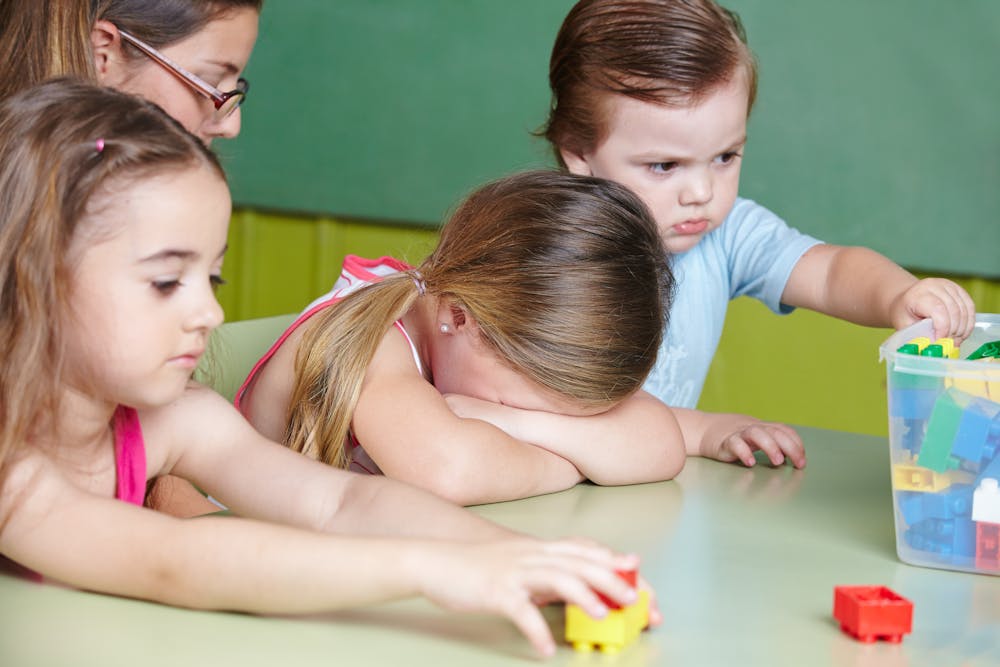 Social skills are the main goal of education at this age.
from shutterstock.com
Social skills are the main goal of education at this age.
from shutterstock.com
Educators in childcare centres are legally required to take regular written observations to record, interpret, analyse and plan the next steps in children’s learning journeys.
These written records are of interactions between individual children, and in small and large groups of children. These should be available for viewing and consultation by parents and caregivers.
You can request educators to keep you updated on interactions your child has with friends. This includes positive, neutral and negative interactions as they are all part of your child’s social development.
Read more: Childhood shyness: when is it normal and when is it cause for concern?
When children are young, they may not yet have the communication skills to explain their feelings. Instead, they may bite or hit another child. Some young children will never go through this stage, and others may take a little while to develop the skills to use their words for positive communication.
If your child comes home with bite marks, or you are regularly receiving incident reports about these types of interactions with the same child, this might signal an undesirable friendship.
You could make an appointment with the centre director to collaborate on possible changes. They may be able to provide support staff in the room at certain times.
The centre may also help you to make a plan to relocate to another room in the centre. Usually this means moving up to the next room with a slightly older age group, when there is a space. – Laurien Beane
Primary school
Peers play a key role in a child’s cognitive, social and emotional development at primary school. These influences can be both positive and negative.
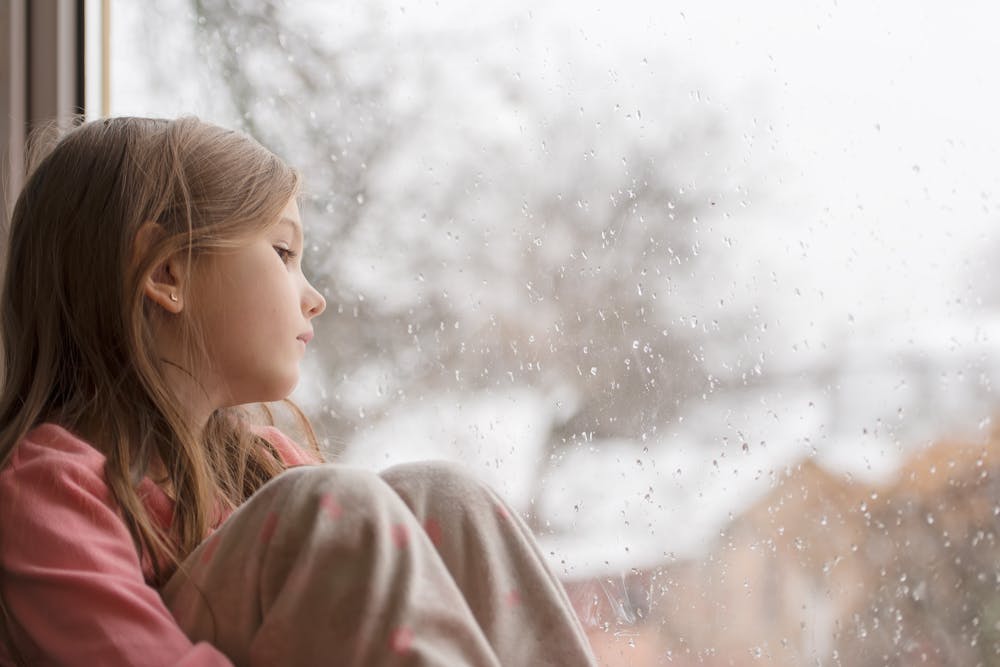 Is your primary-aged child more withdrawn lately?
from shutterstock.com
Is your primary-aged child more withdrawn lately?
from shutterstock.com
Unhealthy friendships involve a breach of trust or damage to someone’s well-being. Some signs your primary-aged child may be dealing with a challenging friend is if:
the person lies to your child on a regular basis
they change best friend status depending on their mood for the day
they control who your child can play with, which clothes they can wear or which interests they can have
they bully your child through social exclusion, verbal put downs, rumour-spreading and/or physical intimidation
they encourage or pressure your child to participate in antisocial or risky behaviours
you have noticed a decline in your child’s self-esteem and overall well-being
you have noticed an increase in withdrawn or aggressive behaviour in your child.
Research shows children are less likely to display antisocial or risky behaviour when their parents are aware of their friendship network. Parental monitoring and supervision can also decrease socialisation with these unhealthy peers.
But overly intrusive parenting can undermine a child’s autonomy. This could make the child more aggressive or rebellious and increase their socialising with unhealthy peers.
Young people are more likely to disclose peer issues to their parents if you:
respond with empathetic advice based on lessons you learnt in your own life (“I understand how you might be feeling. When I was your age something similar happened to me […] I realised a true friend wouldn’t want me to hurt myself just because they thought it was funny. So I decided to make some new friends”)
involve them in the problem-solving process by asking them to consider the options and potential consequences (“What do you think might happen if you stay friends with Sally and she keeps daring you to do XYZ? How could this hurt you or other people? What are some things you could do to protect yourself?”). Allow them to make their own decision.
If open discussion and collaboration in solving the problem doesn’t work, or it doesn’t have a positive result, it may be necessary for parents to intervene.
Subtle intervention could involve limiting your child’s availability by filling in weekends and afternoons with activities like visiting relatives. Eventually, this distance may enable the friendship to fade or run its course in a less confronting way.
Read more: Making friends in primary school can be tricky. Here's how parents and teachers can help
Direct intervention may involve banning contact with the friend, even if this means relocating to a different school or area. This may seem drastic but it may be a necessary course to protect your child’s well-being.
Research shows associations with unhealthy or bullying peers as a child can have serious long-term effects like lowering academic self-esteem while increasing the chance of poor physical and mental health and risky behaviours (including substance abuse and unprotected sex into adulthood.
Counselling may also be required to help the child work through grief, rebuild self-esteem and seek healthier friendships. – Natasha Wardman
Read more: Making friends in primary school can be tricky. Here's how parents and teachers can help
High school
Friendships influence a young person’s development. Happy and healthy relationships between young people can make the transition from primary to secondary school more successful and help shape future trajectories beyond school, even future economic success.
If you are worried your teenager is struggling with a challenging friendship, there are some ways you can help.
 Being an overly controlling parent could push your teenage son or daughter further away.
from shutterstock.com
Being an overly controlling parent could push your teenage son or daughter further away.
from shutterstock.com
Research shows expressions of love and care, even if they are received with repulsion, will likely enhance your teen’s self-esteem and capacity for dealing with difficult friendships.
Saying “I love you” on a regular basis and showing physical affection can be a good habit to establish.
Read more: Teens with at least one close friend can better cope with stress than those without
Research also shows parents remain the most significant influence through the teenage years. Parents might consider talking with their kids about what the family values and whether those values might align with the behaviours and actions of friends.
For example, if you are concerned about what your child’s friend said about someone on social media, you might ask your child questions such as:
“Is that what you would say on social media about others?”
“Do those words reflect the person you want to be?”
“Is this friendship going to bring out the best in you?”
Parents should also be wary of the dangers of overprotective parenting.
Usually, excessive supervision or intrusion in teenagers’ lives does not give them the chance to handle difficult situations competently.
It is usually a good idea to give teenagers some freedom in their decision-making and responsibilities.
You may wish to:
encourage positive friendships. If you know friends who are a good influence on your teenager, try to make opportunities for those friendships to develop
talk about the pros and cons of different friendships. Sometimes parents might use their own friendships as examples. Let your teenager know how you manage and support your friendships and why you manage them in different ways
talk about the real consequences of friendships. Positive friendships can result in anything between good fun and deep development. Harmful friendships have the potential to result in sadness, confusion and stress, with the possibility of life-changing unwanted consequences.
A calm, adult-like dialogue and modelling good behaviours are more likely to elicit an adult-like response from your teenager than forcing them to do something against their will. This is especially true for the choices they make in forming friendships. – Michael Chambers
Authors: Laurien Beane, Course Coordinator, Queensland Undergraduate Early Childhood, Australian Catholic University


 Daily Bulletin


