

Engineered stone benchtops are killing our tradies. Here's why a ban's the only answer
- Written by: Lin Fritschi, Professor of Epidemiology, Curtin University
The National Dust Disease Taskforce is preparing to read submissions next week on how best to handle the resurgence of the fatal lung disease silicosis. This can develop after breathing in silica dust when cutting artificial stone — also known as engineered, composite or manufactured stone — the type used for kitchen benchtops.
But this is not the first time we’ve been alerted to the long-term effects of exposure to hazardous dust. Think asbestos.
So what lessons can Australia learn from tackling asbestos to manage this latest preventable occupational hazard?
Read more: Explainer: what is silicosis and why is this old lung disease making a comeback?
We’ve known about hazardous dust at work for centuries
Centuries ago, we recognised dust in mines badly damaged workers’ lungs. In 1713, Italian physician Bernardino Ramazzini wrote how miners’ bodies:
[…] are badly affected, the lungs especially since they take in with the air mineral spirits.
More evidence led to a 1930 conference in South Africa agreeing the lung disease silicosis was caused by silica dust. A few years later, the International Labour Organisation included silicosis in a list of diseases workers could be compensated for.
Read more: Black lung's back? How we became complacent with coal miners' pneumoconiosis
Control measures to reduce the risk of silicosis were well-recognised even in the mid-1930s; lawsuits were filed against the Union Carbide company for not protecting construction workers.
At that time, breathing protection was fairly basic. But in the decades since then, we established that any activity generating silica dust (such as cutting, blasting or grinding concrete or rock) needed water spray systems, extraction fans and respirators.
The dangers of cutting engineered stone
So how, in a country like Australia, do we suddenly see young workers dying of this completely preventable disease?
The cases seem to be arising from cutting artificial stone. This can contain up to 95% silica, compared with less than 40% silica in natural stone.
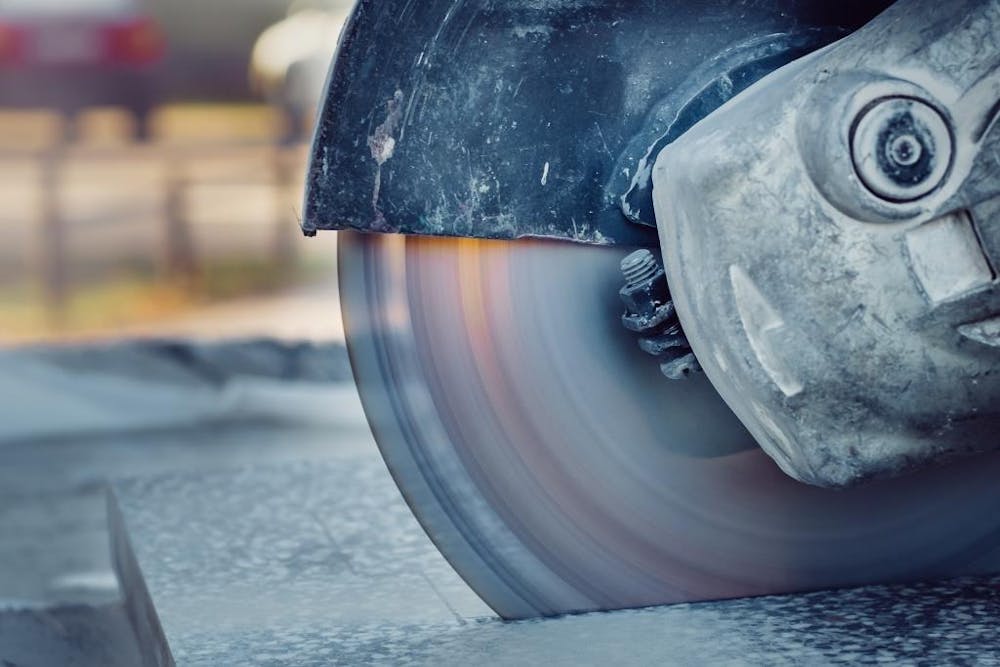 Cutting engineered stone exposes workers to higher levels of silica dust than cutting natural stone.
from www.shutterstock.com
Cutting engineered stone exposes workers to higher levels of silica dust than cutting natural stone.
from www.shutterstock.com
Cutting artificial stone has emerged as a major hazard. The ABC reports there have been 260 cases of silicosis in Australia, mostly in Queensland.
And there are likely to be more cases developing. Regulators’ responses — proactively inspecting workplaces to see if they comply with safe work practices and issuing prohibition notices and fines to individual workplaces if not — are very welcome.
But these responses come too late for those hundreds of young workers who have lost their health, some of whom may die without a lung transplant.
What can we learn from asbestos?
We have been here before. Asbestos mining and manufacturing and the importation of asbestos products into Australia started in the 1880s. Over the next century, it developed into a major industry, peaking in the decades after the second world war.
Over the same time, medical knowledge about the diseases caused by asbestos was growing. The first recorded case of asbestosis (a progressive lung disease) was described in London in 1906 (although, reports of ill health in asbestos workers had been reported from as early as 1899).
In 1928 the Journal of the American Medical Association published an editorial on asbestosis. And, in Australia from 1945, standards for exposure to asbestos were introduced as controlling dust levels was thought the best way to prevent disease.
If Australia had stopped the use of asbestos in 1928, the ill health and death associated with asbestos would not be at levels we’ve seen since.
Read more: Health harms of asbestos won't be known for decades
Instead, Australia only stopped using blue asbestos (the most carcinogenic form) in the late 1960s, brown asbestos (the next most carcinogenic) in the 1980s, and all asbestos in 2003.
By 2020, there will have been an estimated 18,000 cases of mesothelioma, 108,000 cases of lung cancer and an unknown but substantial number of cases of asbestosis in Australia.
How best to protect workers?
The standard response to the silicosis epidemic is that workers should use control measures and personal protection. However, there is increasing evidence dust control measures do not reduce the levels of silica to non-hazardous levels.
Many companies also use a mixture of dry and wet cutting, particularly when installing the products. As with asbestos, there simply is no way to safely use this material.
Read more: Dying for work: the changing face of work-related injuries
We need to go back to the basics of occupational health — the hierarchy of control. This means, if there is a hazard, we first see if we can eliminate it by banning the dangerous product.
This basic principle, taught to all occupational health and safety professionals, seems to have been forgotten for silica. For example, SafeWork Australia does not mention elimination in its online information on controlling silica, although it does mention substitution with products containing lower levels of silica.
The Breathe Freely Australia public health campaign, notes elimination:
[…] is the preferred method of control as it completely eliminates the hazard, but unfortunately it is not often feasible.
Yes, a ban is feasible
We argue it is feasible to ban artificial stone, which is not made in Australia but imported. There are many alternatives, such as natural stone, or Betta Stone made from recycled glass.
The National Dust Disease Taskforce is taking submissions until November 11, 2019.
We suggest:
a total ban on importing, making and using engineered stone with a crystalline silica content of more than 80%
immediate regulation (in every jurisdiction) banning dry cutting, grinding or polishing of all artificial stone
a reduction of the workplace exposure standard for respiratory crystalline silica to half current levels by January 2020 (from 0.10mg/m³ to 0.05mg/m³). Disappointingly, a recent SafeWork Australia meeting rejected the opportunity to reduce the level to 0.02mg/m³.
It took 70 years for Australia to ban all forms of asbestos. We need to learn from that disaster and immediately ban artificial stone. We just can’t continue to let young Australian workers die just so we can have cheap, fashionable kitchens.
Authors: Lin Fritschi, Professor of Epidemiology, Curtin University


 Daily Bulletin


