

Grattan on Friday: Media freedom joins the current 'freedoms' agenda
- Written by: Michelle Grattan, Professorial Fellow, University of Canberra
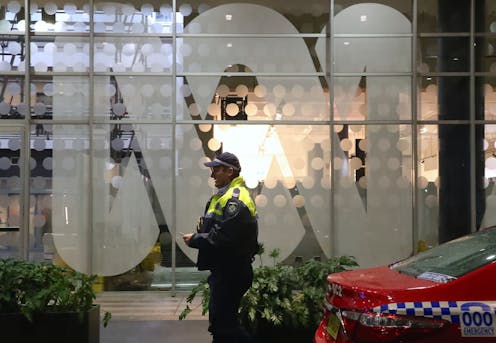
Scott Morrison is very concerned to protect freedom of religion, and many Liberals tell us we don’t have enough safeguards for freedom of speech. Now the prime minister has on his hands a massive, unexpected and, for him, unwelcome argument about media freedom.
The public’s right to know is one issue at stake in the furore over the police raids on the home of a News Corp journalist and on the ABC’s Sydney headquarters, as is a government’s right to protect confidential information.
Also on the line are the reputations of the Australian Federal Police, and of the government itself.
The Annika Smethurst April 2018 story – the detail of which was denied at the time – published extracts of a submission documenting bureaucratic discussions about the remit of the Australian Signals Directorate spy agency.
The 2017 ABC report was about the conduct of Australian SAS soldiers in Afghanistan.
Both stories reproduced actual documents, which increased the risk of the journalists and their sources being targeted by the authorities.
In each case, on a reasonable interpretation of “public interest”, the stories contained information that, it can be strongly argued, it was desirable to have in the public domain. “The Afghan files” report in particular shone a light in a dark place, about unease with SAS culture and possible unlawful killings.
(The fact the police swooped on both News Corp and the ABC does mean, incidentally, that the media response has been more united than it might have been if, for example, only the ABC was in the frame.)
In the raids – which police and bureaucrats would prefer be called the execution of search warrants - the Australian Federal Police acted under the Crimes Act 1914, not under the new secrecy legislation passed last year. This was because of when the stories appeared. The Crimes Act provisions (replaced by the new law, which is wider but provides better defence for journalists) prohibited a Commonwealth official leaking information or documents, and also the publication of such information.
There is no escaping the inconvenient truth that leaks of sensitive information, and their publication, do involve conflicting interests and principles.
Firstly, officials are bound to secrecy by law. But secondly, “whistleblowers” have an important role. While there are legal provisions covering them, these do not seem adequate.
Thirdly, the job of a well-functioning media is to hunt out information and increase accountability.
The weighting one gives to the conflicting imperatives will often depend on where you sit. The “public interest” will, or should be, a concern all round - to politicians, officials and media - although there will also be different views on what this involves in particular instances.
Governments (of either side) and senior bureaucrats dealing with security will place maximum emphasis on confidentiality. In a news conference on Thursday defending the police’s role, the AFP’s acting commissioner Neil Gaughan referenced the information Australia received from its “Five Eyes” partner countries (Canada, New Zealand, the United Kingdom and the United States).
Gaughan said the AFP received “numerous referrals to us [of leaks] and to be honest we get too many. But the premise of investigating these matters is to ensure the international community knows that we take the leaking of information, sensitive information, seriously”.
“If we can’t be seen to protect our own internal information, we are concerned the information flow to us dries up.”
But what do our intelligence partners make of the fact that it’s generally known that certain leaks even involving security matters, such as departmental advice on the medevac legislation, come from ministerial sources or those close to them, for political reasons? Needless to say, they don’t attract raids.
The media perspective is, naturally and properly, primarily focused on disclosure. Sometimes the media will simply have to stare down governments, even if that invites a counter-strike. They are in a strong position, as we’ve seen this week. Publicity is a powerful weapon; it has been the police and the government, not the media, on the back foot in the past few days.
Gaughan has insisted that ministers did not initiate the raids. Home Affairs Minister Peter Dutton’s office was informed by the AFP when the matters were referred to it by officialdom for investigation. But Gaughan said the office did not get progress reports and was not forewarned of the raids.
He said the timing of the operations, which he determined, was not related to the fact the election was over (but the operations were grouped on consecutive days, for “resourcing” considerations). The police turned up at Smethurst’s home unannounced, but had been negotiating with the ABC for months and finally arrived with an appointment. Gaughan said there could be more search warrants.
It is not clear why these investigations took so long. Nor it it evident why, given there is a court case on foot against David McBride, a former military lawyer, who has confessed to leaking the Afghan files, the police are proceeding with that investigation (Gaughan said:“Just because someone says they did something, doesn’t mean they actually did”). McBride has suggested the police may be after a second person.
Morrison – who has been abroad this week – finds himself caught between his own instincts for a high degree of control and mounting evidence that Australia is being portrayed internationally as acting repressively towards the media.
Initially, Morrison sounded dismissive. When asked whether he was bothered by the look of police raiding journalists homes, he replied, “it never troubles me that our laws are being upheld”.
By the following day, he was seeking to strike a slightly different note. Asked whether a change in the law was needed, he said, “I’m open to having discussions about concerns that have been raised and we would consider that in relation to any issues that are raised with us”.
But it didn’t sound as though his position had shifted significantly – it was more a matter of becoming aware he was in the middle of a political firestorm, not just a little brushfire.
What’s needed now?
Another look at the legal provisions protecting whistleblowers, and perhaps those covering journalists as well.
But, most important, a more open political culture. While the government is busy arguing that it had nothing to do with this week’s police actions, that is only half true.
It sets the climate in which so much is referred by officials to the police, often unnecessarily. It’s a climate in which genuine whistleblowers are often hounded, media organisations find it increasingly hard to ferret out facts, and the public’s right to know hardly gets a look in. Security considerations and confidentiality are important but they mustn’t be cloaks for political or bureaucratic convenience (or worse, cover ups).
Media freedom is as important a debate as those around religious freedom and free speech.
Authors: Michelle Grattan, Professorial Fellow, University of Canberra
Read more http://theconversation.com/grattan-on-friday-media-freedom-joins-the-current-freedoms-agenda-118413


 Daily Bulletin


